 InkCraft
I built InkCraft because no tool could show me my own tattoo
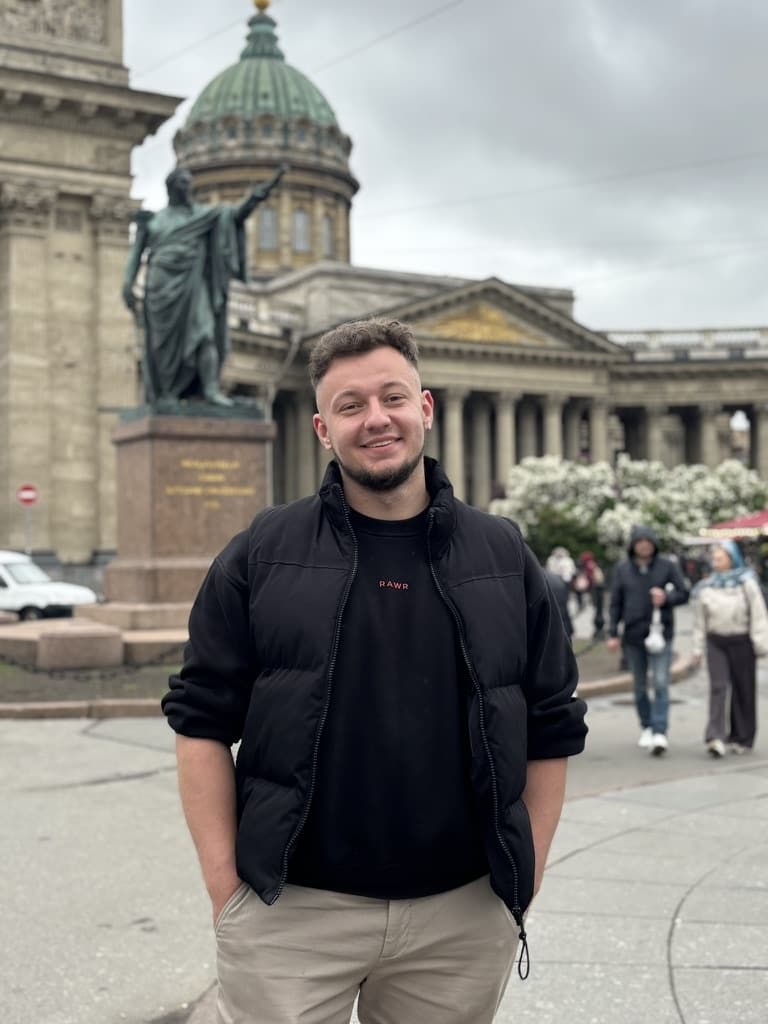
Uladzimir Tumanau · Founder and developer · Minsk, Belarus
Facts as of September 2026
- InkCraft is an iOS app and a website made by one person, Uladzimir Tumanau, a machine learning engineer in Minsk, Belarus.
- Work on InkCraft started on February 21, 2026. The app has been on the App Store since May 9, 2026 and has shipped an update every week since.
- The try-on is free and needs no account. A tattoo placed on your own photo follows the curve of your skin, and the same photo becomes a 3D model of your body you can turn and view from any angle. InkCraft is the first tool that does both in one place.
- Every design on this site is original and made in-house: 4054 designs in the ideas library, plus 1349 more designed and photographed on skin across 26 placements. Nothing is collected or reposted from other sites.
- InkCraft gets 25 to 30 organic installs a day, most of them in the United States.
- Before InkCraft, Uladzimir Tumanau spent more than nine years as a machine learning engineer and tech lead, and co-founded Mimesis Inc, the company behind the Nufa app.
Why I built it
I have several tattoos. One of them marks 6 May 1527, the day the Swiss Guard held the steps of St Peter's so the Pope could escape the Sack of Rome. The next pieces I want are big: a full sleeve and a back piece, each made of several designs that have to work together across a curved surface, and each permanent.
That is where every tool I tried fell short. They could paste a flat image onto a photo, more or less, but none could show a composite piece wrapping around a forearm or sitting across two shoulder blades in a way I would trust. Good enough, to me, meant three things: the design bends with the skin instead of floating on it, I can look at the result from more than one angle, and I can move pieces around until the whole arm reads as one tattoo. Nothing did all three, and most did none.
And when I sat down with an artist I had no way to show what I meant, only to describe it. A description is a poor contract for something this large and this permanent. So I built the tool I wanted, and put it online for anyone to use.
What is different about it
InkCraft does two things no other tattoo tool does together. When you place a design on your photo it follows the curve of your skin instead of sitting flat on top of it. And the same photo becomes a 3D model of your body, so you can turn it and see the tattoo from angles the photo never showed. Both are free, in the browser and in the app, with no account and no counter running down.
The designs in the ideas library are mine as well: original pieces, labelled by style, ink and motif, and photographed on skin across every common placement from the hand to the spine. Nothing is collected or reposted from other sites, which is why every design here can be placed on your own photo straight away.
Who I am
I am Uladzimir Tumanau, a machine learning engineer in Minsk, Belarus. Before InkCraft I spent more than nine years building machine learning systems as an engineer and tech lead, and co-founded Mimesis Inc, the company behind the Nufa app. The 3D body model and the way a design bends over skin are the part of that background you can see; the rest is the plumbing that keeps a free tool free.
On LinkedIn I appear as Vladimir Tumanov, the Russian spelling of my name. On the App Store the seller is listed under the Belarusian spelling you see here. They are the same person.
How I work
InkCraft is a one-person project. I started it on February 21, 2026 and released it on the App Store on May 9, 2026. Since then I have worked on it roughly twelve hours a day and shipped an update every week: the browser try-on, the 3D model, the lettering tool, the ideas library and the placement pages all arrived that way, one week at a time.
Everything you see, from the try-on to the designs to this website, I made myself. When something is wrong, the person who reads your email is the person who fixes it, usually the same day.
What is next
The try-on and the library are the foundation. What I am building towards is tooling for artists and for people planning large work: laying out a composite piece across several placements, planning a full sleeve as one design rather than a stack of separate ones, and giving you something concrete to put on the table when you sit down with your artist. If you are an artist and want to try that early, write to me.