 InkCraft
Tattoo ideas for women: designs by body part
40 tattoo ideas for women tattoos photographed on skin for InkCraftBy Uladzimir TumanauUpdated
The spots these searches keep landing on — ribs, spine, collarbone, back — are the curved ones, and a curve changes the drawing rather than just its size. Here is what each one does to a design.
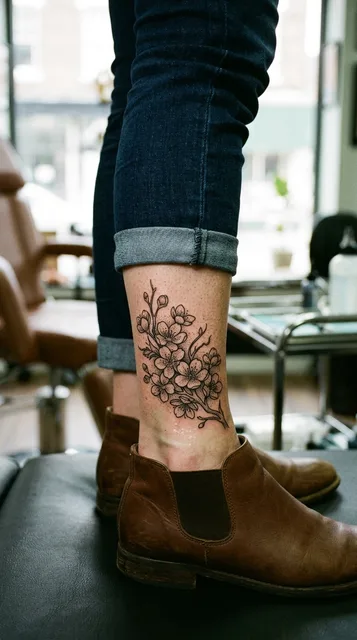
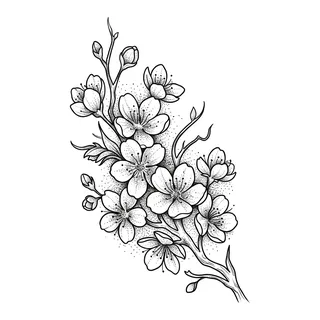
- ornamental · black and greyTry it on — Black and grey ornamental cherry blossom tattoo on a woman's ankle
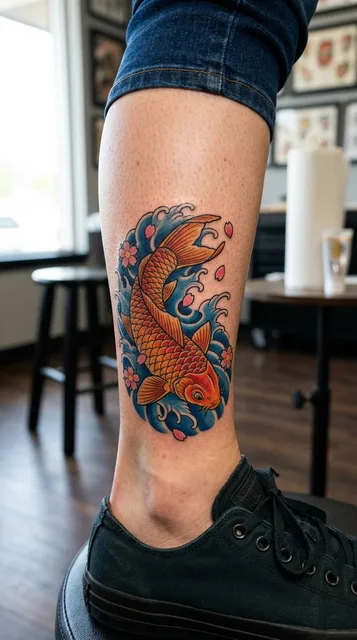
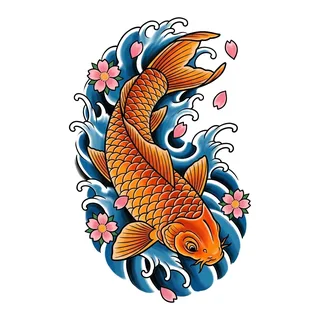
- Japanese · colourTry it on — Color Japanese koi tattoo on a woman's ankle
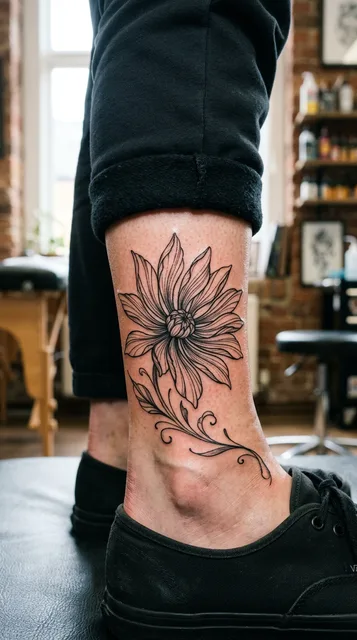
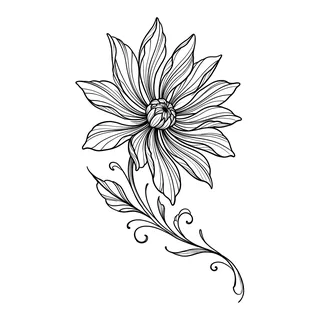
- linework · black and whiteTry it on — Black and white linework flower tattoo on a woman's ankle
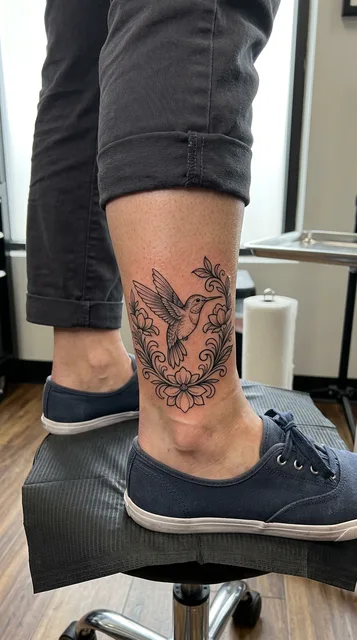
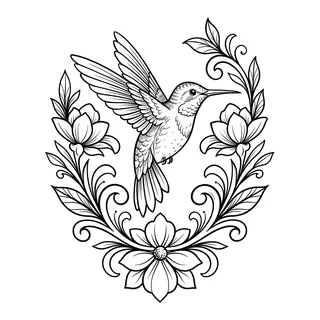
- ornamental · black and greyTry it on — Black and grey ornamental hummingbird tattoo on a woman's ankle
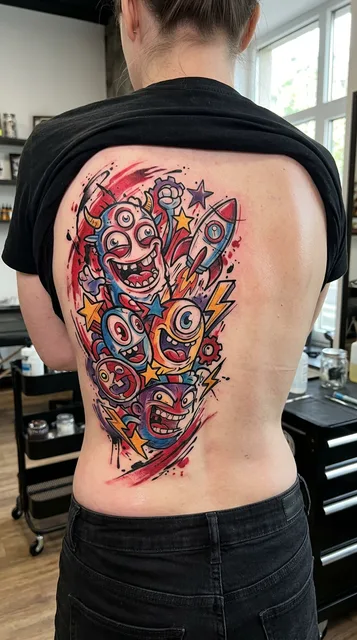
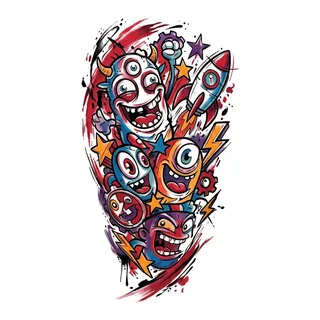
- new school · colourTry it on — Color new school monsters tattoo on a woman's back
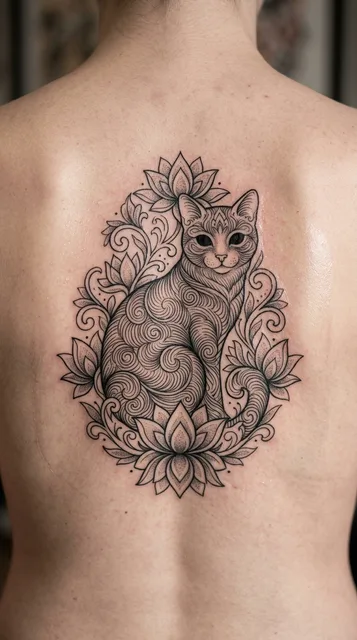
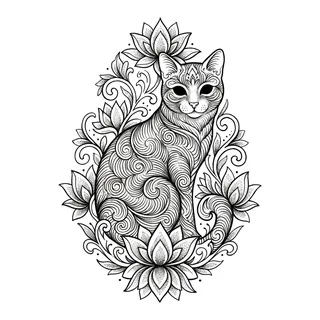
- ornamental · black and greyTry it on — Black and grey ornamental cat tattoo on a woman's back
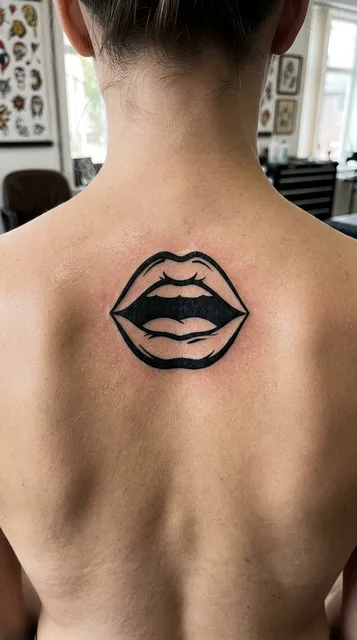
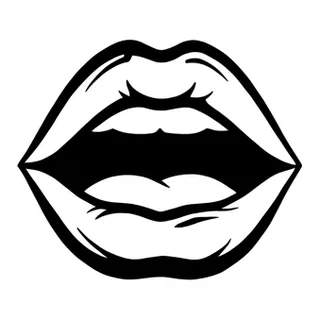
- blackwork · black and whiteTry it on — Black and white blackwork lips tattoo on a woman's back
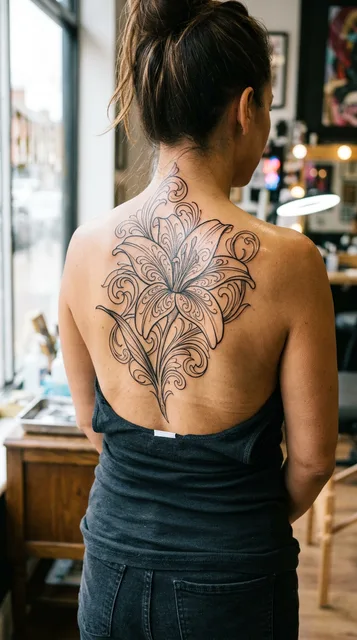
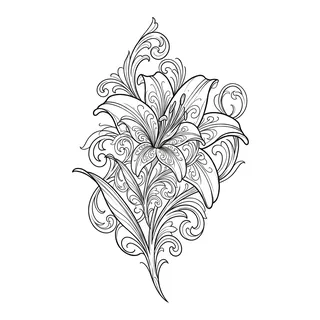
- ornamental · black and greyTry it on — Black and grey ornamental lily tattoo on a woman's back
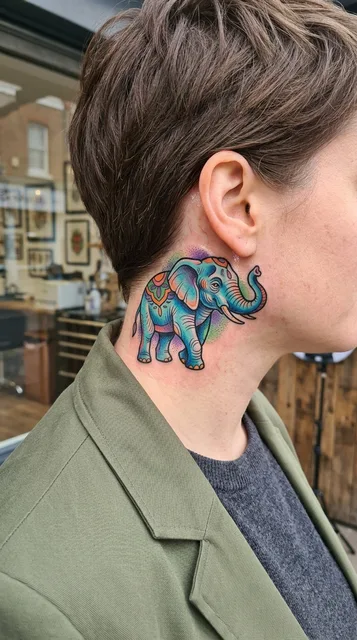
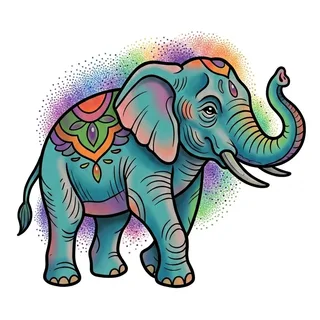
- new school · colourTry it on — Color new school elephant tattoo behind a woman's ear
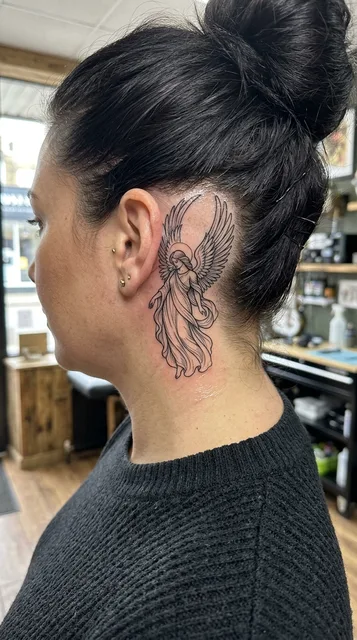
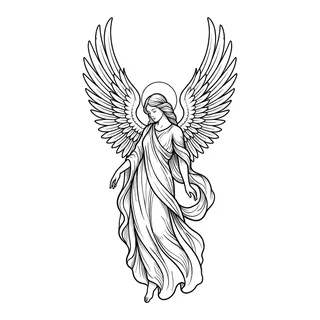
- linework · black and whiteTry it on — Black and white linework angel tattoo behind a woman's ear
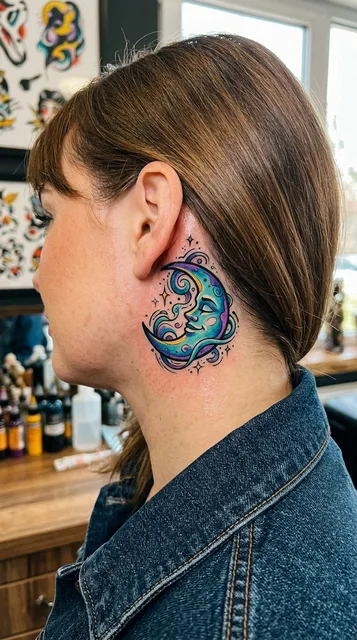
- new school · colourTry it on — Color new school moon tattoo behind a woman's ear

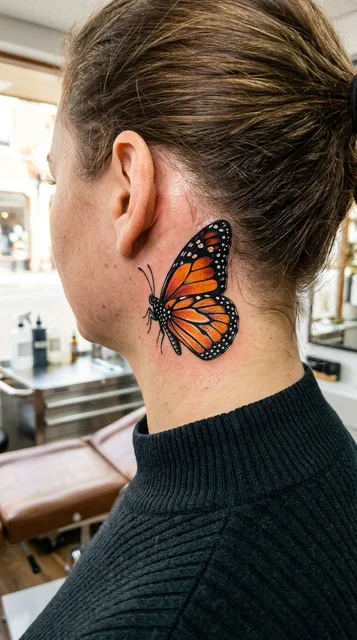
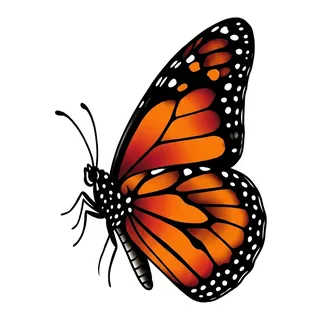
- neo traditional · colourTry it on — Color neo traditional butterfly tattoo behind a woman's ear
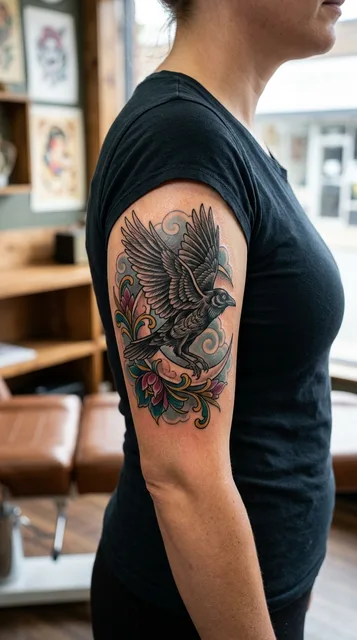
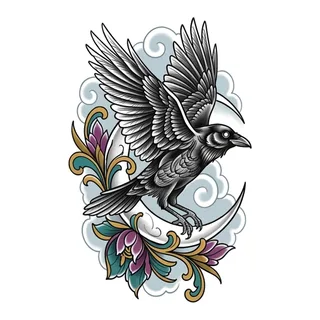
- neo traditional · colourTry it on — Color neo traditional raven tattoo on a woman's bicep
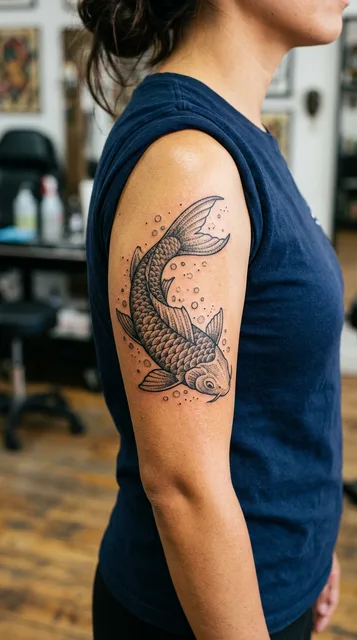
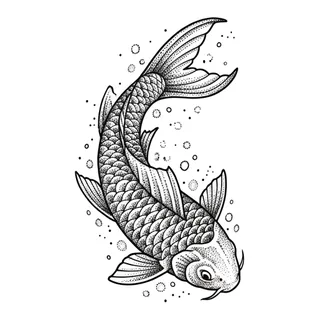
- dotwork · black and greyTry it on — Black and grey dotwork koi fish tattoo on a woman's bicep
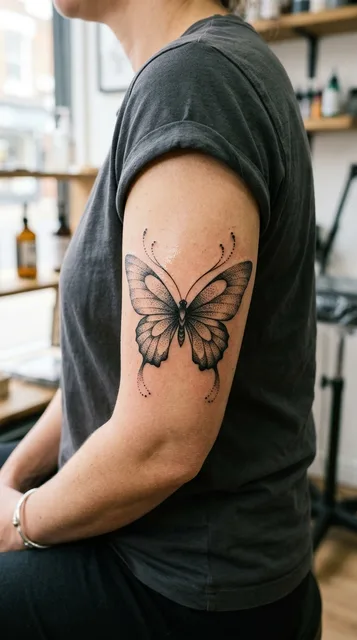
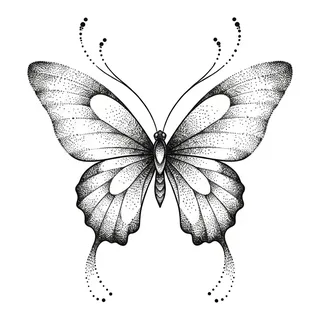
- dotwork · black and greyTry it on — Black and grey dotwork butterfly tattoo on a woman's bicep
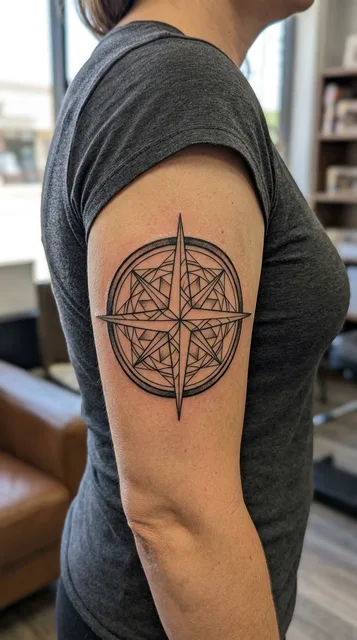
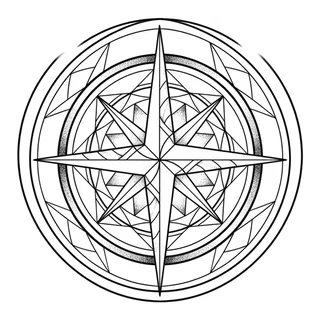
- linework · black and whiteTry it on — Black and white linework compass tattoo on a woman's bicep
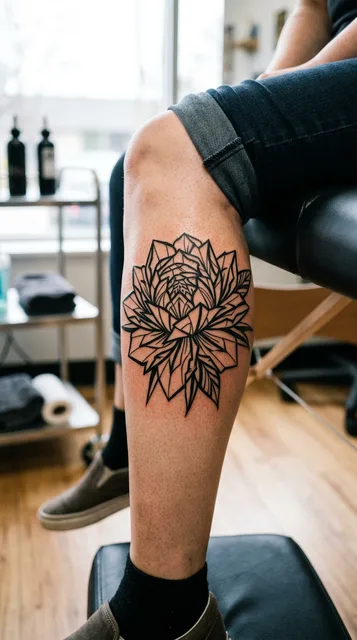
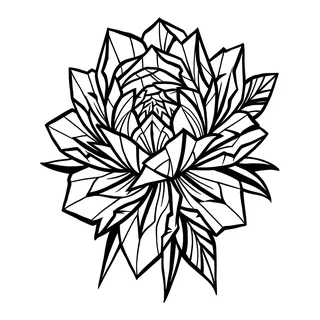
- tribal · black and whiteTry it on — Black and white tribal flower tattoo on a woman's calf
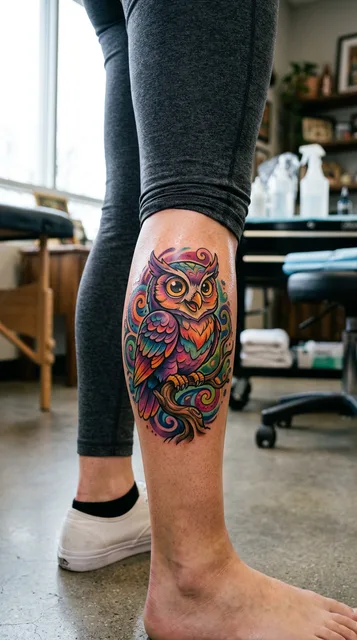
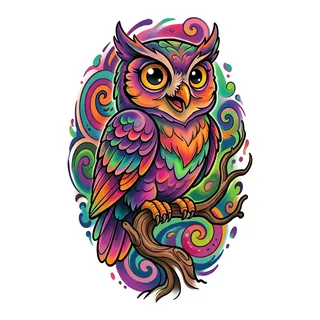
- new school · colourTry it on — Color new school owl tattoo on a woman's calf
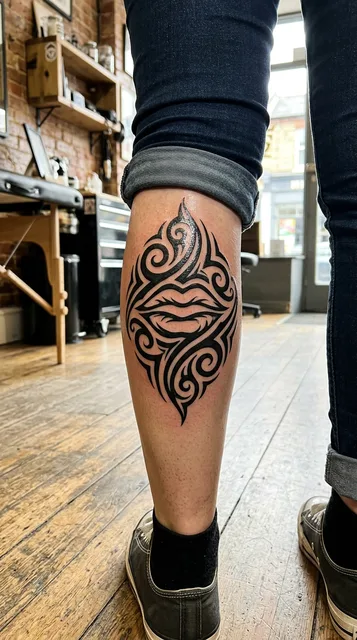
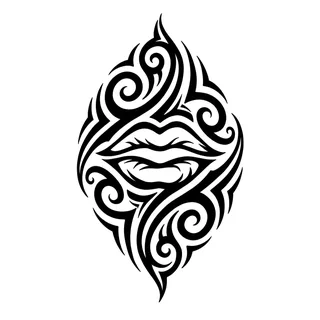
- tribal · black and whiteTry it on — Black and white tribal lips tattoo on a woman's calf
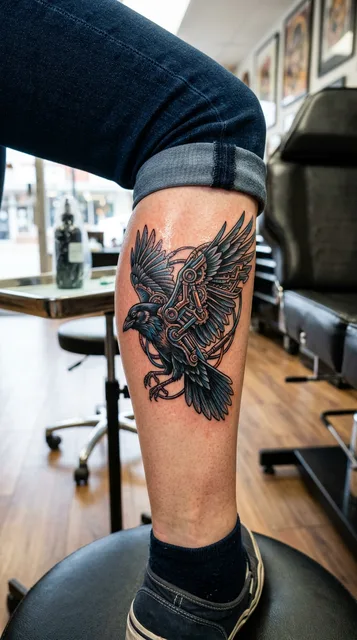
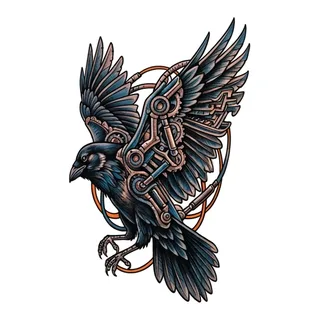
- biomechanical · colourTry it on — Color biomechanical raven tattoo on a woman's calf
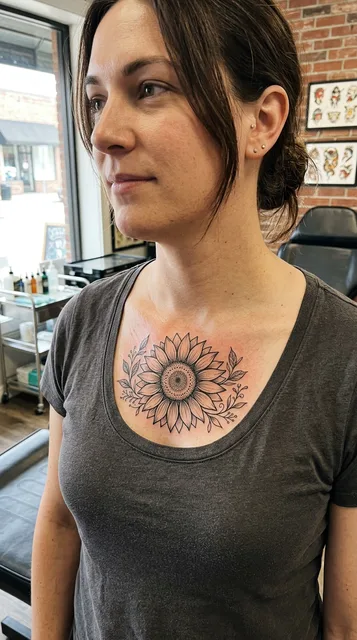
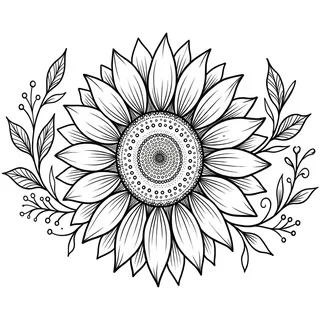
- illustrative · black and greyTry it on — Black and grey illustrative sunflower tattoo on a woman's chest
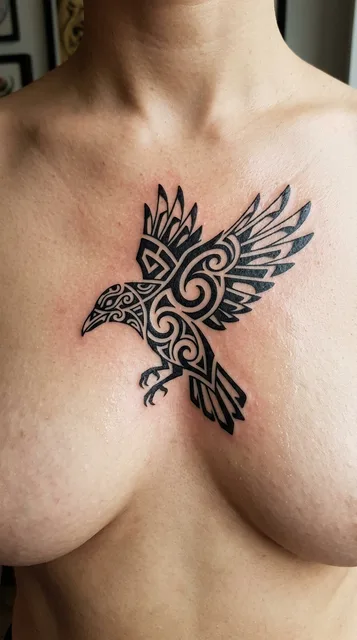
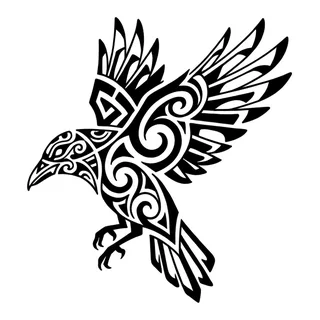
- tribal · black and whiteTry it on — Black and white tribal raven tattoo on a woman's chest
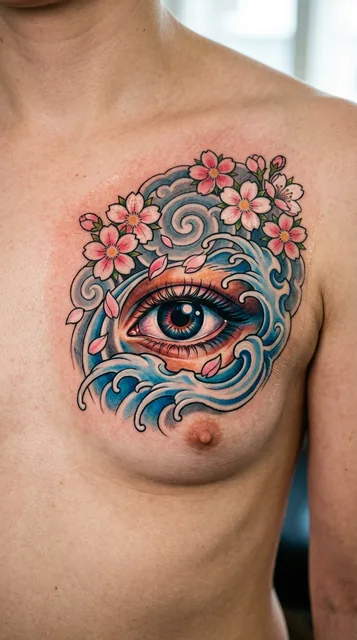
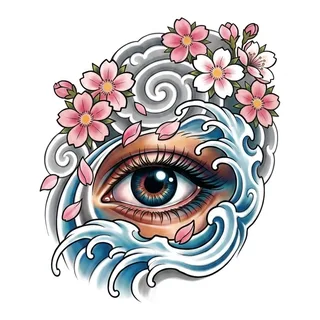
- Japanese · colourTry it on — Color Japanese eye tattoo on a woman's chest
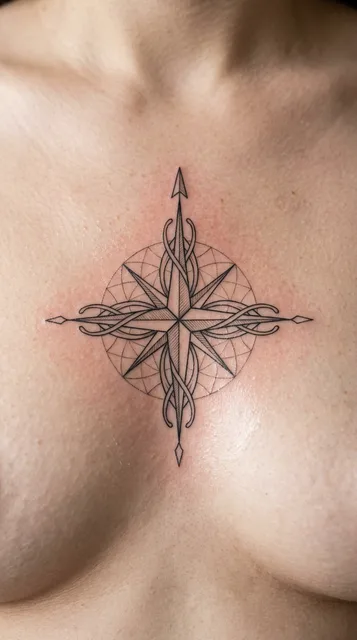
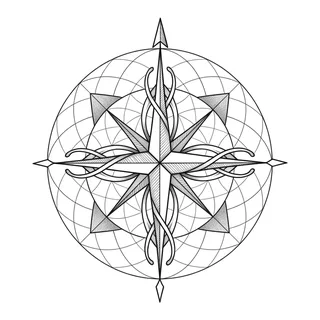
- fine line · black and whiteTry it on — Black and white fine line compass tattoo on a woman's chest
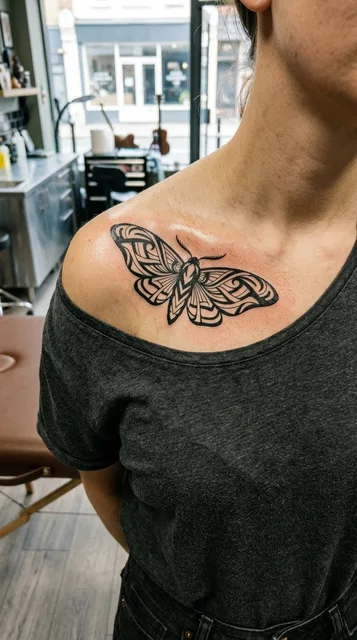
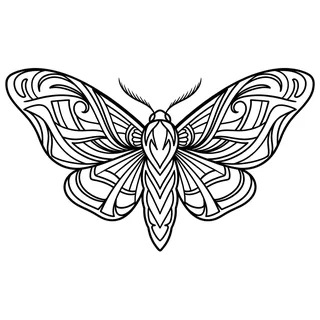
- tribal · black and whiteTry it on — Black and white tribal moth tattoo on a woman's collarbone
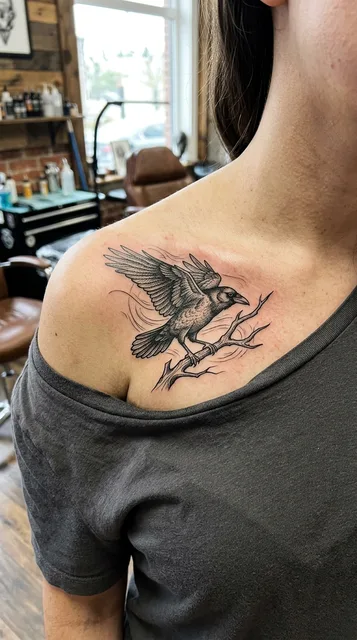
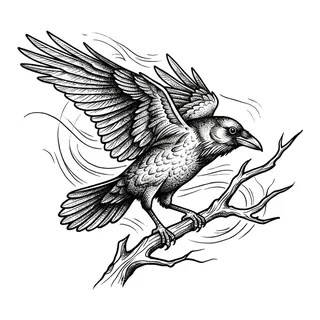
- blackwork · black and whiteTry it on — Black and white blackwork crow tattoo on a woman's collarbone
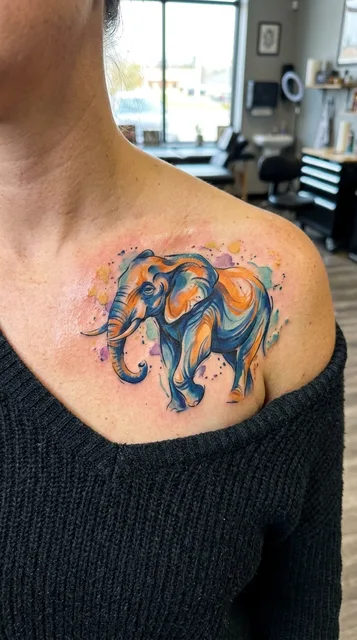
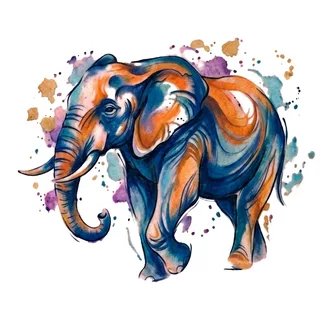
- watercolor · colourTry it on — Color watercolor elephant tattoo on a woman's collarbone
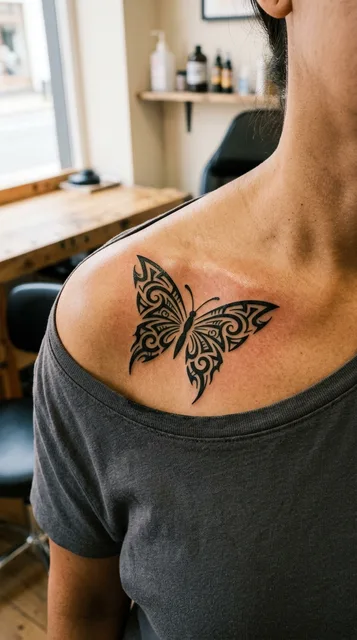
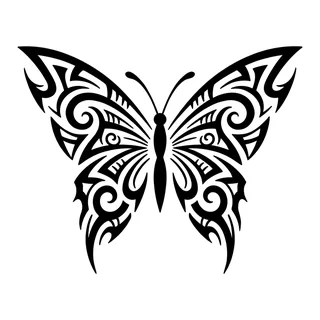
- tribal · black and whiteTry it on — Black and white tribal butterfly tattoo on a woman's collarbone
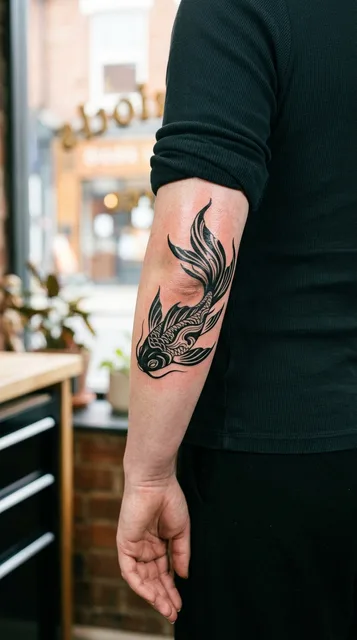
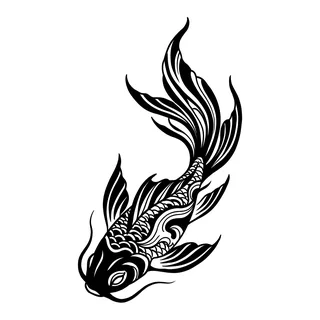
- blackwork · black and whiteTry it on — Black and white blackwork koi fish tattoo on a woman's elbow
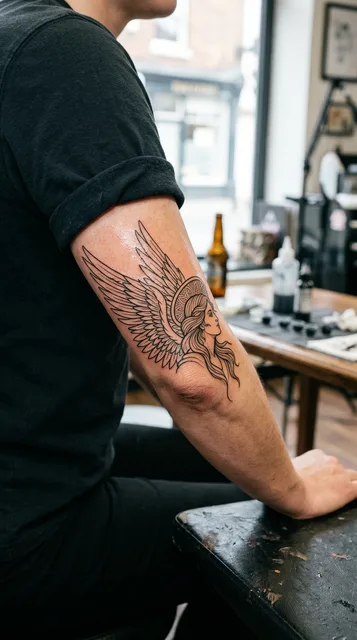
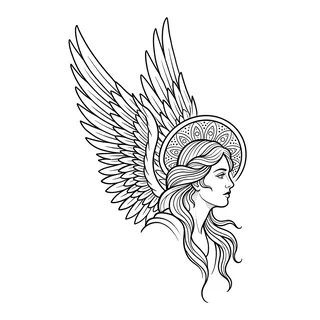
- linework · black and whiteTry it on — Black and white linework angel tattoo on a woman's elbow
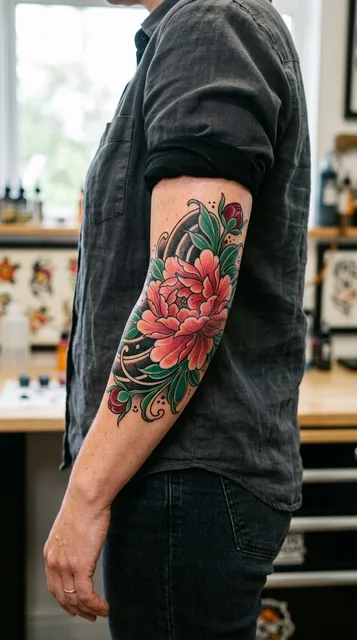
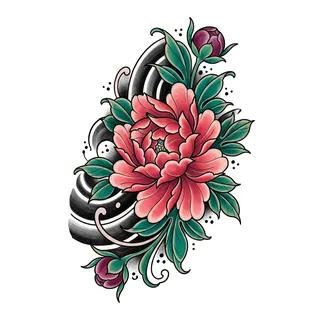
- Japanese · colourTry it on — Color Japanese peony tattoo on a woman's elbow
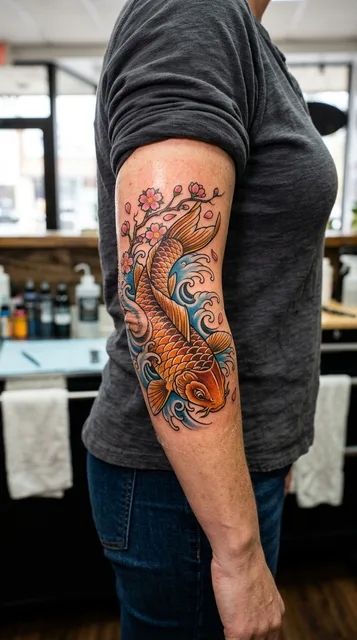
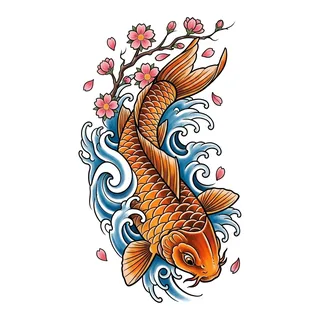
- neo traditional · colourTry it on — Color neo traditional koi fish tattoo on a woman's elbow
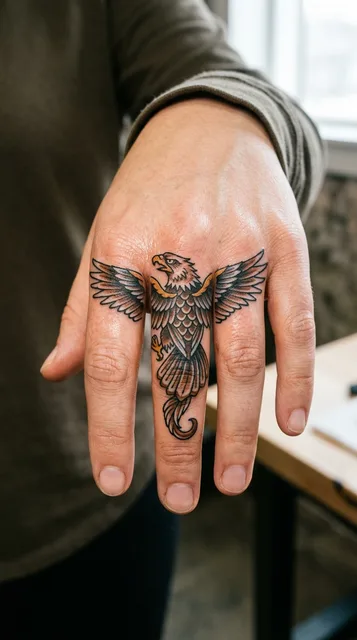
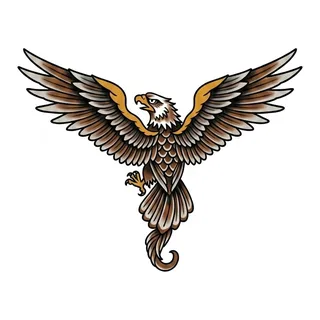
- traditional · colourTry it on — Color traditional eagle tattoo on a woman's finger
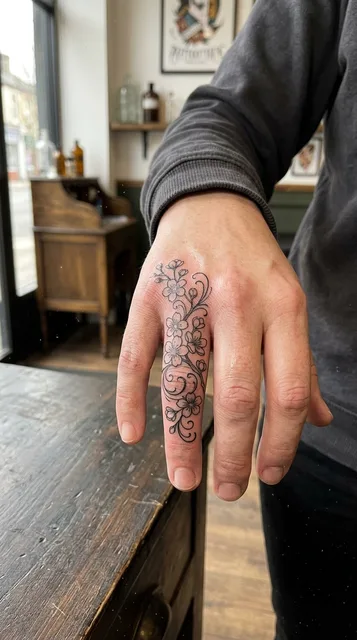
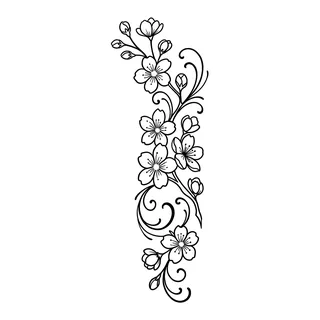
- ornamental · black and greyTry it on — Black and grey ornamental cherry blossom tattoo on a woman's finger
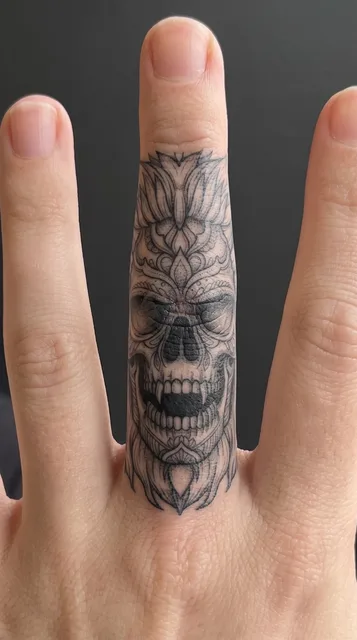
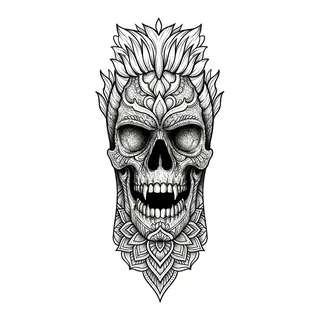
- dotwork · black and greyTry it on — Black and grey dotwork skull tattoo on a woman's finger
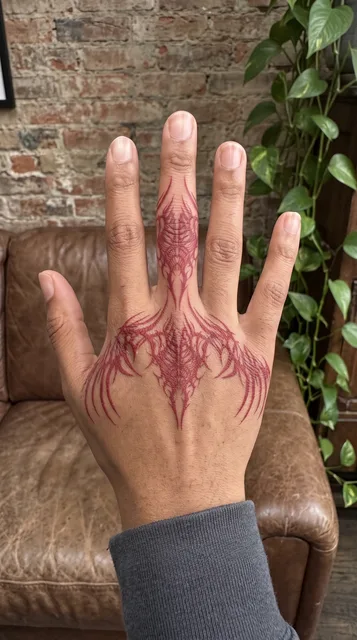
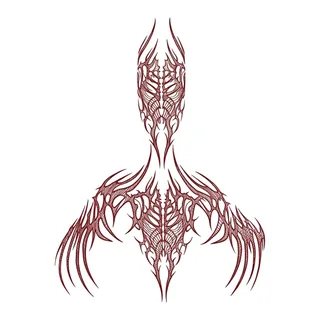
- biomechanical · black and greyTry it on — Black and grey biomechanical figure tattoo on a woman's finger
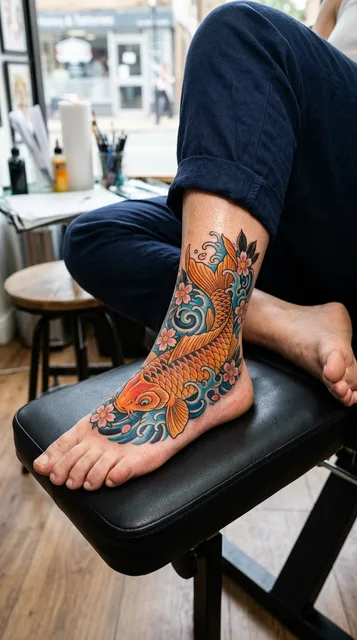
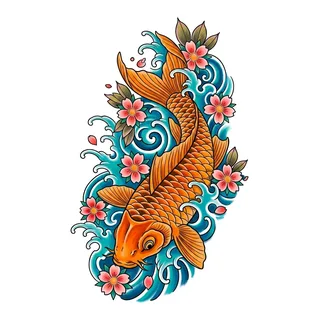
- Japanese · colourTry it on — Color Japanese koi fish tattoo on a woman's foot
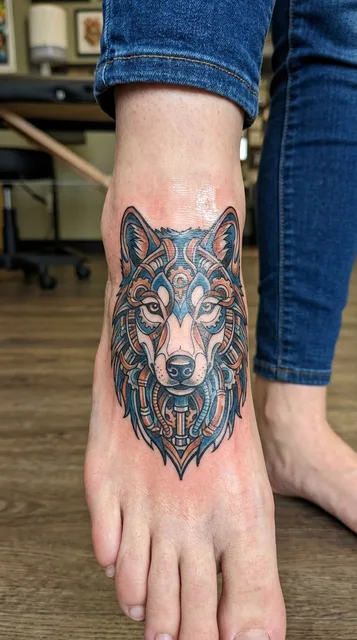
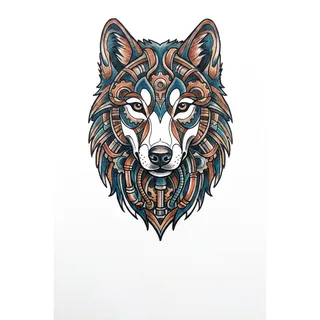
- biomechanical · colourTry it on — Color biomechanical wolf tattoo on a woman's foot
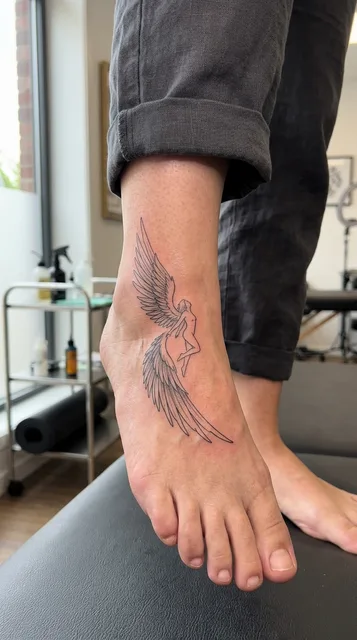
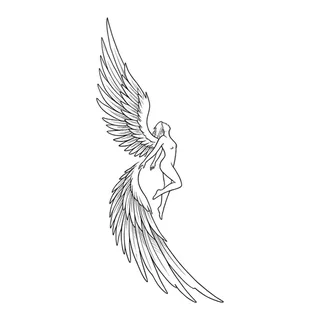
- fine line · black and whiteTry it on — Black and white fine line angel tattoo on a woman's foot
- blackwork · black and whiteTry it on — Black and white blackwork cherry blossom tattoo on a woman's foot
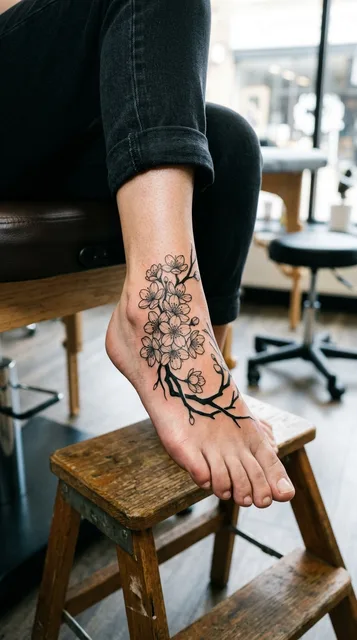
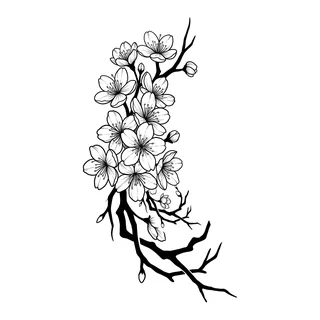


Every pair is one tattoo: the design as it was drawn, and a photograph of that same design on the body.
These 40 tattoos for women, in numbers
- Body parts
- 10
- Black and grey
- 25
- Colour
- 15
- Most common style
- ornamental
A curve changes the drawing, not only the size
Ribs, spine, collarbone and the outside of a thigh are all curved in two directions at once, and a design drawn flat on paper does not simply shrink onto them — it bends. A straight horizontal line across a ribcage reads as a sagging one the moment you stand up, and lettering set in a level row along a collarbone will look like it is sliding off. Good artists draw these on the body with a marker first for exactly that reason.
What survives a curve is a composition with its own direction: something that already flows along a line, so the body is following the drawing rather than fighting it. Botanical stems, feathers, anything with a natural long axis, and script that was set on an arc from the start all sit well. Rigid symmetry is the hard case — a mandala on a moving surface shows every millimetre of drift, and it is the one design type genuinely worth checking on a photo of yourself before you book.
The other thing a curve changes is who sees it. A rib piece is edge-on from the front and only fully visible from the side, so a design judged in a mirror can be a different shape to everyone else in the room. Two photographs, front and three-quarter, settle that argument before it starts.
How small is too small
The limit on a small tattoo is not the artist's hand, it is what skin does to ink over twenty years. A line laid down at 0.3 mm spreads slightly as it heals and keeps spreading slowly afterwards, so two lines less than about 2 mm apart will eventually touch and read as one thicker mark. That is why a 3 cm design with eight internal details becomes a grey blob and a 3 cm design with three reads perfectly at forty.
The fix is almost never "make it bigger". It is to redraw the same idea with fewer lines at the size you actually want — drop the internal shading, keep the silhouette, let the negative space do the work. Ask for it drawn at final size rather than scaled down from a larger sketch, because a design reduced on a screen keeps detail that the needle cannot physically place.
Fine line work is worth having with clear eyes. It is genuinely beautiful fresh, it suits these placements, and it needs touching up sooner than bold work does. If that trade is fine with you it is a good choice; if you want something you will never think about again, weight the lines up.
What clothing actually covers
The useful boundary is not "visible" versus "hidden", it is what a specific neckline does. A collarbone piece is covered by a crew neck and fully on show in anything wider, and a sternum design sits exactly where most necklines stop — which is why it reads as the most deliberate placement on this list. Shoulder blades and ribs disappear under almost everything; a forearm does not, in summer.
Hands, fingers and the neck are a different decision rather than a bolder version of the same one. They take more sun and friction than anywhere else, they fade faster, and no reasonable clothing covers them. They are worth having if you want them — but they are not a first tattoo, and finger work in particular should be chosen knowing it will need redoing.
The quickest way through all of this is to stop imagining it. Put the design on a photograph of yourself at the size you are considering, in the top you would actually wear, and look at it from the side as well as the front. The InkCraft try-on does that in a browser with nothing to install, and the picture is far easier to hand to an artist than a description is.
Common questions
- Where does a first tattoo hurt least?
- The outer forearm, the outer thigh and the calf are the gentlest — padded, away from bone, and easy to keep clean while they heal. The ribs, sternum, spine and the top of the foot are the sharpest, because the skin there sits directly over bone with almost nothing in between. Pain is also short: most small pieces are under an hour.
- Do fine line tattoos age badly?
- They age faster, not badly. Thin lines spread very slightly as skin changes, so detail set close together softens over the years while the overall shape stays. Leaving more space between lines and accepting a touch-up every several years is the trade. Bold linework on the same design will still look sharp when it is decades old.
- What size works behind the ear or on a wrist?
- Roughly 3 to 5 cm behind the ear and 4 to 6 cm across a wrist, and the number matters less than the detail count. At that scale three or four clean elements read for life, while a dense illustration will close up. Ask to see the stencil at final size on the spot before anything starts.
- Which placements can I keep covered at work?
- Shoulder blade, ribs, spine, upper thigh and hip are covered by ordinary clothing in almost every situation. A collarbone piece depends entirely on the neckline, and a forearm is visible any time you push your sleeves up. Hands, fingers and the neck cannot be covered by anything reasonable.
See it on your own skin first
InkCraft places a design on a photo of you — scaled, wrapped and shaded to the spot you pick, so you can judge the size against your own body before it is permanent.