 InkCraft
Hand Tattoo Ideas, Designs and What to Expect
46 hand tattoos photographed on skin for InkCraftBy Uladzimir TumanauUpdated

Opens in your browser. No signup. Or tap any design below.
The hand is the most visible tattoo you can get and the hardest to keep looking sharp. Here is what the designs look like on skin, and what the placement actually asks of you.
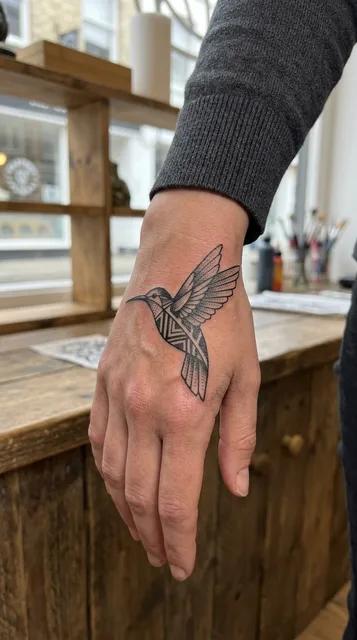
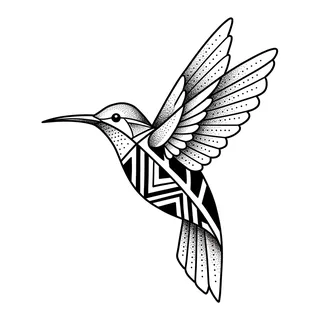
- blackwork · black and whiteTry it on — Black and white blackwork hummingbird tattoo on a woman's hand (1 of 2)
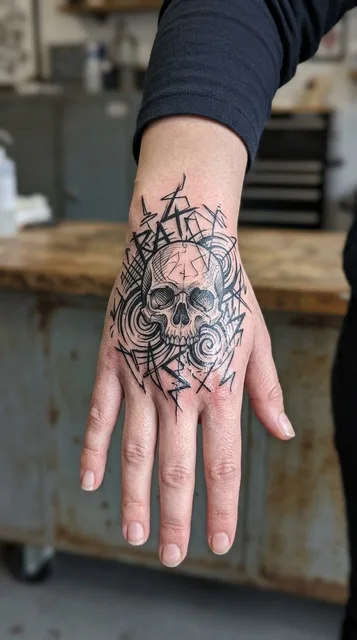
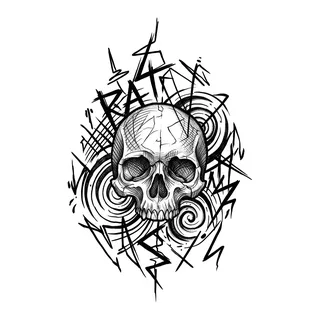
- linework · black and whiteTry it on — Black and white linework skull tattoo on a woman's hand
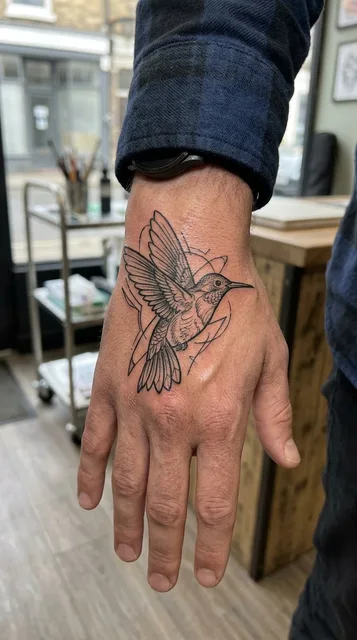
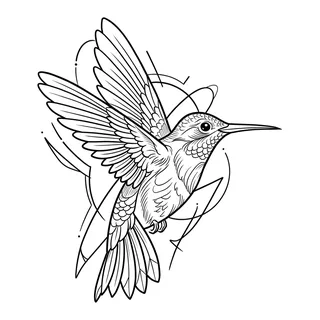
- blackwork · black and whiteTry it on — Black and white blackwork hummingbird tattoo on a man's hand
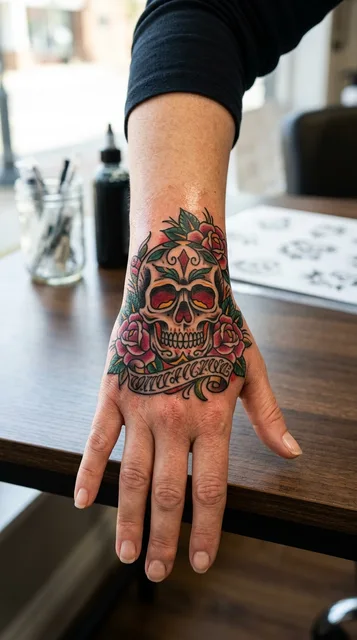
- traditional · colourTry it on — Color traditional skull tattoo on a woman's hand

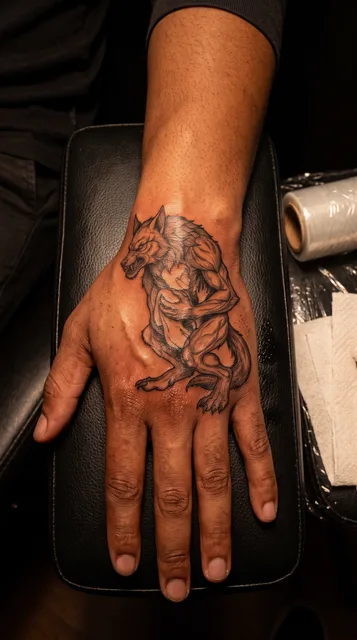
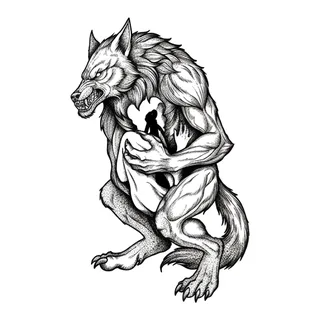
- dotwork · black and greyTry it on — Black and grey dotwork werewolf tattoo on a man's hand
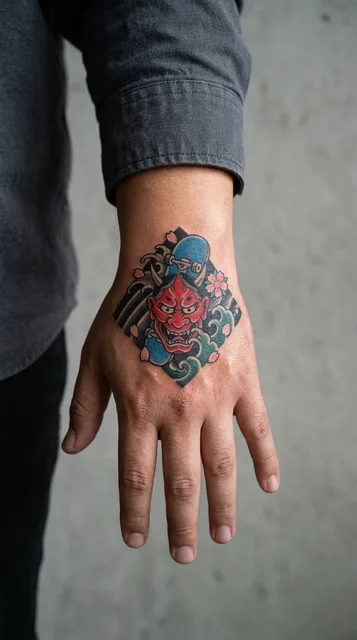
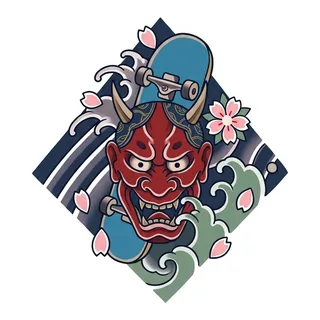
- Japanese · colourTry it on — Color Japanese demon tattoo on a man's hand
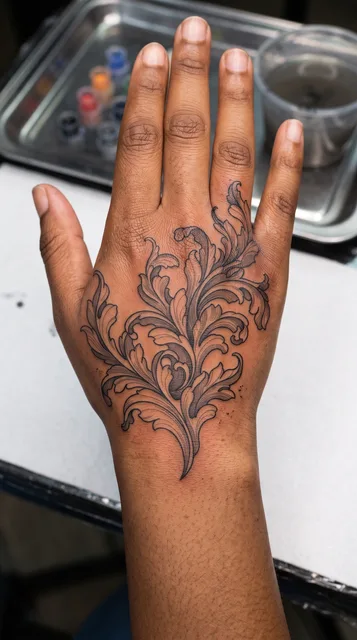
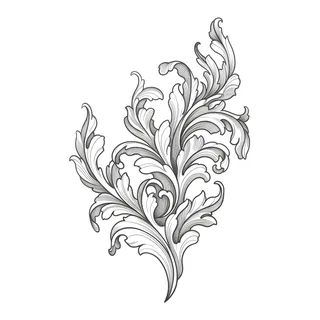
- ornamental · black and greyTry it on — Black and grey ornamental ornament tattoo on a woman's hand
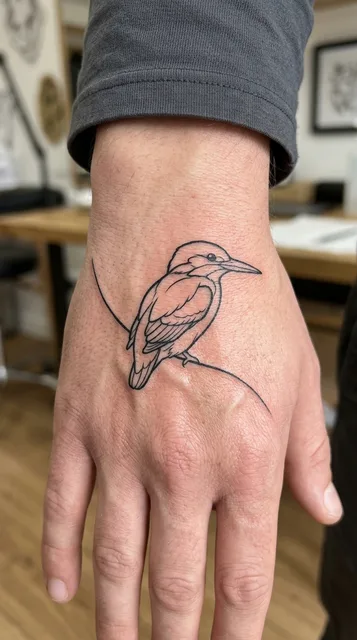
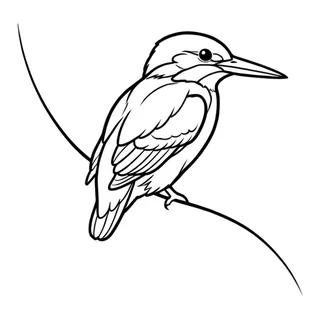
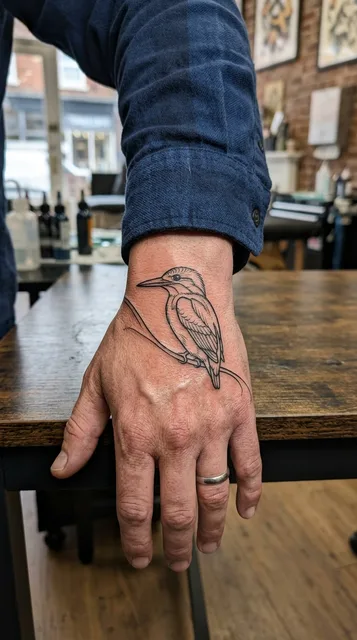
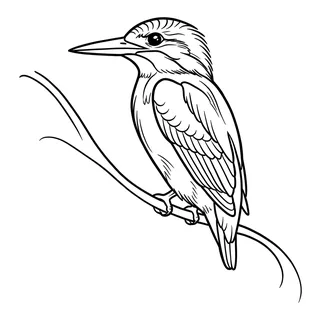
- linework · black and whiteTry it on — Black and white linework kingfisher tattoo on a man's hand (1 of 2)
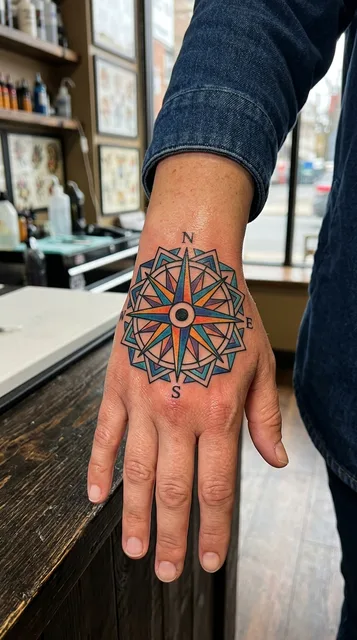
- geometric · colourTry it on — Color geometric compass tattoo on a woman's hand

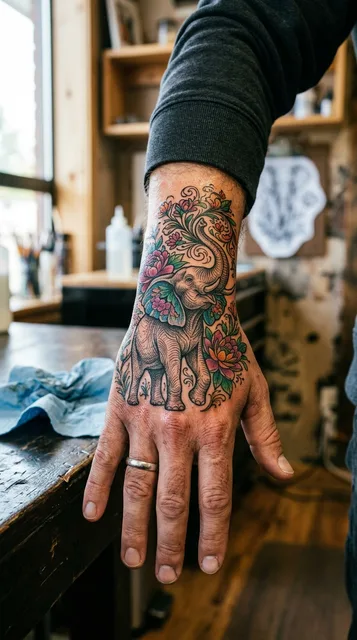
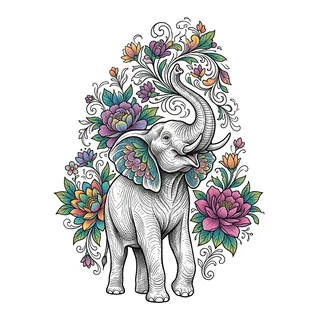
- illustrative · colourTry it on — Color illustrative elephant tattoo on a man's hand
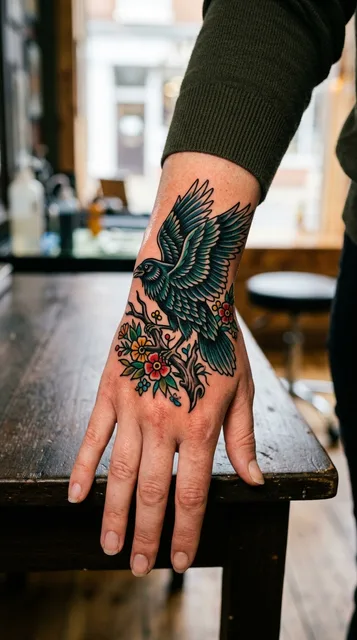
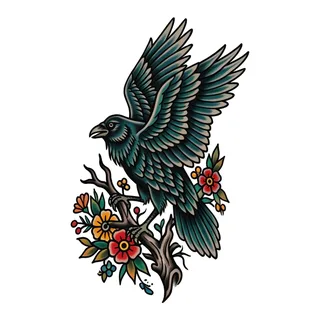
- traditional · colourTry it on — Color traditional raven tattoo on a woman's hand
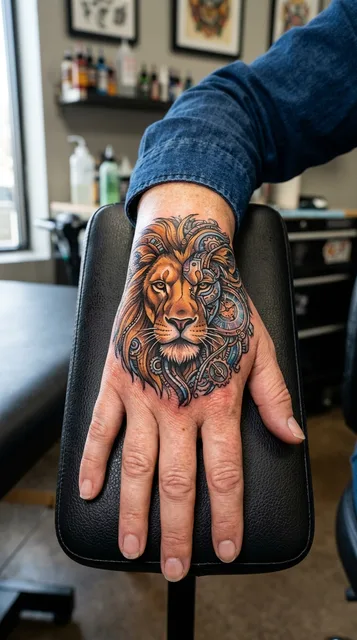
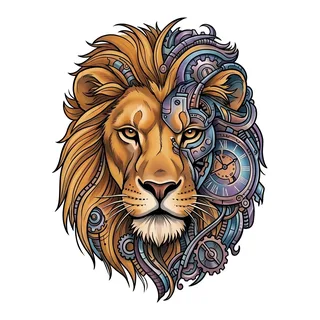
- biomechanical · colourTry it on — Color biomechanical lion tattoo on a man's hand
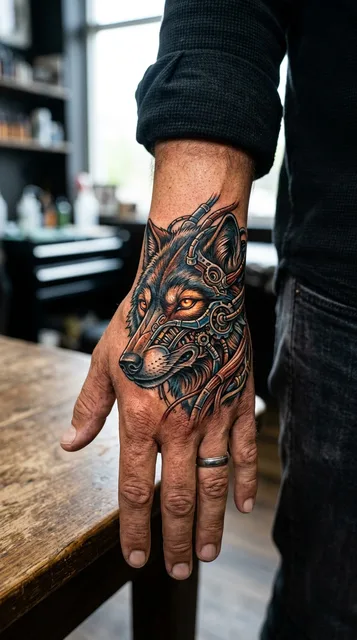
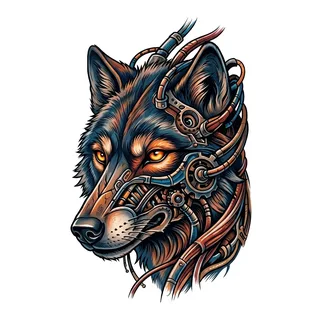
- biomechanical · colourTry it on — Color biomechanical wolf tattoo on a man's hand
- fine line · black and whiteTry it on — Black and white fine line coyote tattoo on a woman's hand
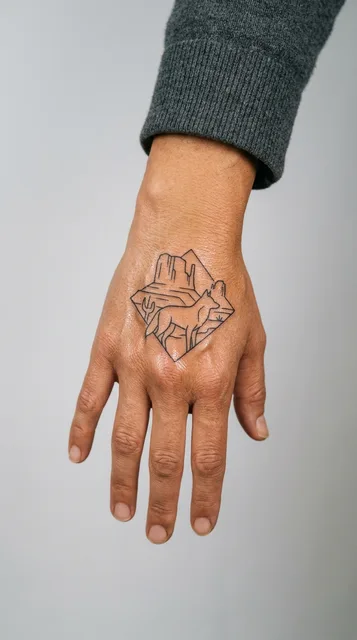
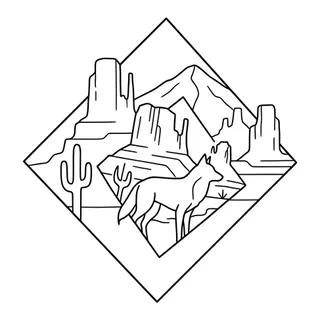
- illustrative · black and greyTry it on — Black and grey illustrative dragon tattoo on a man's hand
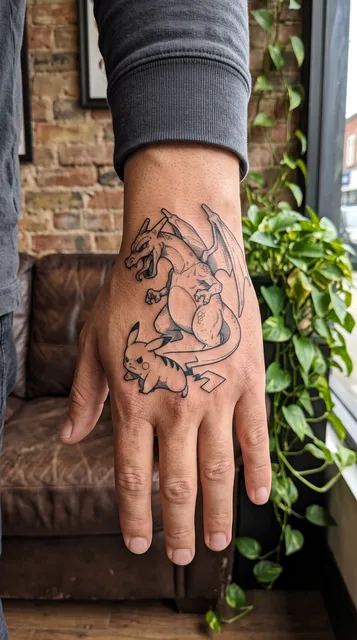
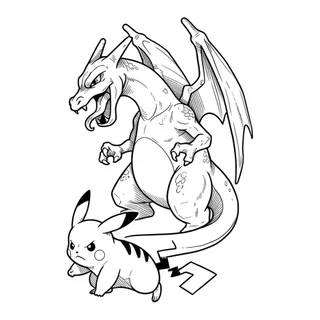
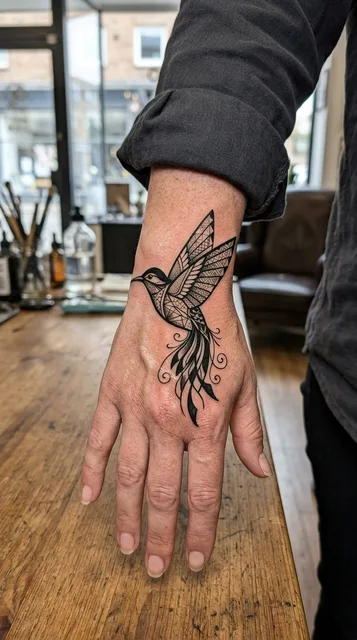
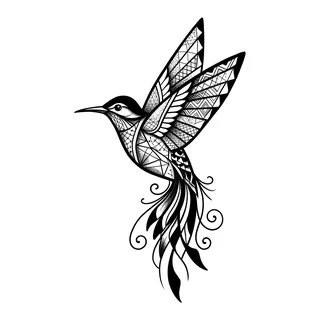
- blackwork · black and whiteTry it on — Black and white blackwork hummingbird tattoo on a woman's hand (2 of 2)
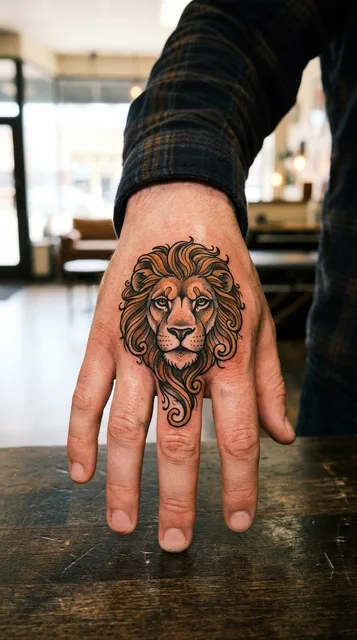
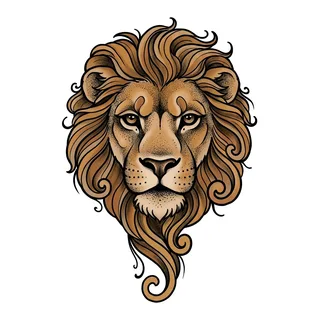
- neo traditional · colourTry it on — Color neo traditional lion tattoo on a man's hand
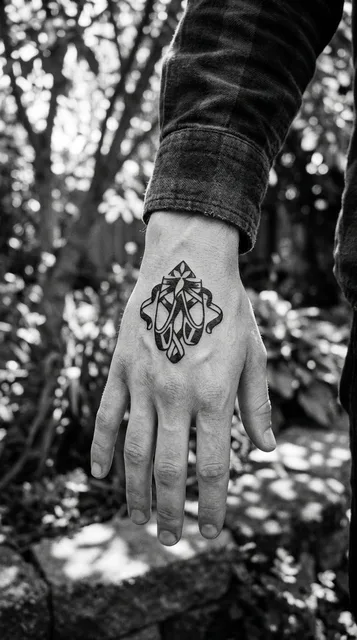
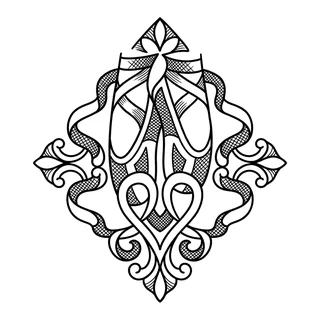
- ornamental · black and greyTry it on — Black and grey ornamental ballet shoes tattoo on a man's hand
- linework · black and whiteTry it on — Black and white linework kingfisher tattoo on a man's hand (2 of 2)
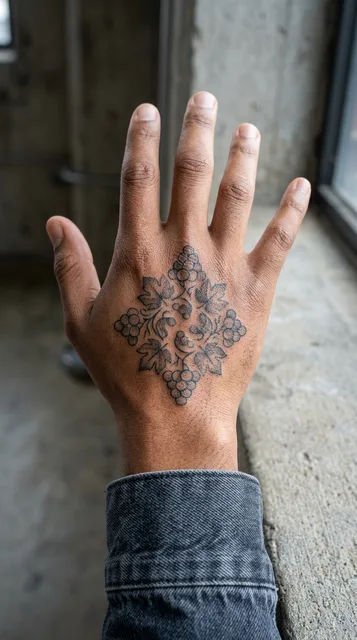
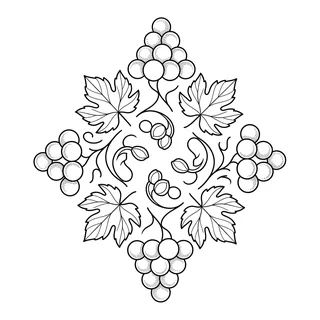
- dotwork · black and greyTry it on — Black and grey dotwork vine tattoo on a man's hand
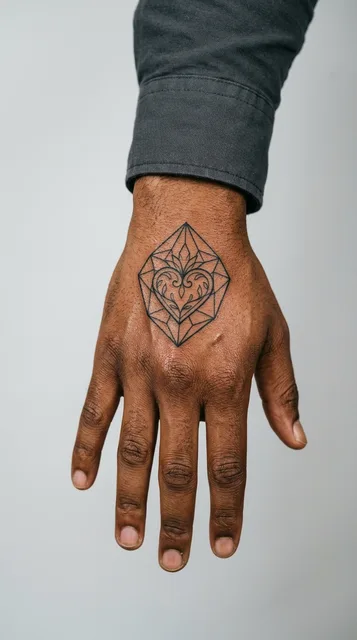
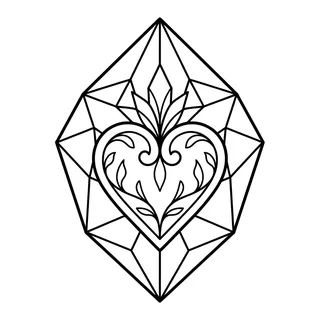
- linework · black and whiteTry it on — Black and white linework heart tattoo on a man's hand
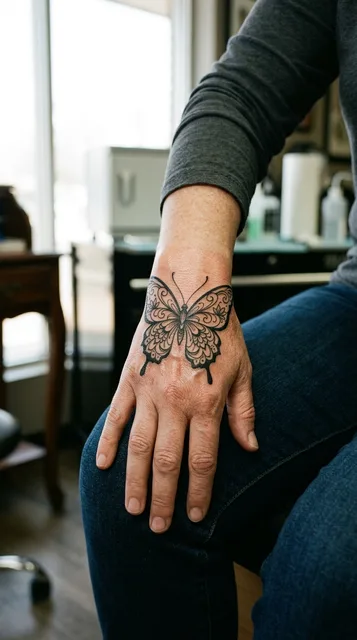
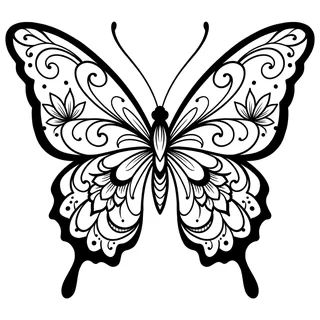
- ornamental · black and greyTry it on — Black and grey ornamental butterfly tattoo on a woman's hand
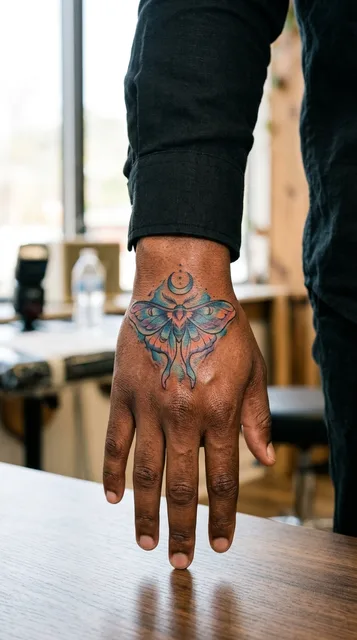
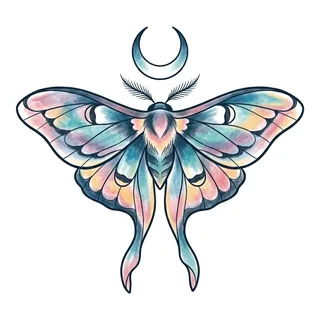
- watercolor · colourTry it on — Color watercolor moth tattoo on a man's hand
- illustrative · black and greyTry it on — Black and grey illustrative faces tattoo on a man's hand
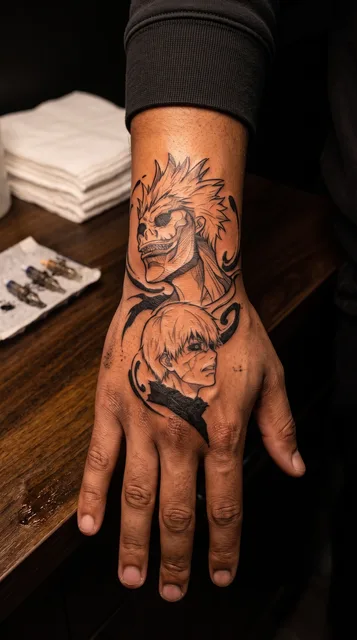
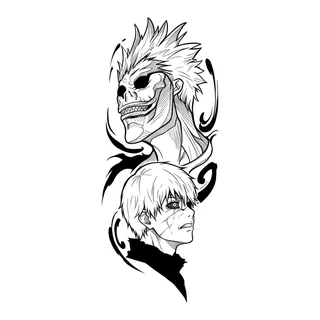
- blackwork · black and whiteTry it on — Black and white blackwork ornament tattoo on a woman's hand
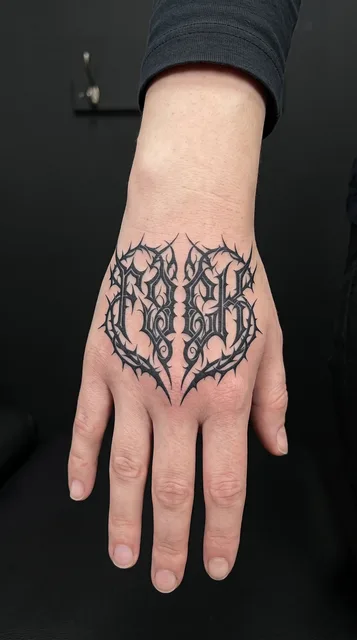
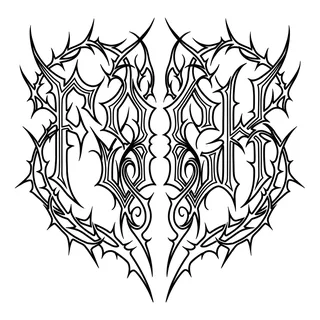
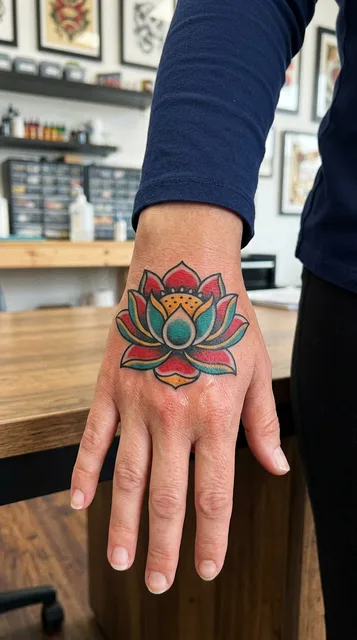
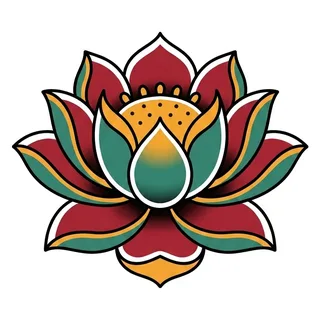
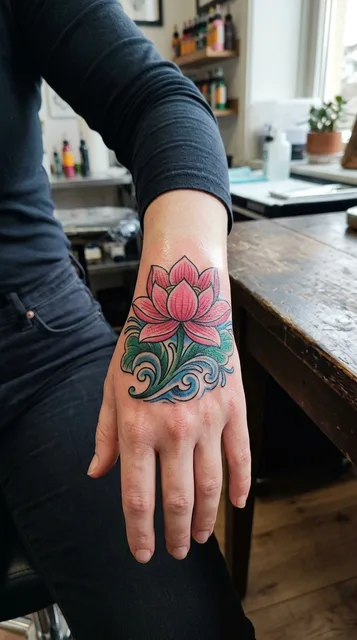
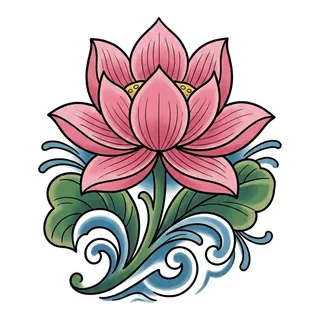
- traditional · colourTry it on — Color traditional lotus tattoo on a woman's hand (1 of 2)
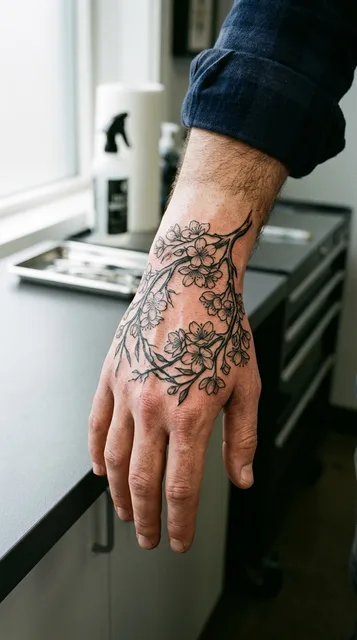
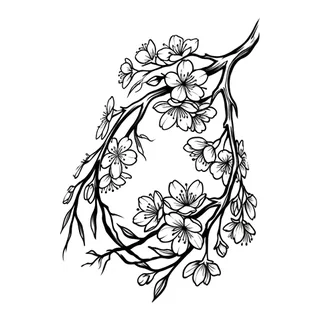
- blackwork · black and whiteTry it on — Black and white blackwork cherry blossom tattoo on a man's hand
- ornamental · black and greyTry it on — Black and grey ornamental crow tattoo on a woman's hand
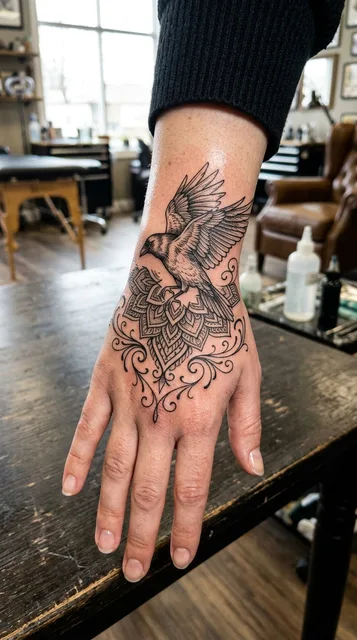
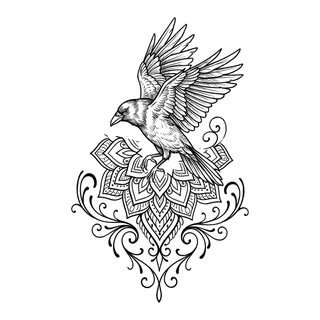
- dotwork · black and greyTry it on — Black and grey dotwork kiwi bird tattoo on a man's hand
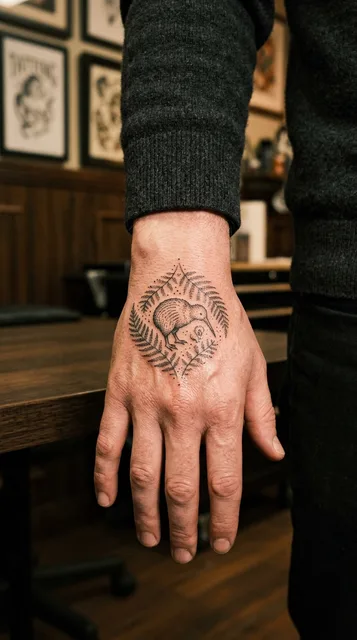
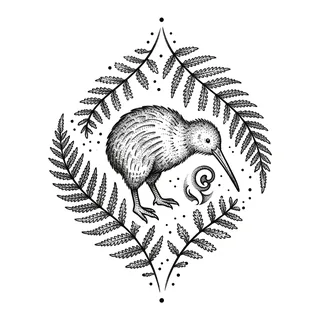
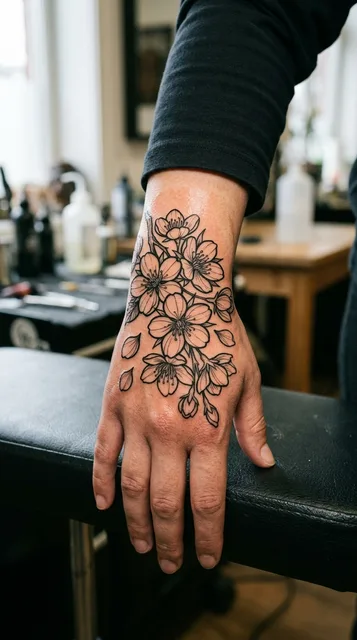
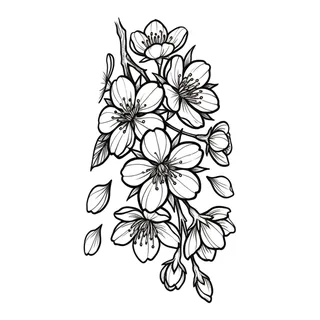
- blackwork · black and whiteTry it on — Black and white blackwork cherry blossom tattoo on a woman's hand
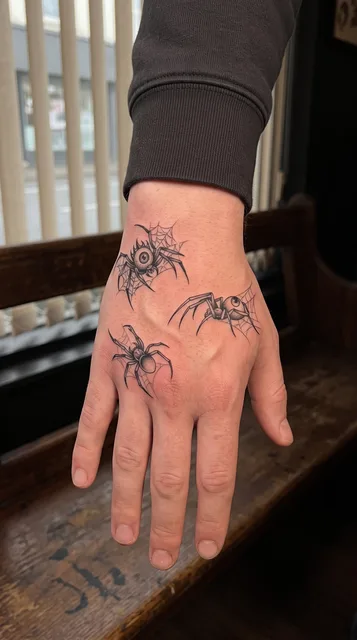
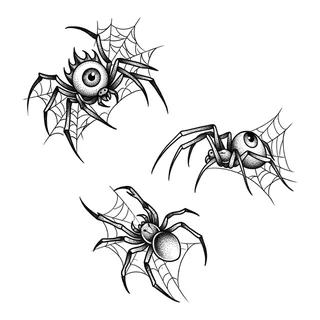
- dotwork · black and greyTry it on — Black and grey dotwork spider tattoo on a man's hand
- geometric · colourTry it on — Color geometric star tattoo on a man's hand
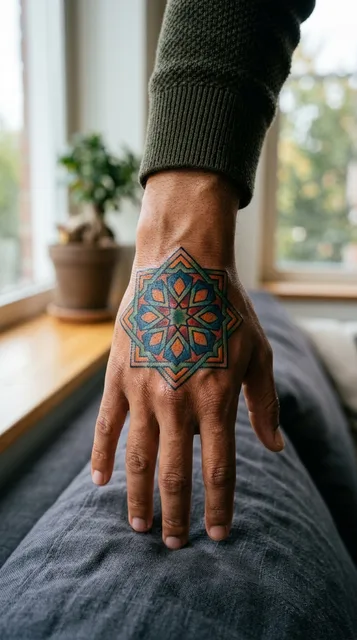
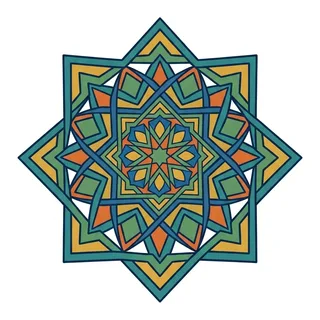
- illustrative · colourTry it on — Color illustrative phoenix tattoo on a woman's hand
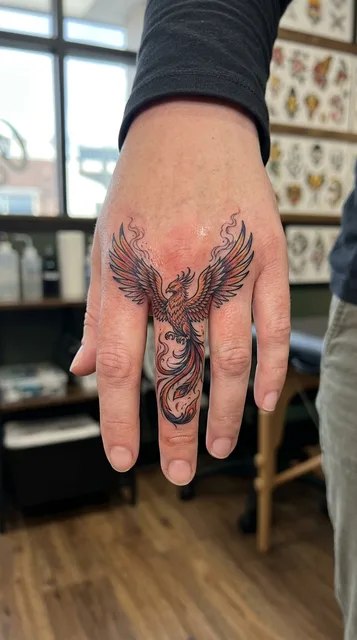
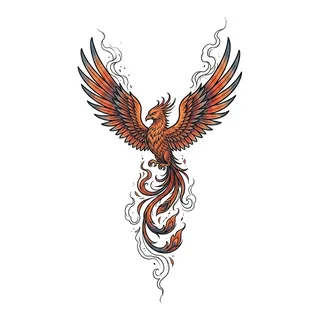
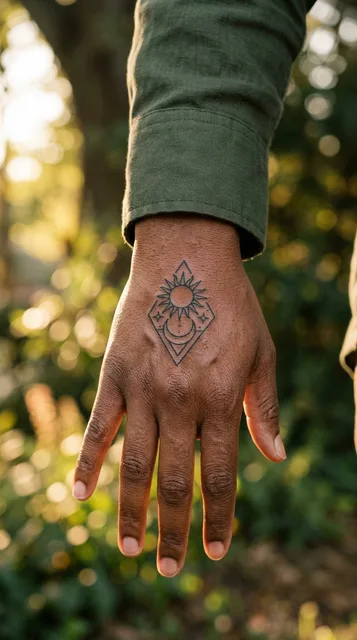
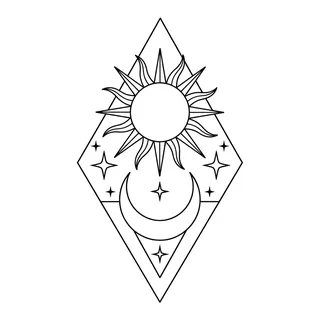
- linework · black and whiteTry it on — Black and white linework sun tattoo on a man's hand
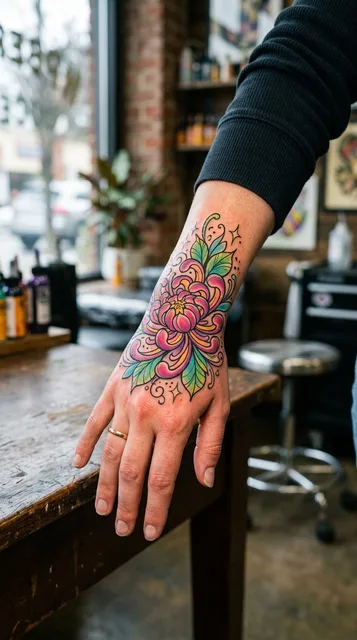
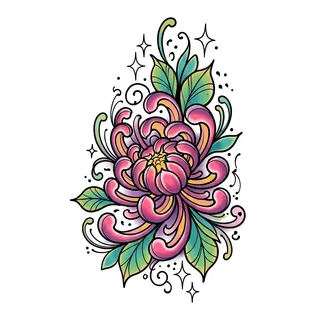
- new school · colourTry it on — Color new school chrysanthemum tattoo on a woman's hand
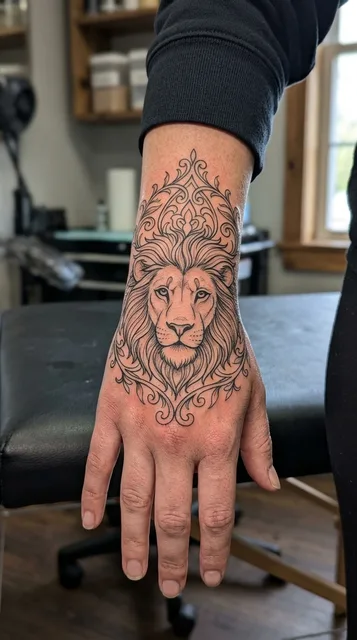
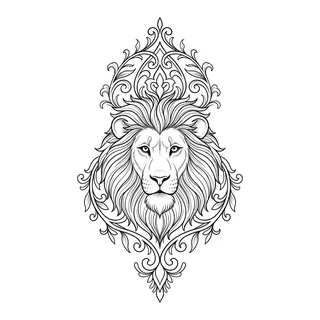
- ornamental · black and greyTry it on — Black and grey ornamental lion tattoo on a woman's hand
- traditional · colourTry it on — Color traditional lotus tattoo on a woman's hand (2 of 2)
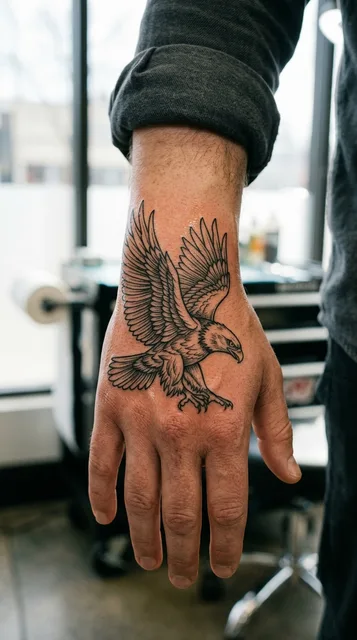
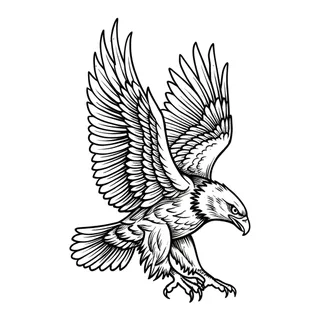
- illustrative · black and greyTry it on — Black and grey illustrative eagle tattoo on a man's hand
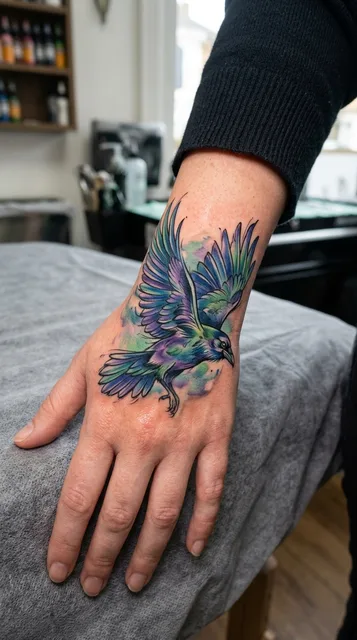
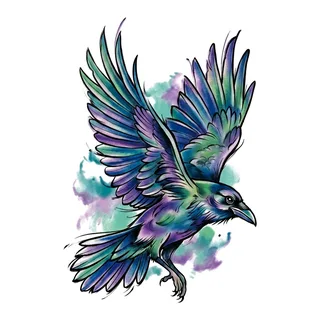
- watercolor · colourTry it on — Color watercolor raven tattoo on a woman's hand
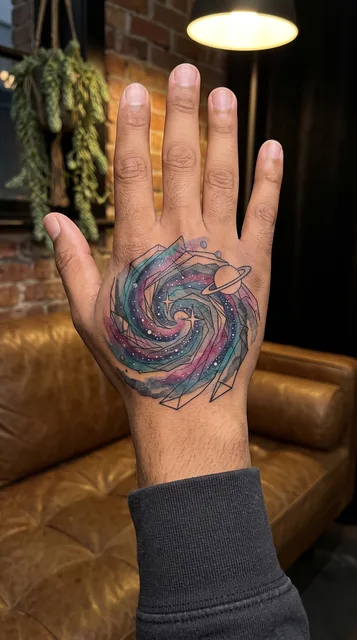
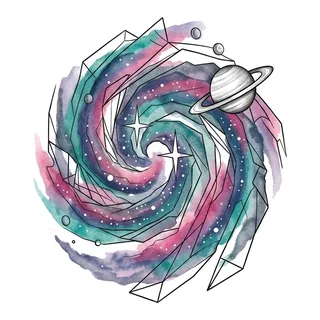
- illustrative · colourTry it on — Color illustrative galaxy tattoo on a man's hand
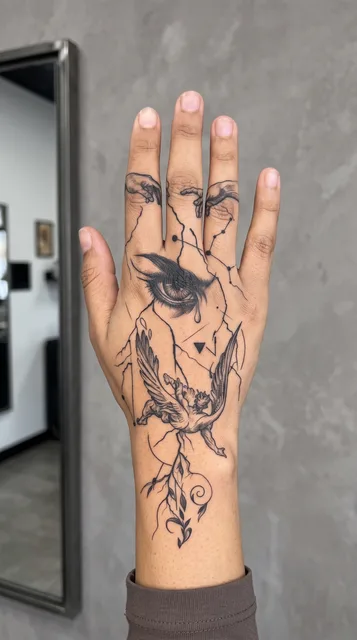
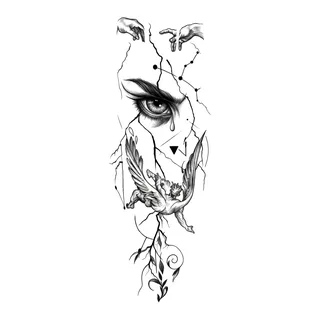
- illustrative · black and greyTry it on — Black and grey illustrative angel eye tattoo on a woman's hand
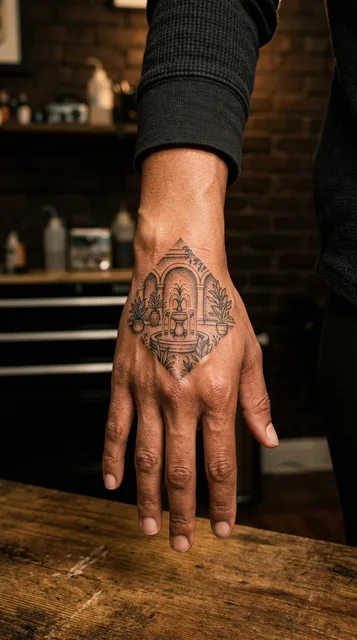
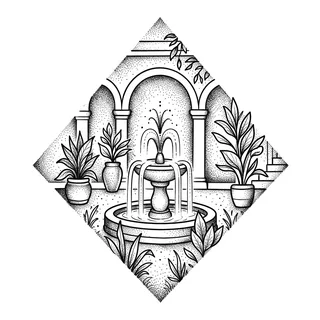
- dotwork · black and greyTry it on — Black and grey dotwork fountain tattoo on a man's hand
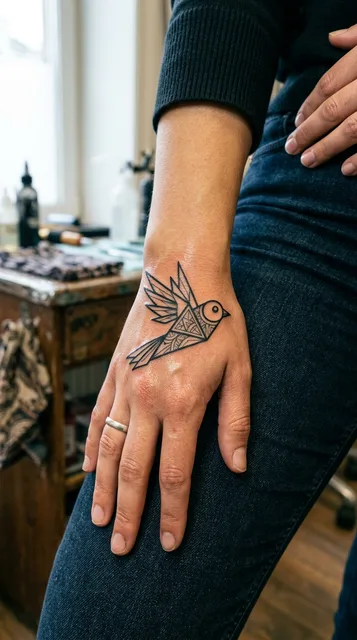
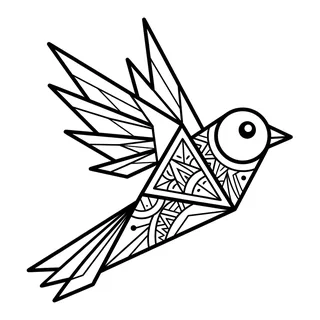
- geometric · black and whiteTry it on — Black and white geometric bird tattoo on a woman's hand
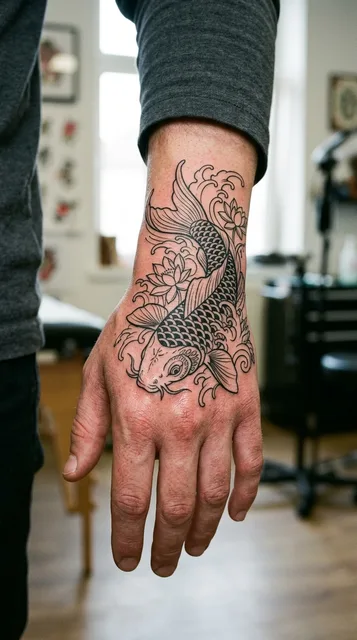
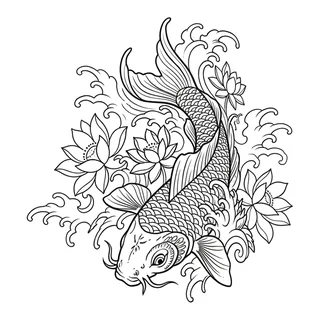
- ornamental · black and greyTry it on — Black and grey ornamental koi fish tattoo on a man's hand
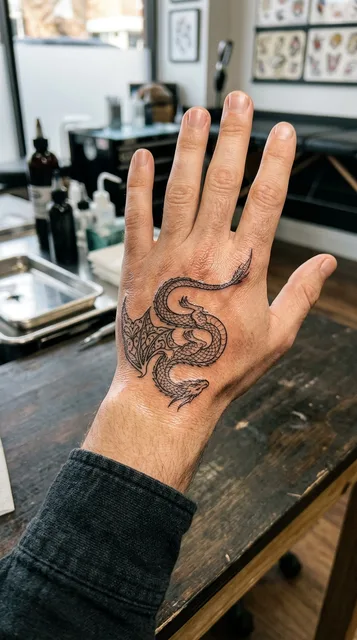
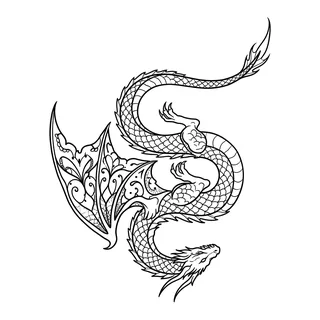
- fine line · black and whiteTry it on — Black and white fine line dragon tattoo on a man's hand
- dotwork · black and greyTry it on — Black and grey dotwork warrior tattoo on the hand
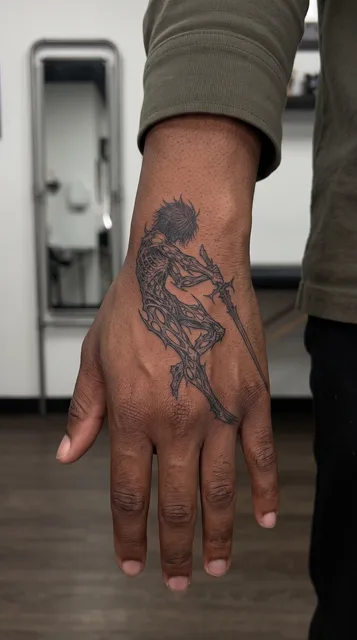
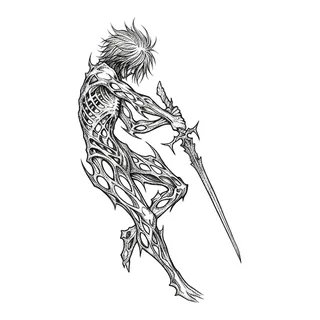


Every pair is one tattoo: the design as it was drawn, and a photograph of that same design on the hand.
These 46 hand tattoos, by the numbers
- Styles represented
- illustrative (7), blackwork (6), dotwork (6), ornamental (6), linework (5), traditional (4)
- Black-and-grey vs colour
- 65% black-and-grey, 35% colour
- Shown on
- 20 feminine, 25 masculine presentation
Counted from the 46 tattoos shown on this page. Every design was drawn for InkCraft and photographed on this placement — none are scraped or reposted. Free to reference with a link to this page.
How a hand tattoo wears
Hands are worked constantly, washed constantly and exposed to sun constantly, and every one of those things pulls ink out of the skin. The back of the hand holds a design better than the fingers or the palm, because the skin there is thinner over bone but stable — it is not being stretched and abraded the way the palm is. Even so, most hand tattoos need a touch-up within two or three years, and any artist who tells you otherwise is selling.
The shape of the hand rewards designs that follow it. The metacarpals fan out from the wrist toward the knuckles, which gives you natural lines running lengthwise, and a design that ignores them tends to sit on the hand rather than belong to it. Ornamental and geometric work does especially well here for that reason: it can be built around the tendons instead of fighting them. A dense, detailed illustration usually does worse, because the fine internal detail is the first thing to blur.
The other thing the hand does is move. Skin over the knuckles stretches by a third when you make a fist, so anything crossing them will distort in use and settle slightly differently once healed. That is not a flaw to design around so much as a fact to design with — bold linework tolerates it, fine stippling does not.
Pain and healing
It hurts, and specifically it hurts in a nerve-dense, bony way rather than a dull one: there is almost no fat between the needle and the metacarpals, and the ulnar nerve branches run close to the surface on the little-finger side. Healing is complicated by the fact that you cannot stop using your hands — washing, gripping and sweating all interfere, and the standard advice to keep a fresh tattoo clean and dry is close to impossible here. Expect a longer, patchier heal than the same design would have on an arm, and plan for a touch-up rather than treating one as a failure.
The tattoo pain chart ranks the hand against the other twenty-five body parts on this site, and says why. The aftercare guide has a row for healing a hand tattoo specifically: what gets in the way here, and the one thing to do about it.
Choosing a design that suits it
- Bold, closed linework survives; fine open stippling and hairline detail rarely does. If you want delicacy, the wrist or forearm will hold it and the hand will not.
- Designs that run lengthwise along the metacarpals sit better than ones placed square across the back of the hand.
- Leave the knuckles and the web between thumb and forefinger alone unless you specifically want the wear that comes with them — both are high-movement, high-friction areas.
- Symmetrical or ornamental work reads well because the hand itself is symmetrical; a single off-centre motif tends to look misplaced rather than deliberate.
Size, cost and who sees it
How big, and what it costs
Most back-of-hand pieces are a two to four hour sitting — small enough to finish in one go, detailed enough that rushing shows. Expect a shop minimum at the low end and a half-day rate for anything covering the full back of the hand. Budget for a touch-up at the eighteen-month mark; many artists include the first one, and it is worth asking before you book rather than after.
Who will see it
There is no hiding a hand tattoo. Long sleeves do not cover it, and it is the part of you that reaches across a desk, holds a menu, and appears in every handshake. Attitudes have shifted a long way, but customer-facing and conservative professions are still where people report friction — worth being honest with yourself about, because unlike a shoulder piece this is not a decision you can defer wearing.
What to ask your artist
- How will this specific design age on a hand — which parts will blur first?
- Do you include a touch-up, and at what point would you want to see it again?
- Would you thicken any lines to account for spread, and can I see the adjusted drawing?
- How should I handle washing and gripping during the first two weeks, given I cannot avoid either?
Prices vary widely by city and artist — treat these as session lengths rather than quotes, and expect a shop minimum on anything small. The cost guide puts the hand in a table with the other twenty-five placements.
Common questions
Do hand tattoos really fade faster?
Yes, measurably. Sun exposure, frequent washing and constant abrasion all break ink down, and the hand gets all three more than anywhere else on the body. A hand piece that is touched up every few years stays sharp indefinitely; one that is never touched up will look noticeably softer within five.
Will an artist refuse to tattoo my hand?
Some will, particularly if it would be your first tattoo. It is not squeamishness — hands are technically demanding, they heal unpredictably, and an artist does not want their work judged on a placement that fights them. If you are turned down, ask what they would want to see first rather than treating it as a no.
How do you heal a hand tattoo?
Treat it as a two-week project rather than an afterthought, because the hand breaks every rule of aftercare by being used. Wash it two or three times a day with unscented soap and lukewarm water, pat it dry with a clean paper towel, and keep a thin layer of unscented ointment on it for the first three days before switching to plain lotion. Wear gloves for dishes and cleaning, skip anything that grips at the gym, and keep it out of the sun. It will scab and flake more than an arm piece would; do not pick, and book the touch-up for about six weeks out, when the skin has settled enough to show what actually held.
Is the palm different from the back of the hand?
Completely. Palm skin regenerates far faster and sheds ink with it, so palm tattoos fade dramatically within months and are usually treated as deliberately temporary. Everything above describes the back of the hand.
See it on your own hand
InkCraft places a design on a photo of you — scaled, wrapped and shaded to the placement you pick, so you can judge it before it is permanent.