 InkCraft
Tattoo styles
By Uladzimir TumanauUpdated
A style is a set of rules about line, shading and colour, and it decides how a tattoo ages more than the subject does. These are every style with enough of our own designs to show, largest set first, with what each one is and where it sits well.
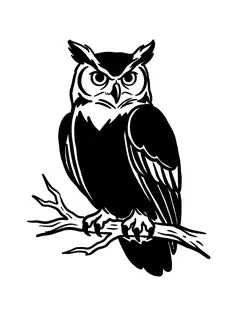
Blackwork tattoos
48 designs
Large areas of solid black, with the skin left bare doing as much work as the ink. It stays readable longer than anything else and leaves you the least room to change your mind.
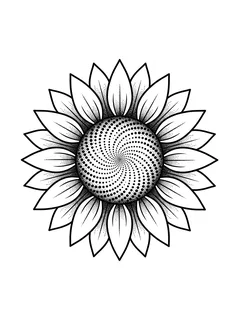
Dotwork tattoos
48 designs
Every tone here is thousands of separate points, placed by hand and spaced by eye. It is the slowest way to shade a tattoo and the one that survives longest.
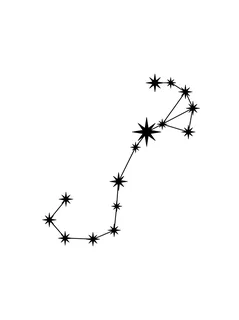
Fine line tattoos
48 designs
A style defined by the needle rather than by the drawing. One or three needles instead of nine, laid in a slower, lighter pass, which buys detail no other style can hold and costs durability no other style gives up.
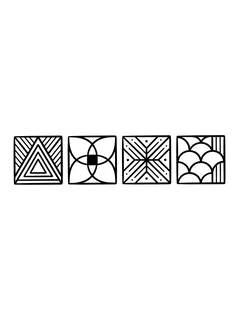
Geometric tattoos
48 designs
Built from repeated shapes and exact symmetry, which is the one thing a human body does not offer. Getting the placement right matters more here than the drawing does.
Illustrative tattoos
48 designs
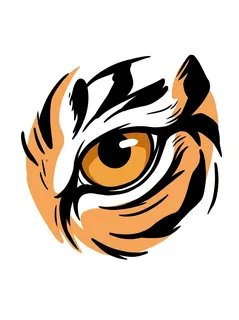
Drawn the way a book plate is drawn: a clear light source, full shading, and a subject that reads as a picture of a thing rather than as a symbol for it. It is the largest set in this library.
Japanese tattoos
48 designs
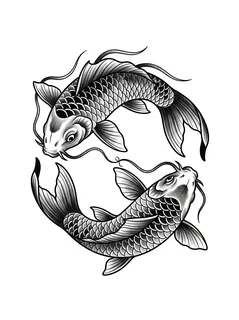
A grammar rather than a look. The subject is only half of it: the wind, water and cloud behind it are what make the piece sit on a shoulder instead of floating on one.
Linework tattoos
48 designs
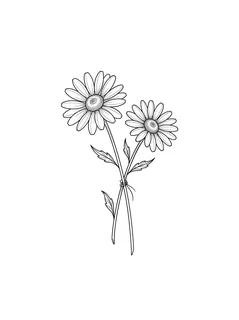
No shading, no fill, nothing to hide behind. A linework piece is a drawing reduced to its structure, which makes it the most flexible style for placement and the least forgiving of a wobble.
Minimalist tattoos
48 designs
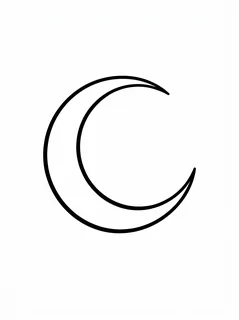
A drawing reduced to the fewest lines that still carry it, with no shading at all. It is the most requested style in tattooing and the least forgiving, because a design with nothing spare has nothing left to lose when the ink spreads.
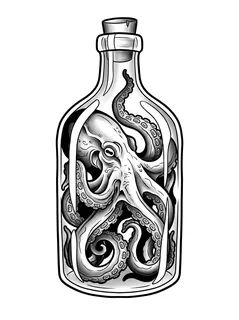
Neo-traditional tattoos
48 designs
Keep the outline that makes traditional work last, then open everything it restricted: the palette, the subject, the amount of detail inside the line. That trade is the whole style.
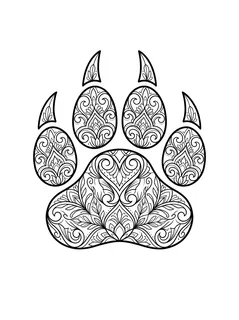
Ornamental tattoos
48 designs
Borrowed from jewellery and architecture rather than from pictures. There is no subject here, which means where it sits is not a detail of the design — it is the design.
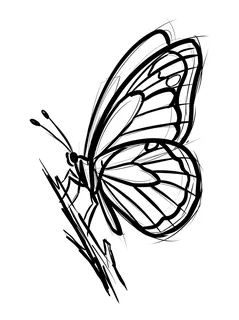
Sketch style tattoos
48 designs
Construction lines left visible, strokes that overshoot, corrections still on the page. It looks like a sketchbook rather than a finished illustration, and that is the intention rather than an accident.
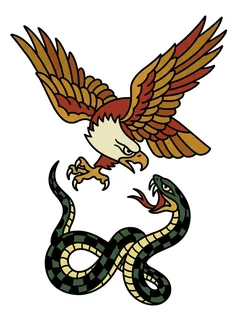
Traditional tattoos
48 designs
The style that has not needed to change in a century, because it was built around what skin does to ink rather than around what looks best on the day it heals.
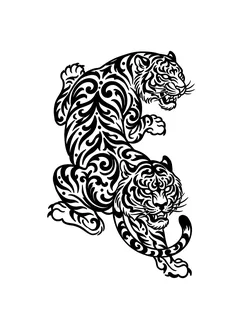
Tribal tattoos
48 designs
No shading, no colour, no interior. A tribal piece is a black shape, and everything that makes it good or bad happens at its edge.
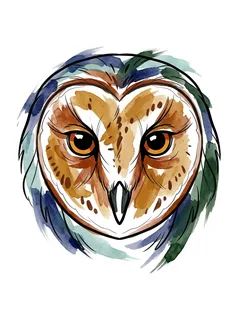
Watercolor tattoos
48 designs
Soft edges, colour that bleeds past its own shape, often no outline at all. It is the most painterly thing you can put on skin and the style that asks the most of both the artist and the aftercare.
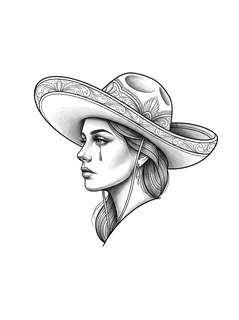
Chicano tattoos
32 designs
Mexican-American, and defined by an absence: there is no outline anywhere in it. The drawing is held together entirely by soft greywash, which is the technical opposite of everything American traditional does.
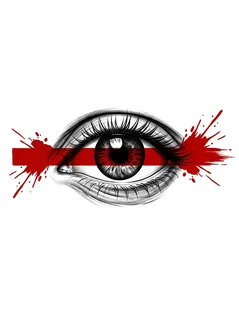
Trash polka tattoos
30 designs
Two colours only, red and black, and two registers at once: something carefully rendered and something violently applied over it. The collision is the style, not a decoration on it.
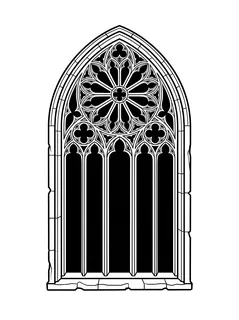
Gothic tattoos
29 designs
The word names a period of building before it names a mood, and that is the useful distinction: a gothic tattoo is structural, not simply dark. The pointed arch is the whole of it.
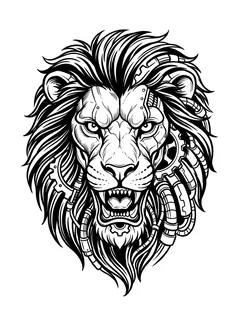
Biomechanical tattoos
27 designs
The skin opened to show machinery underneath. It is the only major style whose design cannot be finished before the artist has seen the limb it is going on, because the illusion is made of your own anatomy.
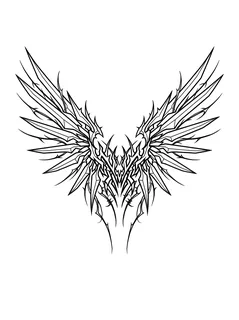
Cybersigilism tattoos
26 designs
A style with a traceable birthday rather than a tradition: 1990s digital vector art, revived on social media around 2021, and now one of the most-requested looks in tattooing despite being barely four years old in studios.
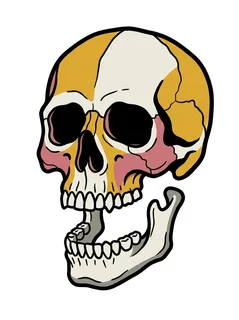
New school tattoos
22 designs
The 1990s answer to traditional tattooing: the same heavy outlines and solid colour, aimed at cartoon proportions instead of flash-sheet ones. Exaggerated, saturated, and built on the one thing that actually survives.
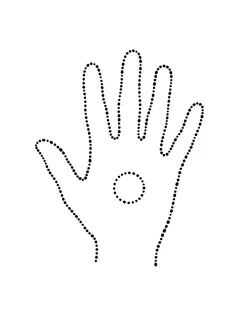
Stick and poke tattoos
22 designs
No machine: a needle held in the hand, one dot at a time, which is how every tattoo was made for most of human history. The look follows from the method and cannot be faked by a machine.
What a style actually decides
People choose a subject first and a style last, and the style is the decision that lasts. A rose can be drawn in any style on this page. Whether it still reads as a rose in fifteen years is decided by the line weight, the amount of solid black and the distance between the marks, and those are exactly what a style fixes. Traditional work survives decades because its rules were written by people who watched tattoos age; fine line is young, and its long-term record is still being written on the arms of the people who chose it.
The styles below split into a few families. Line styles, which are linework, fine line, minimalist and geometric, carry the design in the outline alone and are the only ones that are stencils in the strict sense. Solid styles, which are blackwork, tribal, dotwork and ornamental, build from black mass or texture. Shaded styles, illustrative, realism, sketch and chicano, model form in grey. Colour styles, traditional, neo-traditional, Japanese, watercolour, new school, anime and trash polka, each have a fixed relationship between outline and pigment that is the style. The rest are traditions with their own grammar: gothic, cybersigilism, stick and poke, biomechanical, surreal.
Choosing one for a body part
Fine line and minimalist work want flat, protected, low-friction skin: the inner forearm, the ribs, the collarbone, the back. On a finger, a hand or a foot the lines close up and the piece is gone within years. Bold traditional and blackwork are the opposite: they read through hair, survive sun, and are the right answer for the forearm of someone who works outdoors. Dotwork and ornamental want a surface that stays still, which rules out joints. Realism wants size and a surface that does not stretch, so the thigh, the bicep and the back, never the stomach.
The other question is distance. A style that reads from across a room, traditional, blackwork, tribal, is a different object from one that rewards being looked at from thirty centimetres, which is fine line, dotwork and realism. Neither is better. A visible forearm piece is seen at arm's length by strangers all day; a rib piece is seen close, by few people, on purpose. Match the style to the distance at which the tattoo will actually be looked at, and most of the regret people describe about styles disappears.
Mixing styles, and when not to
One body can carry several styles; one composition mostly cannot. A fine line piece beside a bold traditional one reads as two tattoos, which is fine if that was the plan and a problem if the plan was a sleeve. Styles with the same outline weight mix well: traditional with neo-traditional, illustrative with dotwork, geometric with linework. Styles with different outline weights fight, and the finer one always loses, because the eye goes to the heavier line.
Every style page below shows the designs we drew in that style, on skin where we have the photographs, and says what the style costs in sessions, pain and touch-ups. The counts are live: a style is listed here only when it holds enough of our own work to be worth a page, so a small count means a young set, not a bad style. Any design on any of them can be placed on a photo of your own skin first, which is the quickest way to find out whether a style you like on a screen is a style you like on yourself.
Common questions
- Which tattoo style lasts the longest?
- Bold styles with heavy outlines and solid black: American traditional, blackwork and tribal. Their lines are thick enough to spread a little over decades without closing, and solid black fades more slowly than grey or colour. Fine line and watercolour show change soonest and are refreshed most often.
- What is the most popular tattoo style?
- By searches, traditional and fine line lead in the US, with Japanese, tribal and watercolour behind them. By what is actually on skin, illustrative black and grey is the largest group in most studios and in our own set, because it suits almost any subject and ages well when the lines are kept clean.
- Can one tattoo be two styles?
- Only if the two share an outline weight. Traditional and neo-traditional mix; dotwork and illustrative mix; fine line and blackwork do not, because the heavier line takes the eye and the finer one reads as unfinished beside it. Two styles on one body, on separate pieces, is a different matter and is common.
- Which style should a first tattoo be?
- One with a clear outline: traditional, illustrative, linework or blackwork. Those forgive the small movements of a first sitting, heal predictably and still read if the piece softens. Fine line and watercolour depend on a steady artist and a protected placement and are better second tattoos than first ones.
See a style on your own skin first
InkCraft places any design on a photo of you — scaled, wrapped and shaded to the spot you pick — so a style you like on a screen can be judged on yourself before it is permanent.