 InkCraft
Jellyfish Tattoo Ideas, Designs and Meaning
12 original jellyfish designs drawn for InkCraftBy Uladzimir TumanauUpdated
Jellyfish have no brain, no heart and no bones and have drifted through the sea for over half a billion years, which is most of what wearing one means. Tentacles are the design problem: parallel lines creep together as ink settles, so their spacing matters more than their number.
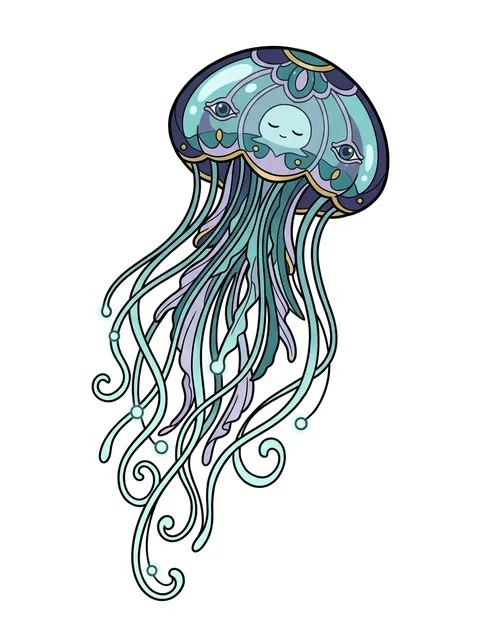
Color anime jellyfish tattoo design Try it on — Color anime jellyfish tattoo design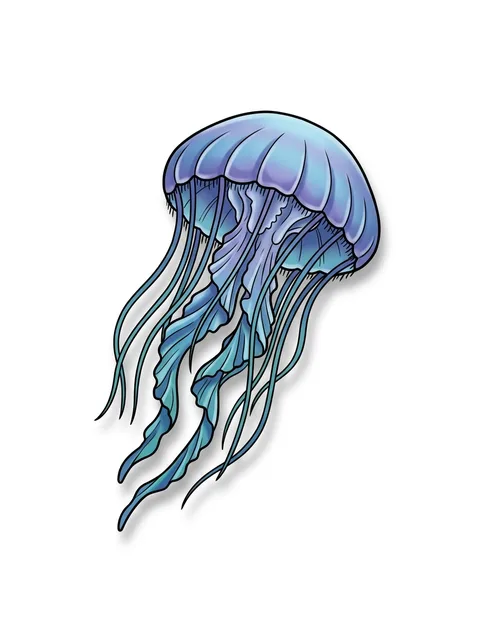
Color 3D jellyfish tattoo design Try it on — Color 3D jellyfish tattoo design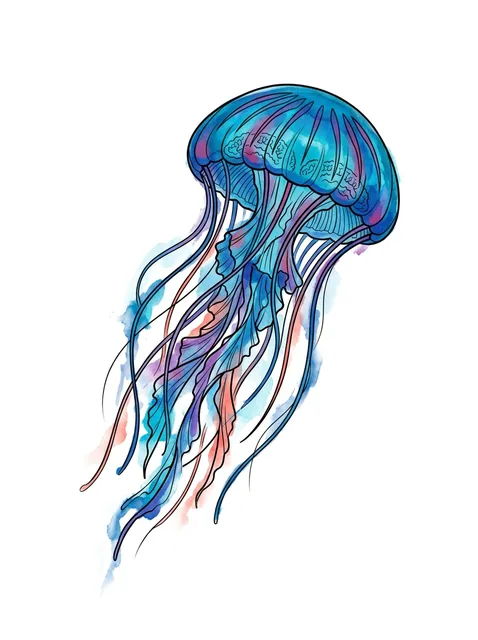
Color watercolor jellyfish tattoo design Try it on — Color watercolor jellyfish tattoo design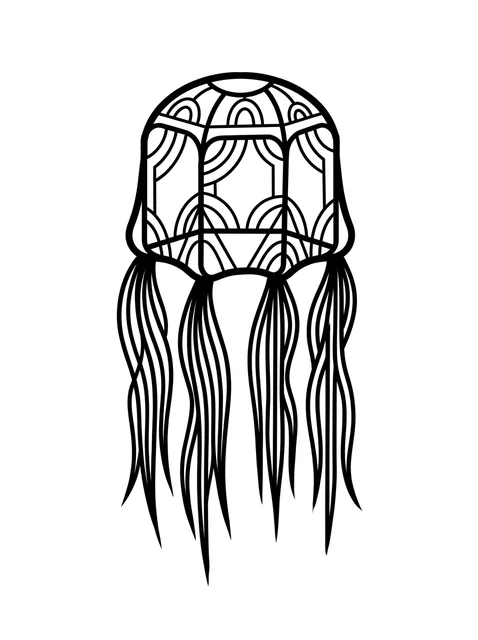
Black and white geometric jellyfish tattoo design, outline stencil Try it on — Black and white geometric jellyfish tattoo design, outline stencil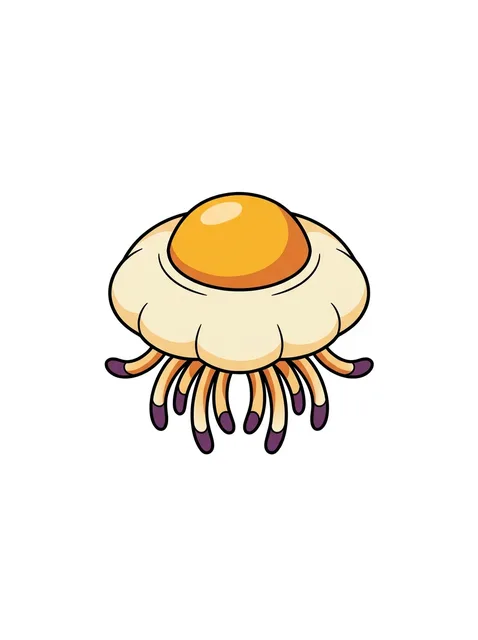
Color neo traditional jellyfish tattoo design: a raised yolk-yellow and orange dome Try it on — Color neo traditional jellyfish tattoo design: a raised yolk-yellow and orange dome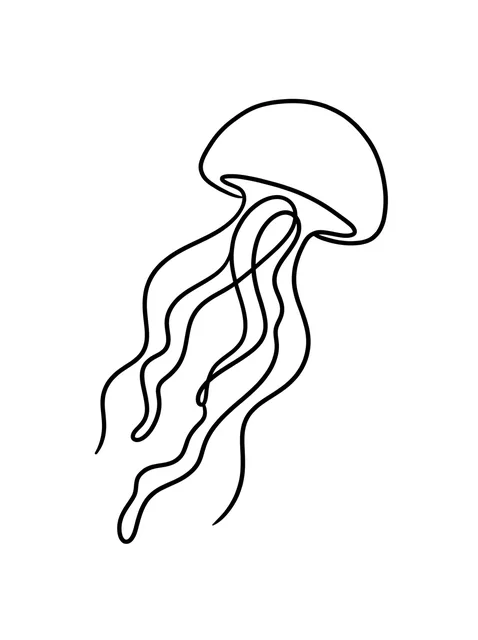
Black and white minimalist jellyfish tattoo design, outline stencil Try it on — Black and white minimalist jellyfish tattoo design, outline stencil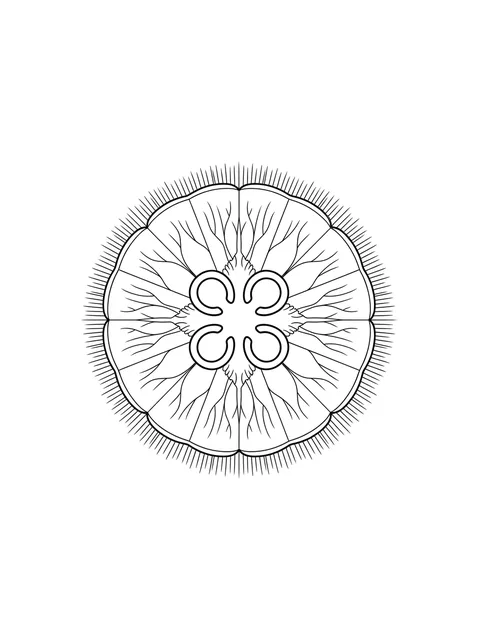
Black and white fine line jellyfish tattoo design, outline stencil Try it on — Black and white fine line jellyfish tattoo design, outline stencil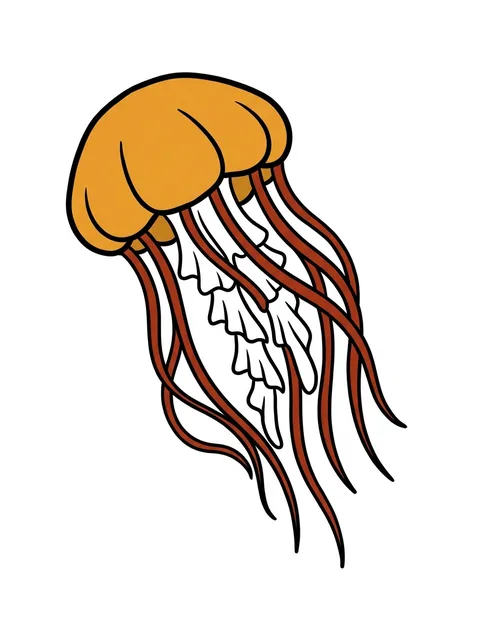
Color traditional jellyfish tattoo design Try it on — Color traditional jellyfish tattoo design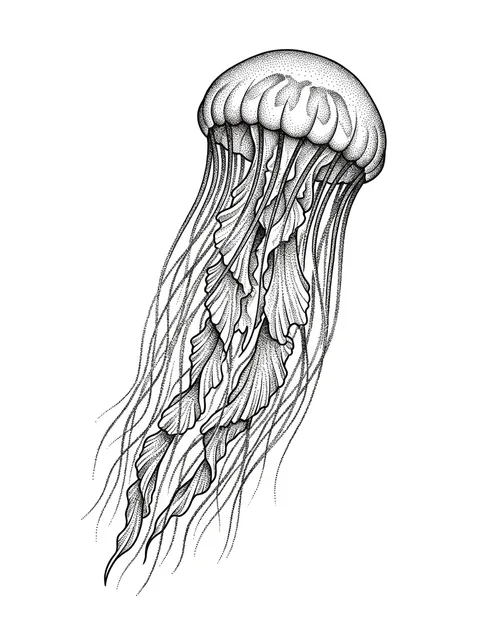
Black and grey dotwork jellyfish tattoo design Try it on — Black and grey dotwork jellyfish tattoo design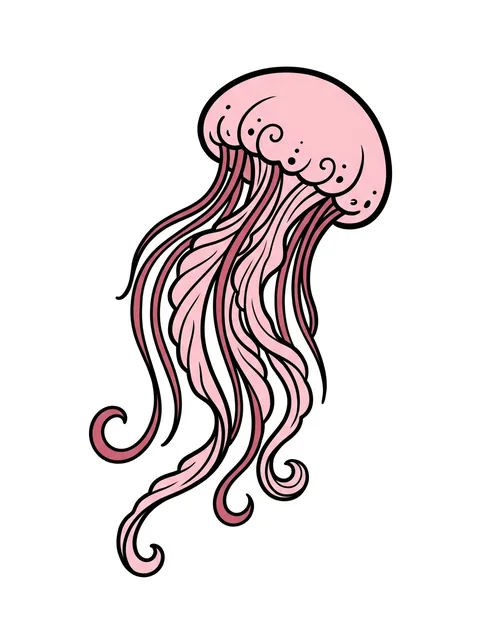
Color Japanese jellyfish tattoo design Try it on — Color Japanese jellyfish tattoo design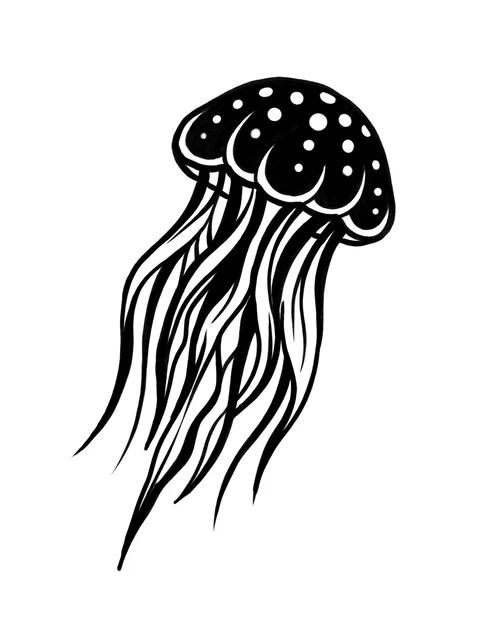
Black and white blackwork jellyfish tattoo design: a solid black bell dotted Try it on — Black and white blackwork jellyfish tattoo design: a solid black bell dotted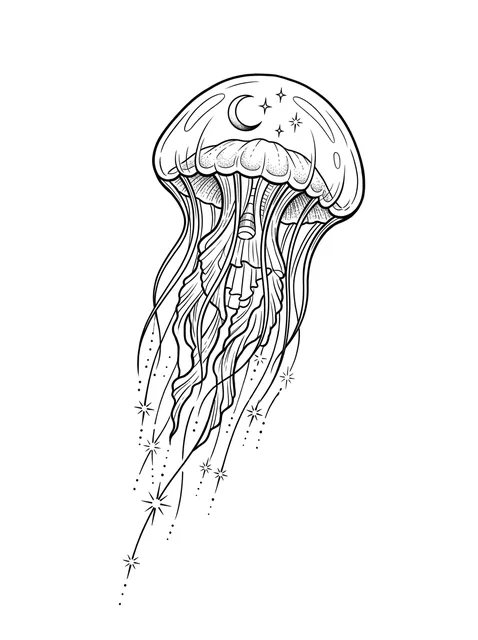
Black and white fine line jellyfish and moon tattoo design, outline stencil Try it on — Black and white fine line jellyfish and moon tattoo design, outline stencil


Tap any design to see it on your own skin in the try-on — no signup.
This set of 12 jellyfish designs, by the numbers
- Styles represented
- fine line (2), anime (1), 3d (1), watercolor (1), geometric (1), neo traditional (1)
- Black-and-grey vs colour
- 50% black-and-grey, 50% colour
- Most often drawn with
- moon, star
Counted from the 12 designs shown on this page. Every one was drawn for InkCraft — none are scraped or reposted. Free to reference with a link to this page.
What a jellyfish tattoo means
What a jellyfish offers is survival without force. It has no brain, only a net of nerves spread through the bell, and no heart or blood; it pulses to stay up and lets the current do most of the travelling. Burgessomedusa, a swimming jellyfish described in 2023 from fossils in the Burgess Shale of British Columbia, lived about 505 million years ago, so the animal is a standing argument that going with the water works. It suits a stretch of life in which pushing back failed and drifting did not.
The sting gives it an edge that the softness hides. A jellyfish does not chase anything the size of a person; its stinging cells fire when something brushes against them, and they go on firing in a jellyfish washed up dead on the sand, because the defence needs no intention behind it. Worn that way it is a boundary, gentle to look at and costly to handle, a warning given only to whoever reaches out.
Renewal belongs to one species in particular. Turritopsis dohrnii, a jellyfish a few millimetres across, can turn its adult body back into a polyp when injured or starved and grow up all over again, which earned it the name immortal jellyfish; biologists working in Italy documented the reversal in the 1990s. None of the designs here is that species, but the reading has attached itself to the whole animal.
Light is the last. Many jellyfish glow, and one of them, the crystal jelly Aequorea victoria, gave biology the green fluorescent protein that won Osamu Shimomura, Martin Chalfie and Roger Tsien the Nobel Prize in Chemistry in 2008. The moon-and-stars jelly on this page, its bell holding a crescent and its tentacles trailing into a scatter of tiny stars, draws on that: a soft thing that makes its own light in the dark.
Where the design comes from
Zoologists still call the free-swimming stage a medusa, after the Gorgon whose hair was snakes. The drawings behind most fine-line versions came much later: Ernst Haeckel's Kunstformen der Natur, issued in parts between 1899 and 1904, set jellyfish out like jewellery, and its best-known plate shows Desmonema annasethe, named for his first wife Anna Sethe, whose hair he said its tentacles recalled. In Japan, the Kojiki of 712 has the young land drifting like a jellyfish before the gods gave it shape. Arthur Conan Doyle made a lion's mane the killer in a 1926 Sherlock Holmes story, which is why the long-haired dotwork one here still carries a faint threat.
Choosing yours
- Pick the species, because each is a different shape. The moon jelly seen from above is a disc with four horseshoe rings, the only design here that wants a round field. The box jellyfish, drawn in panels of arches, reads almost as architecture; the fried egg jelly is a compact yolk-coloured dome; the sea nettle and the lion's mane are all trailing length.
- Tentacles are the problem of size. Where parallel lines sit closer than about a millimetre, the ink settles them together into one grey band over the years, so the single-line jelly with three tentacles holds at 6 cm while the lion's mane needs 18 cm or more. Wider spacing, not a bigger number of strands, is what saves a small design.
- The watercolour and 3D jellies depend on blue and violet washes that soften sooner than black, so keep a line under them.
Size, cost and placement
How big, and what it costs
The single-line jelly is shop-minimum work at 6 to 8 cm. The moon jelly needs 7 to 9 cm for its fine canals and one to two hours; the sea nettle, the pink jelly and the blackwork jelly sit at 12 to 15 cm and two to three hours. The stippled lion's mane, every strand built from dots, is four hours or more.
Where it sits, and how much it hurts
Trailing tentacles want length: the outer forearm, the calf, the spine, or down the side of the ribs, the sharpest of them. The moon jelly is a disc for the shoulder cap or the outer thigh.
What to ask your artist
- How many tentacles survive at your size, and how far apart they will sit.
- How the bell will read as clear without relying on white ink.
- Whether a black line will hold a colour wash once the blues soften.
Prices vary widely by city and artist — treat these as session lengths rather than quotes, and expect a shop minimum on anything small. The cost guide turns hours into money by size, placement and style.
Common questions
How is a see-through bell done in ink?
With skin rather than pigment, since ink has no transparency. The artist leaves the bell open inside a fine outline and shades only its folds and rim in light grey, as the moon jelly here is drawn. White highlights are usually the first thing to fade.
Which way should the tentacles point on a leg?
Downward, toward the ankle, with the bell high. A jellyfish swims bell first, so tentacles trailing down read as the animal rising along the calf or shin; turned the other way it looks as if it is sinking.
Is the box jellyfish the dangerous one?
Some are. Chironex fleckeri of northern Australia has killed swimmers, and box jellyfish carry twenty-four eyes in four clusters on the bell, remarkable in an animal with no brain. The geometric one here is drawn for its squared outline, not its venom.
Does the pink Japanese-style jellyfish mean something in Japan?
It is not one of the irezumi animals. In a folktale the Dragon King has the jellyfish beaten boneless for letting a monkey learn that its liver was wanted, and the pink one here simply puts Japanese line and flat colour on a Western subject.
See it on your skin before you commit
InkCraft places any of these designs on a photo of you — scaled, wrapped and shaded to the placement you pick.