 InkCraft
Galaxy Tattoo Ideas, Designs and Meaning
12 original galaxy designs drawn for InkCraftBy Uladzimir TumanauUpdated
A few of these are real galaxies, Andromeda with its two companions or a face-on spiral; most pour space into another outline, a whale, a heart, a corked bottle. Leave the stars as unshaded skin inside dark shading, since white ink fades toward yellow within years.
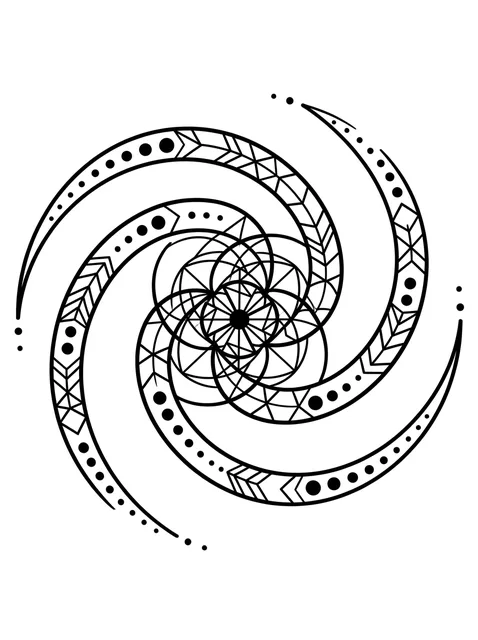
Black and white geometric galaxy tattoo design, outline stencil Try it on — Black and white geometric galaxy tattoo design, outline stencil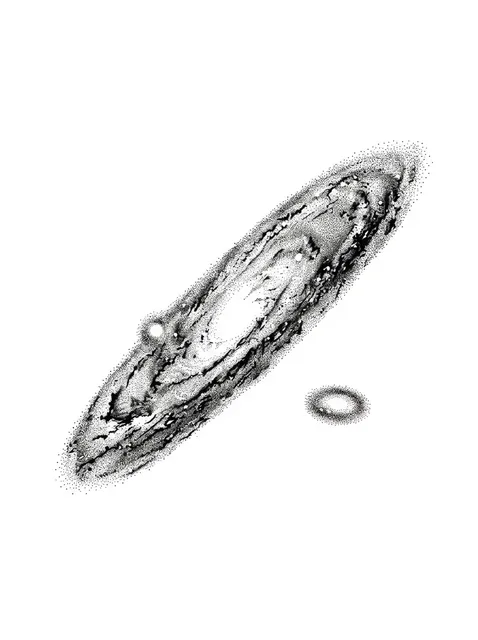
Black and grey realism galaxy tattoo design Try it on — Black and grey realism galaxy tattoo design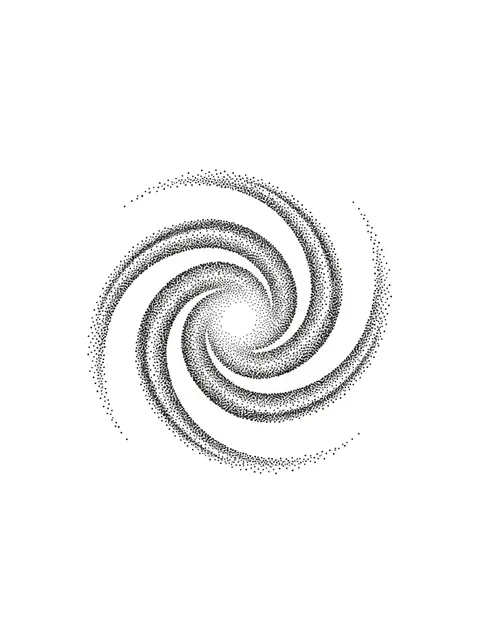
Black and grey dotwork galaxy tattoo design Try it on — Black and grey dotwork galaxy tattoo design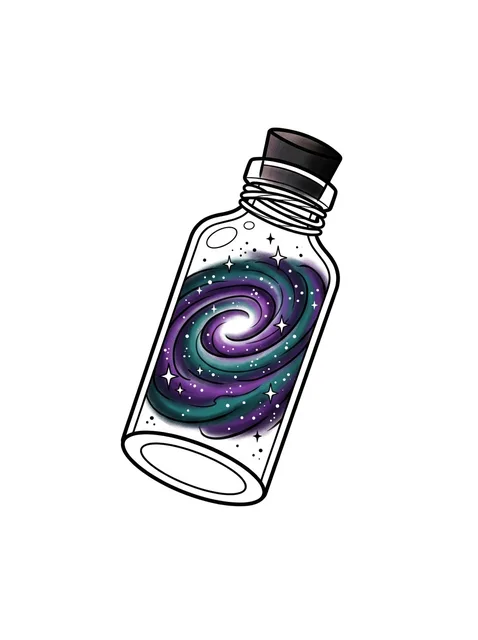
Color neo traditional galaxy and bottle tattoo design Try it on — Color neo traditional galaxy and bottle tattoo design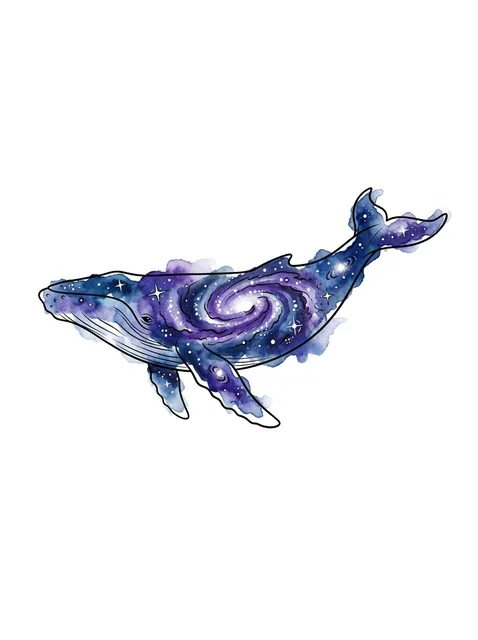
Color watercolor galaxy and whale tattoo design Try it on — Color watercolor galaxy and whale tattoo design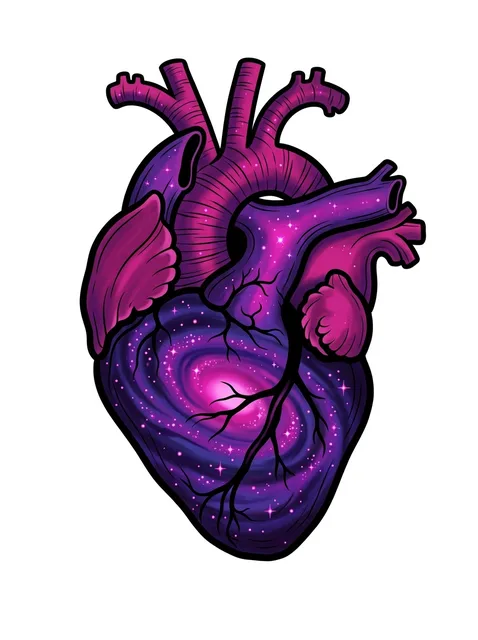
Color neo traditional galaxy and heart tattoo design Try it on — Color neo traditional galaxy and heart tattoo design
Black and white blackwork galaxy and moon tattoo design Try it on — Black and white blackwork galaxy and moon tattoo design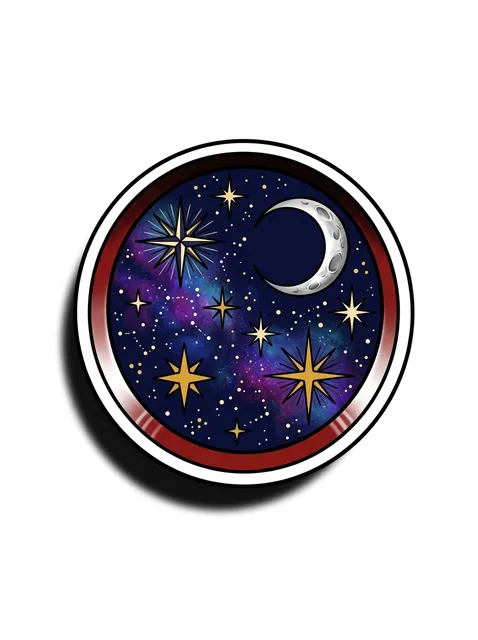
Color 3D galaxy and moon tattoo design Try it on — Color 3D galaxy and moon tattoo design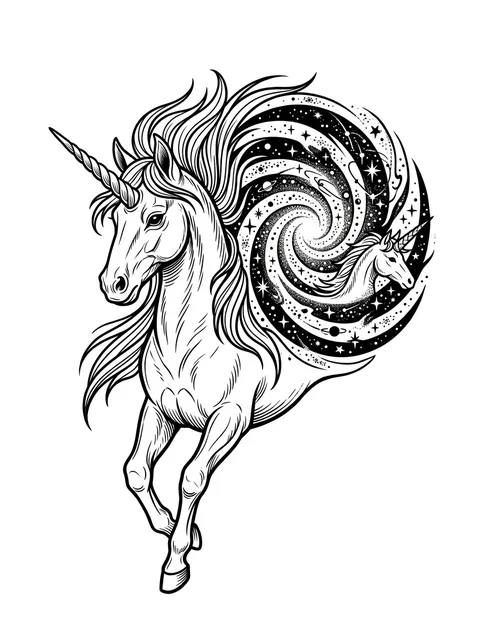
Black and grey surreal galaxy and unicorn tattoo design Try it on — Black and grey surreal galaxy and unicorn tattoo design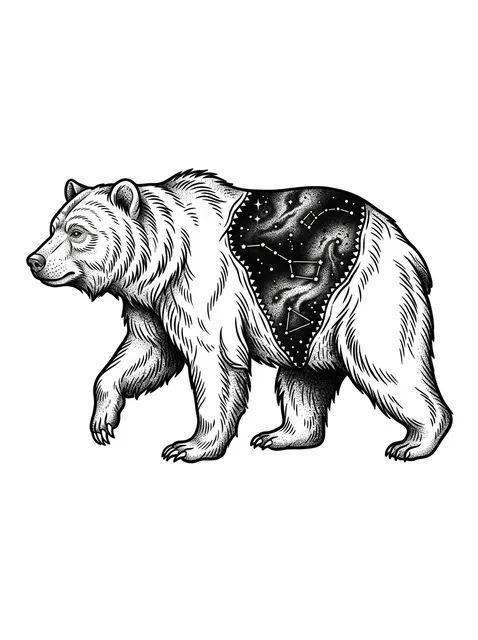
Black and grey illustrative galaxy and bear tattoo design: a walking bear Try it on — Black and grey illustrative galaxy and bear tattoo design: a walking bear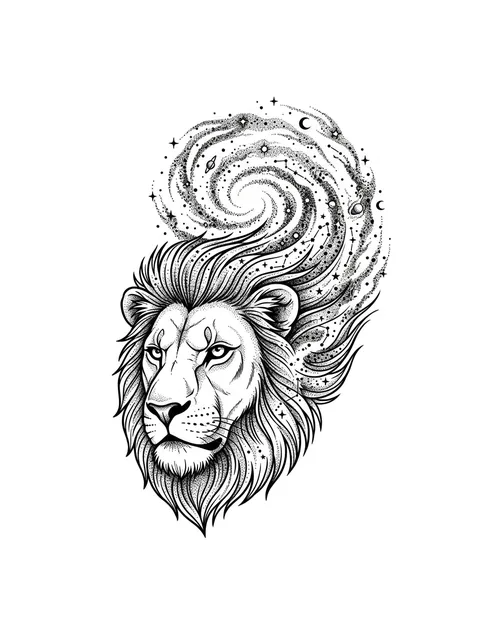
Black and grey illustrative galaxy and leo tattoo design Try it on — Black and grey illustrative galaxy and leo tattoo design
Black and grey illustrative galaxy and guitar tattoo design Try it on — Black and grey illustrative galaxy and guitar tattoo design


Tap any design to see it on your own skin in the try-on — no signup.
This set of 12 galaxy designs, by the numbers
- Styles represented
- illustrative (3), neo traditional (2), geometric (1), realism (1), dotwork (1), watercolor (1)
- Black-and-grey vs colour
- 67% black-and-grey, 33% colour
- Most often drawn with
- moon, star, bottle, whale
Counted from the 12 designs shown on this page. Every one was drawn for InkCraft — none are scraped or reposted. Free to reference with a link to this page.
What a galaxy tattoo means
The word is Greek for milky. The Greeks called the pale band across the night sky galaxias kyklos, the milky circle, and told how the infant Heracles was put to Hera's breast while she slept; when she woke and pushed him off, her milk sprayed across the heavens. For most of history nobody knew that band was one galaxy among countless others; it simply stood for distance.
On skin a galaxy is usually about scale, and wearers take it two opposite ways. Some want the comfort of being small, the feeling Carl Sagan gave words to when Voyager 1 photographed Earth from about six billion kilometres in 1990 and he named the picture the Pale Blue Dot. Others mean that one person holds something that large. His line in Cosmos that we are made of star-stuff is literal: the carbon and oxygen in a body were forged inside stars, and much of its iron was scattered by stars that exploded.
Most of this page uses the galaxy as a filling rather than a subject. A humpback whale swims with a spiral inside its silhouette, an anatomical heart glows magenta and violet, a bear walks with a window into the night cut through its flank, a guitar's sound hole opens onto stars, and the manes of a unicorn and a lion unwind into spiral arms. Each time the outline is the thing you are and the space is what it carries. The corked bottle turns that round: a universe kept small enough to put on a shelf.
East Asia reads the Milky Way as a river. In the story told at Qixi in China and Tanabata in Japan, the weaver girl and the cowherd, the stars Vega and Altair, live on opposite banks of the River of Heaven and may cross only on the seventh day of the seventh month, so a galaxy between two initials borrows a love kept across distance.
Where the design comes from
Nobody saw the shape of a galaxy until the nineteenth century. Galileo turned a telescope on the Milky Way in 1610 and found it made of faint stars beyond counting. The Persian astronomer Abd al-Rahman al-Sufi had described Andromeda as a small cloud in his Book of Fixed Stars around 964, and a cloud it stayed until 1845, when William Parsons, Earl of Rosse, turned his 72-inch telescope at Birr Castle in Ireland on the Whirlpool and sketched the first spiral anyone had seen. Whether those spirals sat inside our galaxy or far beyond it was argued by Harlow Shapley and Heber Curtis in 1920 and settled in 1923, when Edwin Hubble found a Cepheid variable star in Andromeda and its distance put the whole spiral outside.
Choosing yours
- Choose a galaxy or space as a filling. A real one stands alone and wants a field its own shape: Andromeda, tilted steeply with its two companions, is a long ellipse for a forearm, the face-on dotwork spiral a round one for a shoulder blade. The geometric spiral leans on a fact about real ones: their arms run close to logarithmic spirals, the curve that keeps its shape as it grows.
- Keep the stars as skin. The blackwork disc and its heavy crescent moon leave every star unshaded inside solid black shading, and that version stays bright; white ink dotted over colour drifts toward yellow or the skin tone within a few years, and a nebula that relied on it dulls to a flat violet patch.
- Violet is a convention, not a photograph. A real spiral in natural colour has a yellowish core of old stars, bluish arms of young ones and pink knots where hydrogen glows.
Size, cost and placement
How big, and what it costs
A dotwork or blackwork spiral holds at 8 to 10 cm and takes one to two hours, most of it grading the stipple. Andromeda wants 12 to 18 cm along a limb. The colour fillings are slowest: a whale or heart packed with nebula at 12 to 15 cm is three to four hours, since every star is shaded around rather than dotted on.
Where it sits, and how much it hurts
Round spirals and the disc with its moon sit on the shoulder blade or the outer calf; the long Andromeda ellipse and the whale run down the outer forearm or shin. Dense dark filling hurts more than line, and a big nebula on the ribs is among the hardest sittings here.
What to ask your artist
- Whether the stars will be left as skin or added in white.
- How dark the space around the nebula will be, since colours glow only against black or deep blue.
- Which way a spiral should turn; real ones turn both ways, so mirror it if the placement reads better.
Prices vary widely by city and artist — treat these as session lengths rather than quotes, and expect a shop minimum on anything small. The cost guide turns hours into money by size, placement and style.
Common questions
Why are galaxy tattoos nearly always purple and blue?
Because space art made them so, not the sky. Violet reads as space to almost everyone, which makes it a fair choice, just not a realistic one.
Can Andromeda really be seen without a telescope?
Yes, from a dark site on a northern autumn night, as a faint oval near the Great Square of Pegasus. At about 2.5 million light years it is the most distant thing most people will ever see with their own eyes.
How do the stars stay white in a black-and-grey galaxy?
By being left out: the artist shades around each star and never into it, and the darker the space, the brighter they read.
What does a galaxy inside a heart or a whale say?
That the outer shape holds something far larger than itself: a person, a love, an animal carrying a universe.
See it on your skin before you commit
InkCraft places any of these designs on a photo of you — scaled, wrapped and shaded to the placement you pick.