 InkCraft
Ship Tattoo Ideas: Sailing, Pirate and Viking
9 original ship designs drawn for InkCraftBy Uladzimir TumanauUpdated
The ship is the sailor's own tattoo, and lore says a fully rigged one marked a man who had rounded Cape Horn, a claim repeated more often than documented. Rigging is what makes a ship legible, and the first detail lost when a design shrinks.
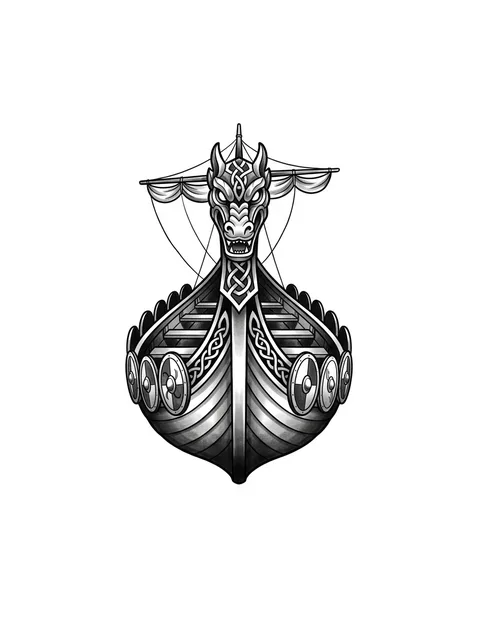
Black and grey neo traditional ship and viking tattoo design Try it on — Black and grey neo traditional ship and viking tattoo design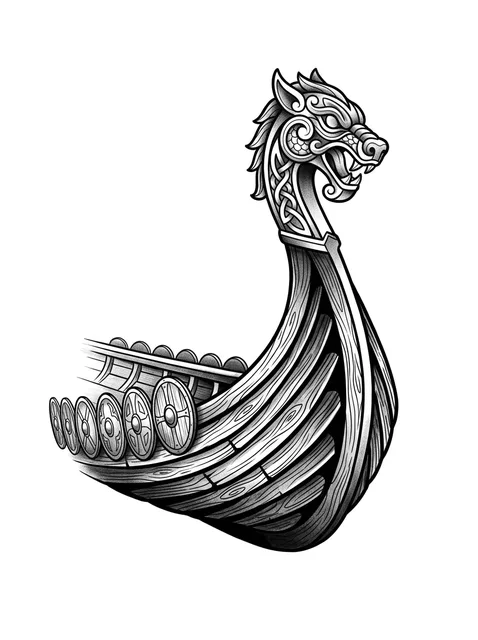
Black and grey illustrative ship and viking tattoo design Try it on — Black and grey illustrative ship and viking tattoo design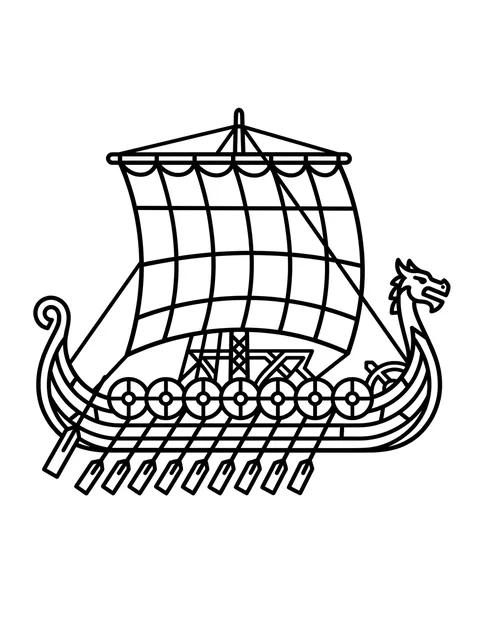
Black and white linework ship and viking tattoo design, outline stencil Try it on — Black and white linework ship and viking tattoo design, outline stencil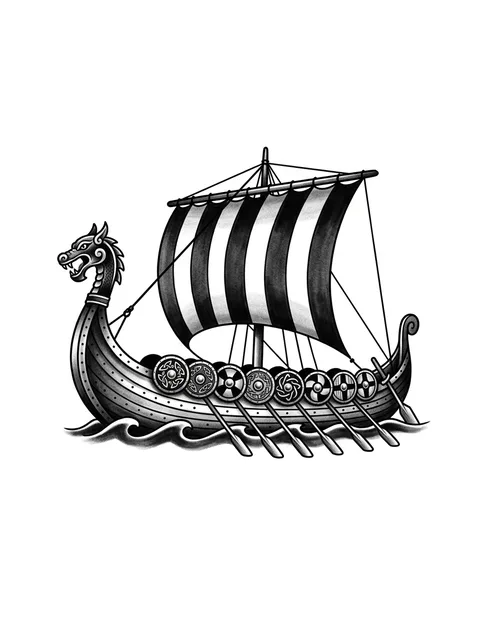
Black and grey illustrative ship and viking tattoo design Try it on — Black and grey illustrative ship and viking tattoo design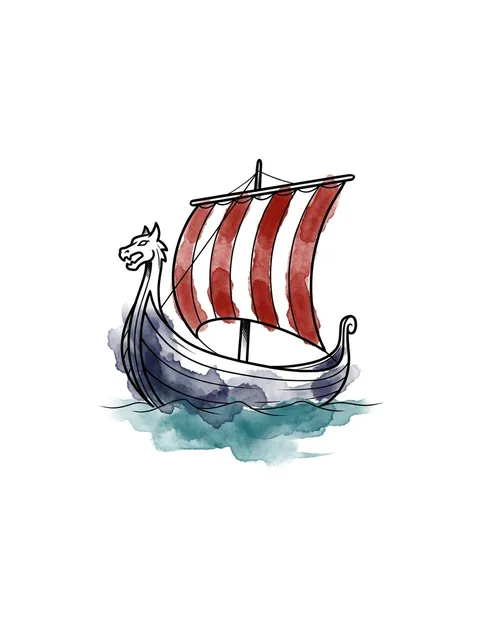
Color watercolor ship and viking tattoo design Try it on — Color watercolor ship and viking tattoo design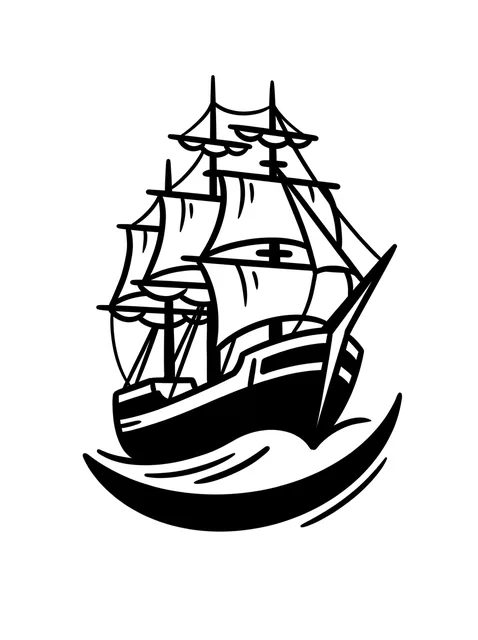
Black and white blackwork ship and ocean tattoo design Try it on — Black and white blackwork ship and ocean tattoo design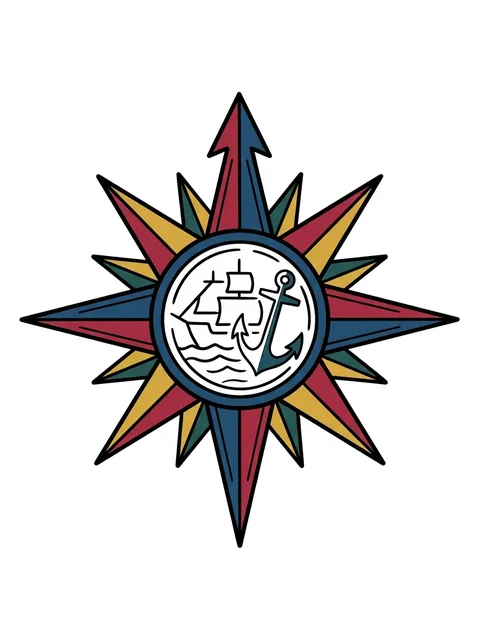
Color traditional ship and compass tattoo design: a compass rose with a central medallion Try it on — Color traditional ship and compass tattoo design: a compass rose with a central medallion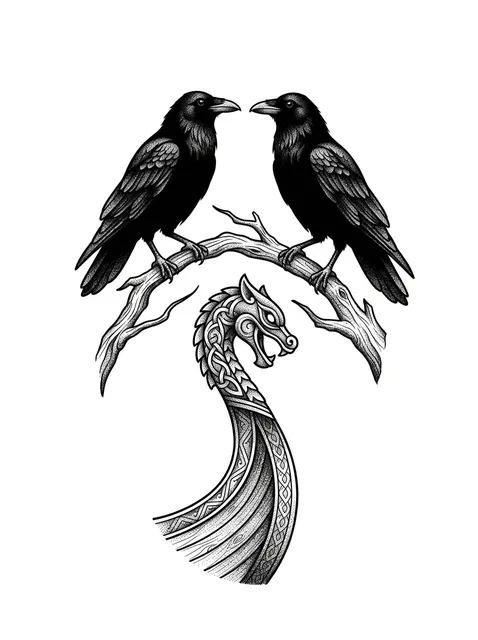
Black and grey illustrative ship and viking tattoo design Try it on — Black and grey illustrative ship and viking tattoo design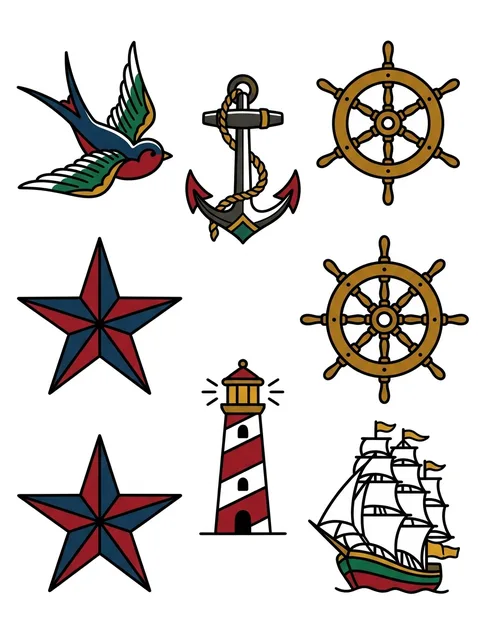
Color flash ship and swallow tattoo design Try it on — Color flash ship and swallow tattoo design


Tap any design to see it on your own skin in the try-on — no signup.
This set of 9 ship designs, by the numbers
- Styles represented
- illustrative (3), neo traditional (1), linework (1), watercolor (1), blackwork (1), traditional (1)
- Black-and-grey vs colour
- 67% black-and-grey, 33% colour
- Most often drawn with
- viking, anchor, ocean, compass
Counted from the 9 designs shown on this page. Every one was drawn for InkCraft — none are scraped or reposted. Free to reference with a link to this page.
What a ship tattoo means
On a sailor the ship was a record before it was a symbol. Lore ties particular voyages to particular marks, and the fully rigged ship, three masts or more with square sails on all of them, is said to have belonged to men who had sailed round Cape Horn, where the Southern Ocean squeezes through the Drake Passage. How strictly that was ever kept is unknown, since the evidence is mostly memoir and flash-sheet captions, but the idea of a tattoo earned by a passage rather than bought on a whim is real, and it is what the older ships on this page carry.
Away from the log, a ship is a journey and the person who makes it. Under full sail it is departure and ambition, a life steered by its owner; in a storm it is a hard passage endured; heading home it is return. A shipwreck is the bleak inversion, the voyage that ended, worn as a memorial or as a reminder of what was survived. The ship in a bottle, built with its masts hinged flat and raised by a thread once inside, is the patient version: a whole voyage made small, and kept rather than sailed.
A pirate ship is a sailing ship plus a black flag, and the flag holds all the meaning. The skull-and-crossbones Jolly Roger belongs to the early eighteenth century, when pirates of Blackbeard's generation flew black flags so that merchant ships would surrender without a fight; worn now it means freedom from rules rather than theft.
The longship, the commonest vessel here, belongs to the Norse and means something else again: a crew rather than one sailor, raiding, trading and settling as far as Newfoundland, and in death a ship to carry the dead into the burial mound, which is how the best-preserved ones survived.
Where the design comes from
The Gokstad and Oseberg ships, dug from Norwegian burial mounds in 1880 and 1904, supply much of what is known of longships, and Gokstad's sixty-four shields explain the row in nearly every drawing. The sailing ships come from the tattoo shop: port tattooers around 1900 sold flash crowded with clippers, and in mid-century Honolulu Norman Collins, Sailor Jerry, fixed the ships, swallows and nautical stars of the traditional style. The flash sheet here comes straight from it.
Choosing yours
- Choose the ship by what it carries. A square-rigger means the sea as a working life, with the Cape Horn lore attached; a longship with shields and a dragon prow means the Norse; a pirate ship needs its flag. Five longships and a carved prow make the Norse vessel the best represented here.
- Rigging is the design problem: below about 12 cm every stay and shroud closes up against the next and the sails turn grey, so detail goes first. To keep a small ship legible, go bigger, cut the rigging to a few bold strokes as flash does, or pick a longship, which loses little when the design shrinks.
Size, cost and placement
How big, and what it costs
A rigged sailing ship needs 12 cm at least and looks right at 15 to 25 cm: three to five hours in black and grey. A linework longship, with one sail and little rigging, is often two.
Where it sits, and how much it hurts
Wider than it is tall, a ship suits the outer forearm, calf, upper back or chest, where sailors classically wore the big ones, and the ribs take a large seascape. Chest and ribs are sharp.
What to ask your artist
- Which rigging lines they would drop first at your size.
- Whether it is a type: a clipper, a longship, a named vessel.
- Whether it sails away toward a horizon or in toward the viewer.
Prices vary widely by city and artist — treat these as session lengths rather than quotes, and expect a shop minimum on anything small. The cost guide turns hours into money by size, placement and style.
Common questions
Did a fully rigged ship really mean rounding Cape Horn?
It is the most repeated piece of sailor lore about ship tattoos, but there was never a rulebook, and plenty of sailors wore ships for no voyage in particular. Treat it as tradition, not regulation.
What turns a sailing ship into a pirate ship?
Little besides the flag, since pirates mostly sailed captured merchantmen. Without a black flag or a skull on the sail, a three-master reads as a sailor's ship.
Were Viking sails really striped?
Nobody knows. No complete Viking sail survives, only fragments of woollen cloth, so the red-and-white stripes, on one longship here as on so many, are a convention; Gotland's picture stones show sails crossed by a lattice.
How can a ship stand for someone lost at sea?
A ship sailing toward the horizon is the classic farewell, a wreck the voyage that ended, a ship coming in a return hoped for. The name of their vessel on the bow says more than any symbol.
What a ship tattoo can mean
The meanings this motif carries on the pages that argue them. Each line is that page's own reason for including it.
- Freedom tattoos
- Freedom as a voyage with no fixed return: a square-rigger under full sail, built for leaving port. It suits a departure that was chosen, where most sailor imagery is about getting home.
- Resilience tattoos
- A hull that has taken weather and is still upright. Drawn for this meaning the sea should look heavier than the ship, because the point is what the vessel came through rather than where it was headed.
- Greek mythology tattoos
- Jason's ship, built with Athena's help and carrying a speaking beam of oak from Dodona in its prow. The one vessel in Greek myth remembered for its crew rather than its cargo, and worn for a voyage made with others.
See it on your skin before you commit
InkCraft places any of these designs on a photo of you — scaled, wrapped and shaded to the placement you pick.