 InkCraft
Ring Tattoo Ideas, Wedding Bands and Claddagh
8 original ring designs drawn for InkCraftBy Uladzimir TumanauUpdated
Opens in your browser. No signup. Or tap any design below.
A ring is tattooed either as a drawing, like the bands and the Claddagh here, or as a band round the finger in place of metal. The finger band fades and blurs faster than almost any tattoo, so a drawn ring sits better on the wrist or forearm.
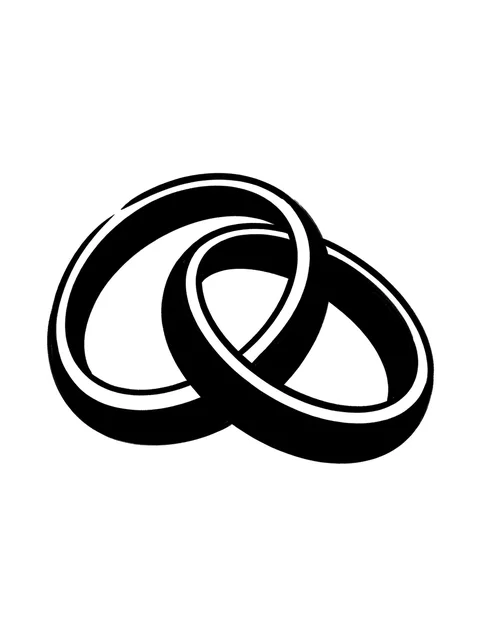
Black and white blackwork ring tattoo design Try it on — Black and white blackwork ring tattoo design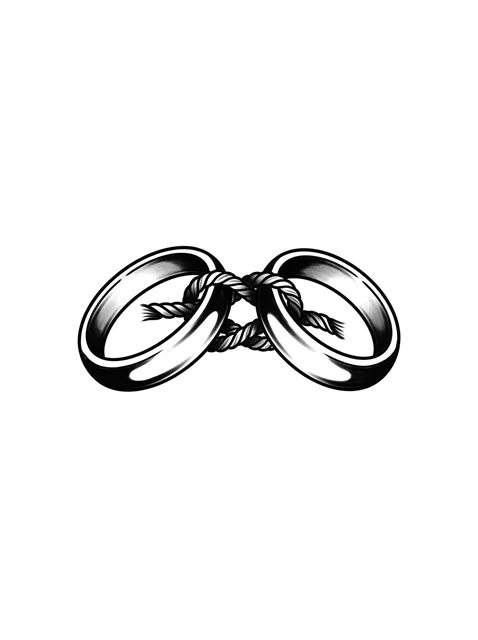
Black and grey illustrative ring tattoo design Try it on — Black and grey illustrative ring tattoo design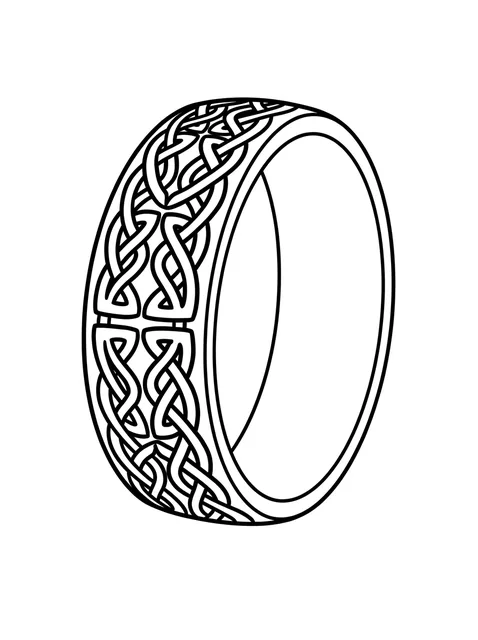
Black and grey ornamental ring tattoo design Try it on — Black and grey ornamental ring tattoo design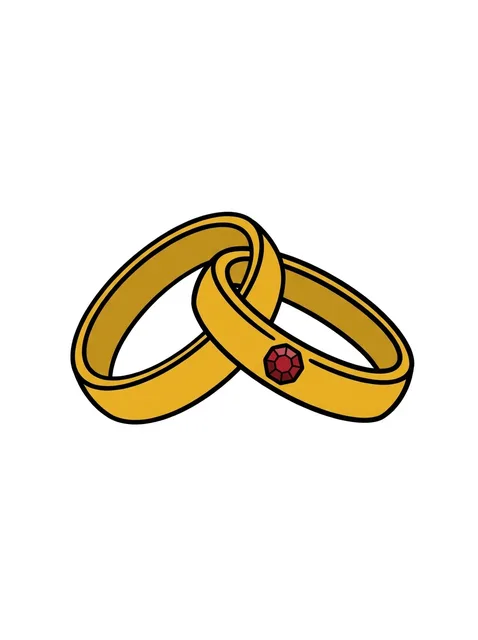
Color traditional ring tattoo design Try it on — Color traditional ring tattoo design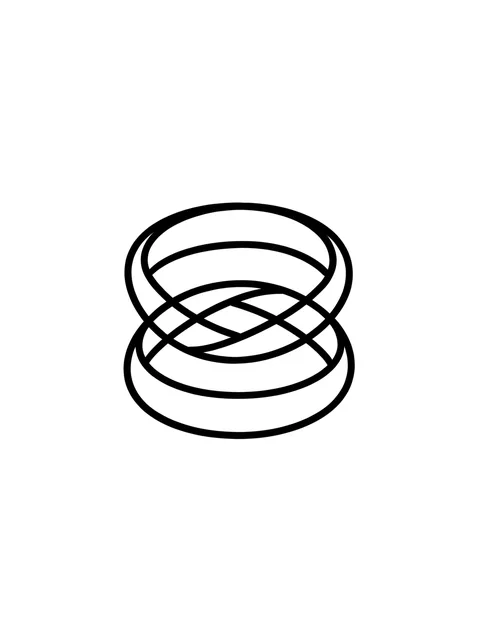
Black and white minimalist ring tattoo design, outline stencil Try it on — Black and white minimalist ring tattoo design, outline stencil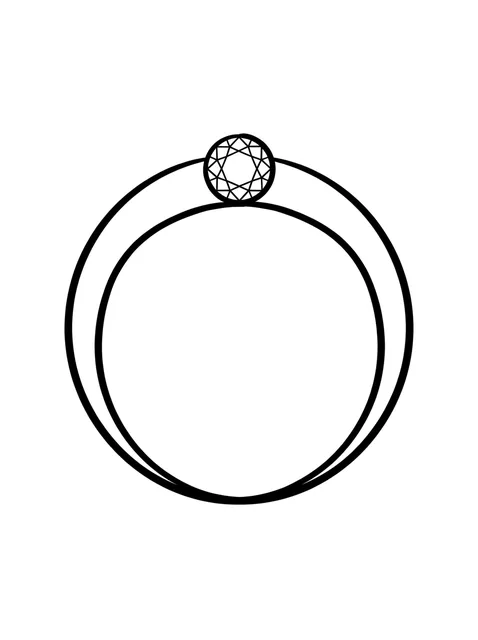
Black and white linework ring and diamond tattoo design, outline stencil Try it on — Black and white linework ring and diamond tattoo design, outline stencil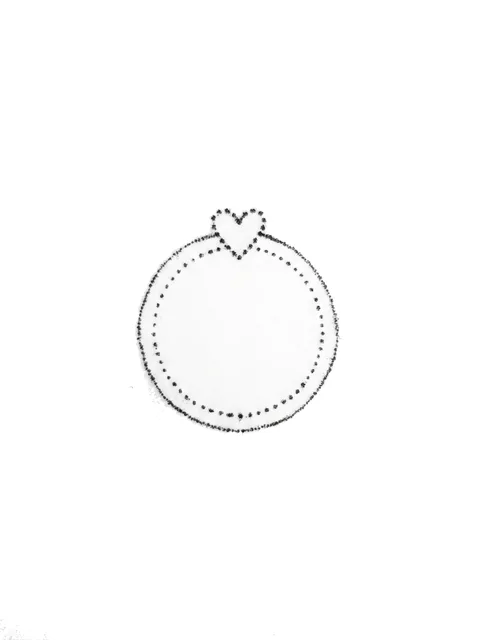
Black and grey stick and poke ring and heart tattoo design Try it on — Black and grey stick and poke ring and heart tattoo design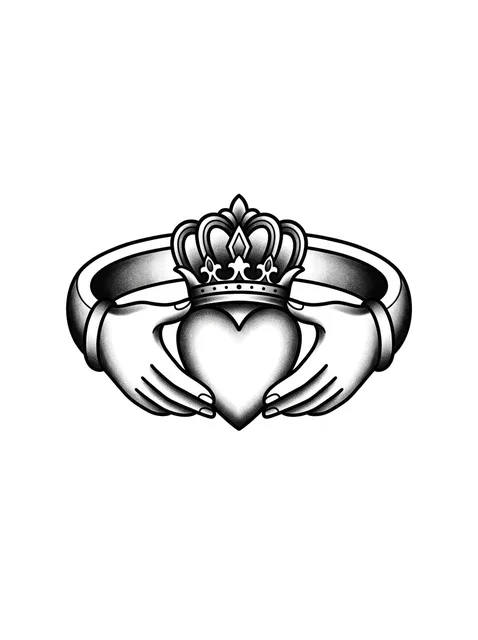
Black and grey illustrative ring and heart tattoo design Try it on — Black and grey illustrative ring and heart tattoo design


Tap any design to see it on your own skin in the try-on — no signup.
This set of 8 ring designs, by the numbers
- Styles represented
- illustrative (2), blackwork (1), ornamental (1), traditional (1), minimalist (1), linework (1)
- Black-and-grey vs colour
- 88% black-and-grey, 13% colour
- Most often drawn with
- heart, diamond, crown, hand
Counted from the 8 designs shown on this page. Every one was drawn for InkCraft — none are scraped or reposted. Free to reference with a link to this page.
What a ring tattoo means
A ring is a promise with no ends, which is why it has marked marriage for two thousand years; Roman betrothal rings were often plain iron. It goes on the fourth finger of the left hand in Britain and the United States, and of the right hand in Germany, Poland and Russia, a choice once explained by a vein supposed to run from that finger straight to the heart, the vena amoris, which does not exist.
Tattooed, a ring means one of two things. Drawn as an object, like every design on this page, it is a picture of a marriage or an engagement: two interlocked bands for two people, a band with a stone for the proposal, two rings bound with a knotted cord for tying the knot. Inked as a band around the finger, it replaces the ring itself, and that is what most people searching for a wedding ring tattoo have in mind.
Practical reasons count as much as romance. A ring that catches on machinery or a climbing hold can strip the skin from a finger, the injury surgeons call ring avulsion. Football's Laws of the Game ban all jewellery, and some people react to nickel or have knuckles that swell.
The Claddagh is the one ring with a grammar of its own. It is named for the fishing village beside Galway, the earliest surviving examples carry the mark of the goldsmith Richard Joyce from around 1700, and it shows two hands for friendship holding a heart for love beneath a crown for loyalty. Worn on the right hand with the point of the heart toward the fingertip it says the wearer is free; turned toward the wrist, taken; moved to the left hand, married. A Claddagh tattooed on the finger cannot be turned round, so settle which it says first.
Where the design comes from
Ring tattoos are recent; the ring finger is not. In the second century the Roman writer Aulus Gellius passed on an Egyptian claim that a fine nerve runs from that finger to the heart. For most of history only the bride wore a ring, and in the United States the groom's band became usual only around the Second World War. The tattooed band offers what metal cannot: it is never taken off, lost down a drain or left in a locker.
Choosing yours
- Be clear about what a finger does to ink. The skin is thin, renews faster than on the arm and is flexed, washed and rubbed all day, so a band usually heals patchy and softens within a year or two, the palm side first.
- The drawn rings here need room: highlights, a faceted stone, the Celtic knot and the Claddagh's hands all close up below 4 or 5 cm, while on the inner wrist, the forearm or the ankle they stay rings for decades.
- On the finger itself, keep to one bold line or a solid black band; dots drop out and gold fades first.
Size, cost and placement
How big, and what it costs
A finger band is nearly always a shop minimum, plus a touch-up or two. The drawn rings are 4 to 8 cm: an hour for the plain interlocked bands, two or more for the Claddagh or the knot band, where every crossing must stay open.
Where it sits, and how much it hurts
The ring finger is quick and sharp, bone right under thin skin. The inner wrist, inner forearm, ribs and ankle all hold a drawn ring far longer; the wrist and forearm are mild, the ribs are not.
What to ask your artist
- How often their finger bands need touch-ups, and at what price.
- Whether the design can be simplified enough for a finger.
- Which way the heart of a finger Claddagh should point.
Prices vary widely by city and artist — treat these as session lengths rather than quotes, and expect a shop minimum on anything small. The cost guide turns hours into money by size, placement and style.
Common questions
Can a tattooed band stand in for a wedding ring for good?
As a sign, yes; as a permanent mark, only if it is redone whenever it softens.
Why do some finger bands look blurred as soon as they heal?
That is a blowout, not fading: ink placed a fraction too deep in thin skin spreads into a soft halo. Fading can be touched up; a blowout can only be hidden under a heavier line or lightened by laser.
Which way should a Claddagh face?
On a finger, a heart pointing toward the wrist says taken and toward the fingertip says free. Drawn on the arm it has no hand to follow, so the crown sits on top.
What do two rings joined by a knotted cord mean?
Tying the knot, drawn literally, and it splits well: each partner wears one ring with half the cord.
What a ring tattoo can mean
The meanings this motif carries on the pages that argue them. Each line is that page's own reason for including it.
- Wedding tattoos
- The literal answer, and the one most people searching this page mean: a band, or two interlocked, drawn as the object rather than worn. A solid band with one plain highlight is the only ring design that still reads after the finger has blurred it, which is why the drawn versions here are heavy and simple.
See it on your skin before you commit
InkCraft places any of these designs on a photo of you — scaled, wrapped and shaded to the placement you pick.