 InkCraft
Roman Numeral Tattoo Ideas, Dates and Rules
22 original roman numeral designs drawn for InkCraftBy Uladzimir TumanauUpdated
Seven Latin letters that most people wear to hold one date, public in form and private in meaning. Check the conversion letter by letter, because a numeral repeated four times or a pair the rules forbid is a spelling mistake nobody can erase.

Black and grey lettering roman numerals tattoo design Try it on — Black and grey lettering roman numerals tattoo design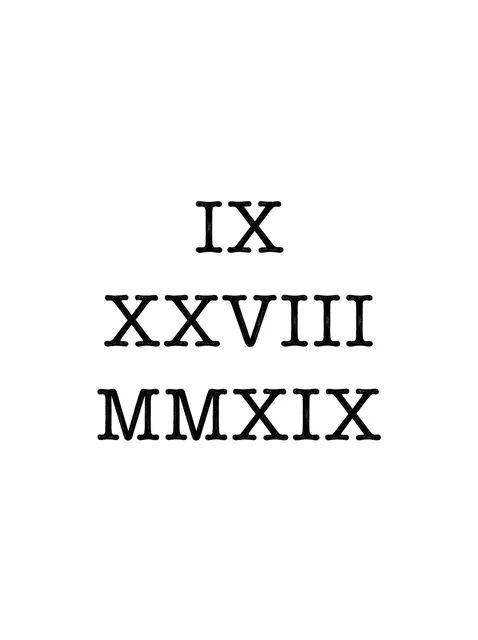
Black and grey lettering roman numerals tattoo design Try it on — Black and grey lettering roman numerals tattoo design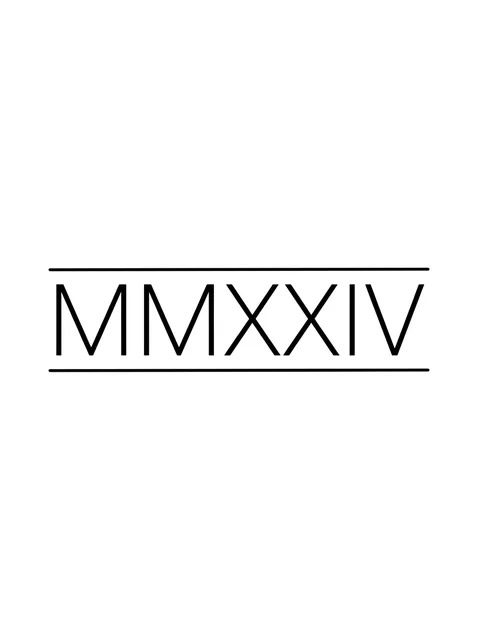
Black and grey lettering roman numerals tattoo design Try it on — Black and grey lettering roman numerals tattoo design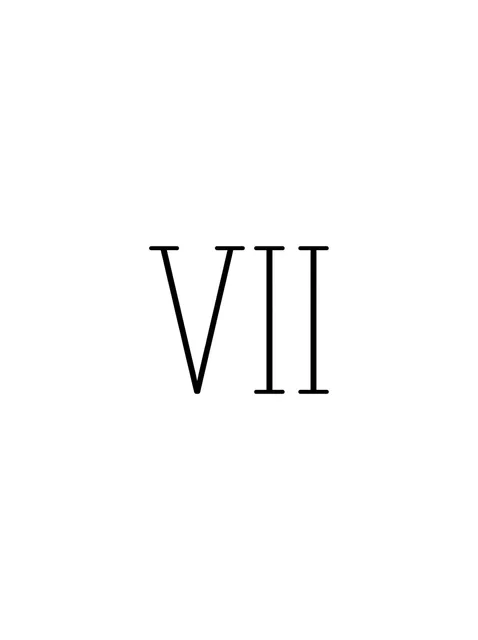
Black and grey lettering roman numerals tattoo design Try it on — Black and grey lettering roman numerals tattoo design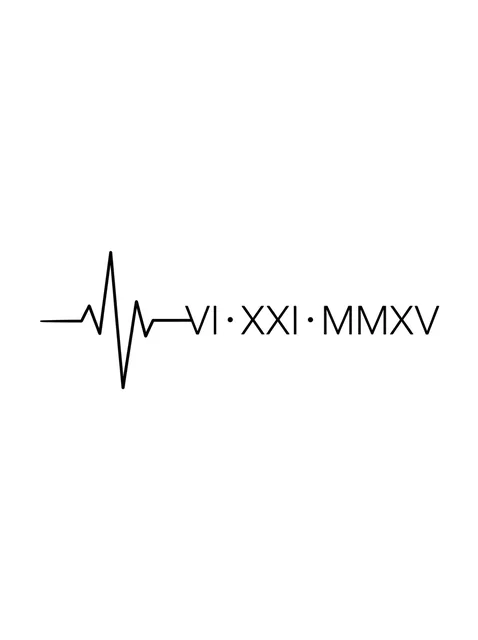
Black and grey lettering roman numerals tattoo design Try it on — Black and grey lettering roman numerals tattoo design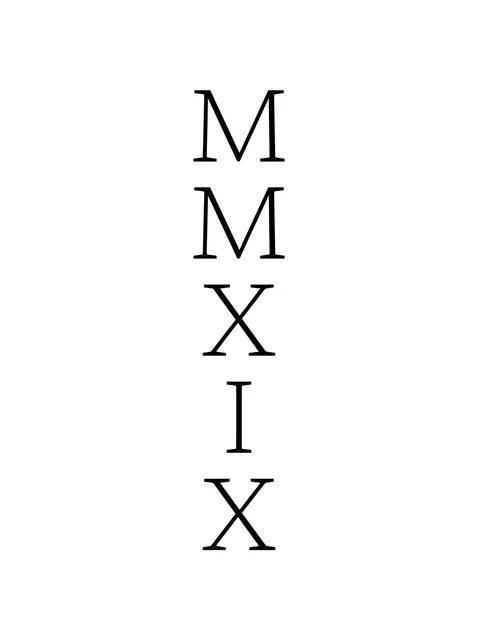
Black and grey lettering roman numerals tattoo design Try it on — Black and grey lettering roman numerals tattoo design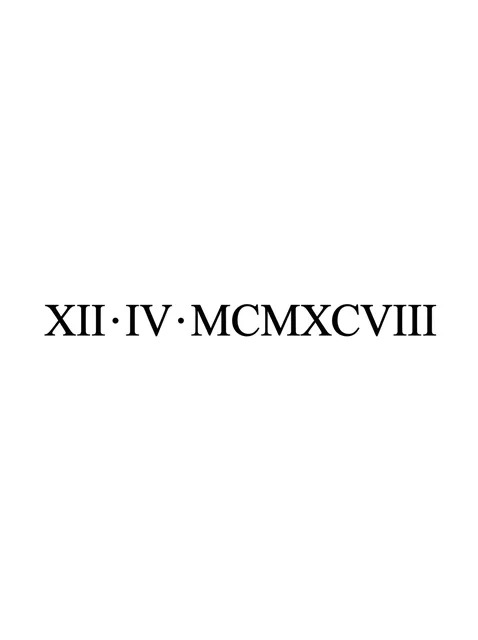
Black and grey lettering roman numerals tattoo design Try it on — Black and grey lettering roman numerals tattoo design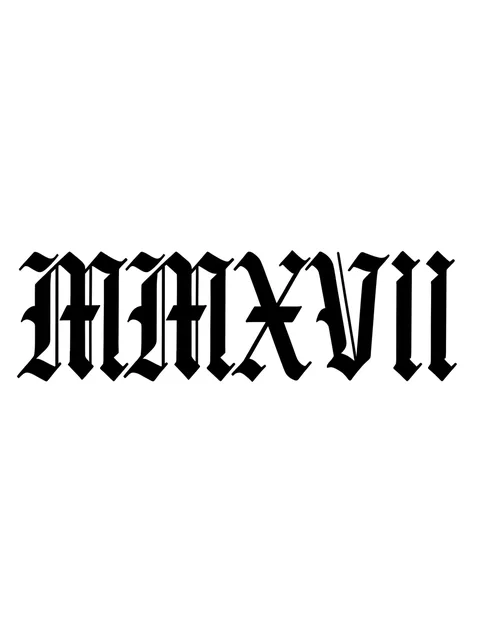
Black and grey lettering roman numerals tattoo design Try it on — Black and grey lettering roman numerals tattoo design
Black and grey lettering roman numerals tattoo design Try it on — Black and grey lettering roman numerals tattoo design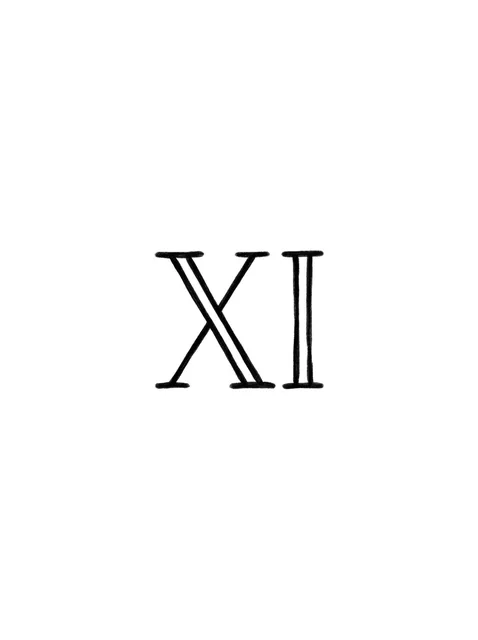
Black and grey lettering roman numerals tattoo design Try it on — Black and grey lettering roman numerals tattoo design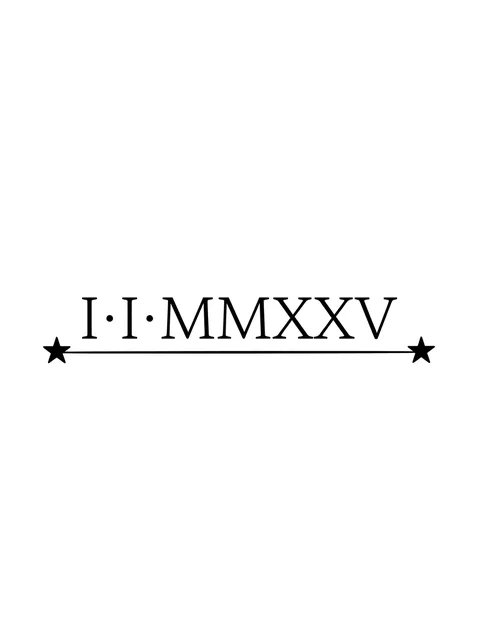
Black and grey lettering roman numerals and star tattoo design: a small solid star at each end Try it on — Black and grey lettering roman numerals and star tattoo design: a small solid star at each end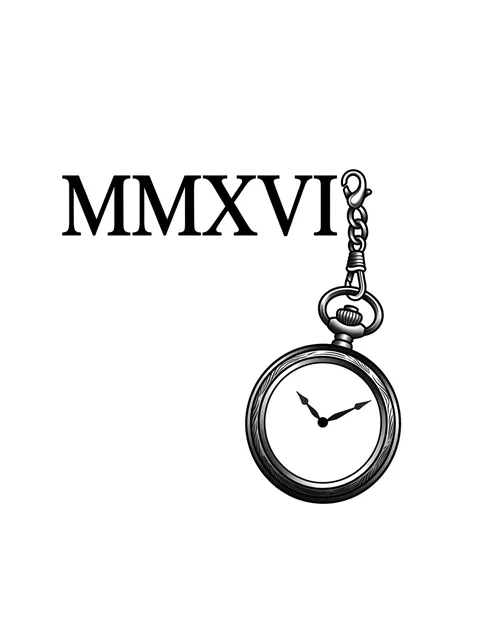
Black and grey lettering roman numerals and clock tattoo design Try it on — Black and grey lettering roman numerals and clock tattoo design
Color lettering roman numerals and rose tattoo design Try it on — Color lettering roman numerals and rose tattoo design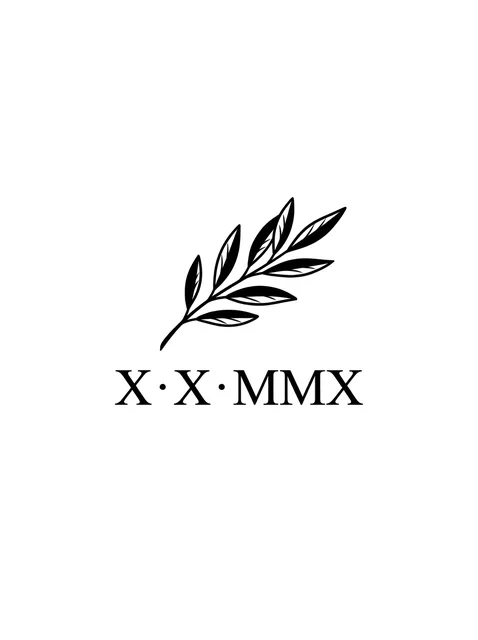
Black and grey lettering roman numerals and leaf tattoo design Try it on — Black and grey lettering roman numerals and leaf tattoo design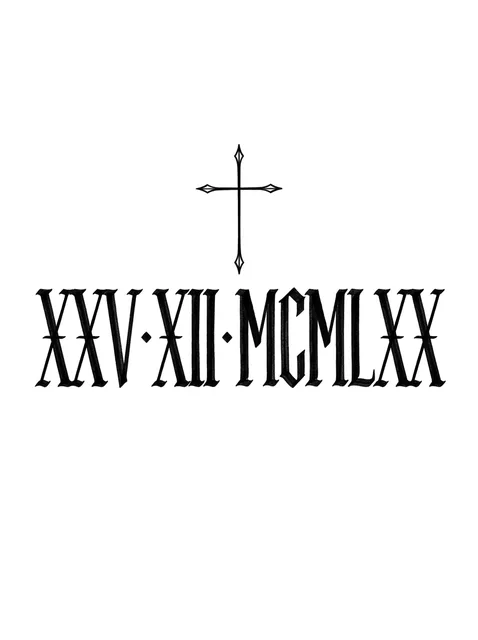
Black and grey lettering roman numerals and cross tattoo design Try it on — Black and grey lettering roman numerals and cross tattoo design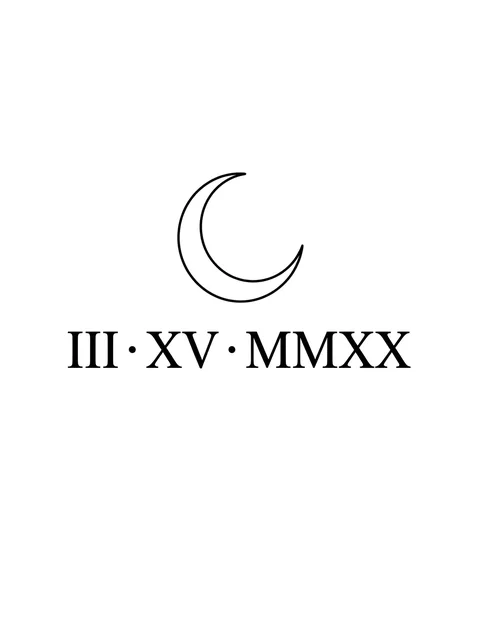
Black and grey lettering roman numerals and moon tattoo design Try it on — Black and grey lettering roman numerals and moon tattoo design
Color lettering roman numerals and swallow tattoo design Try it on — Color lettering roman numerals and swallow tattoo design
Black and grey lettering roman numerals and star tattoo design Try it on — Black and grey lettering roman numerals and star tattoo design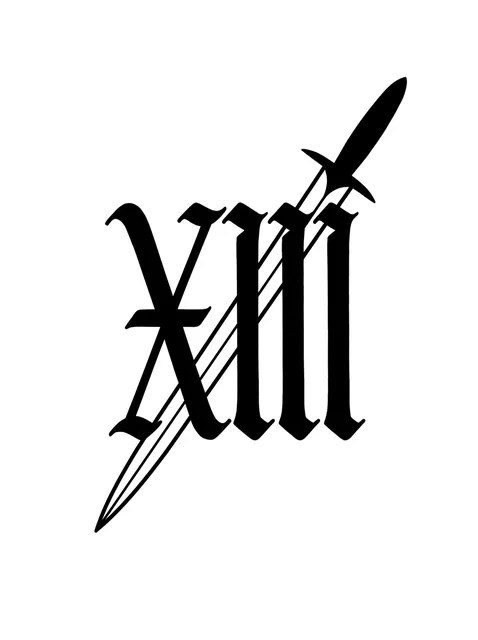
Black and grey lettering roman numerals and dagger tattoo design Try it on — Black and grey lettering roman numerals and dagger tattoo design
Black and grey lettering roman numerals and crown tattoo design Try it on — Black and grey lettering roman numerals and crown tattoo design
Black and grey lettering roman numerals and angel wings tattoo design Try it on — Black and grey lettering roman numerals and angel wings tattoo design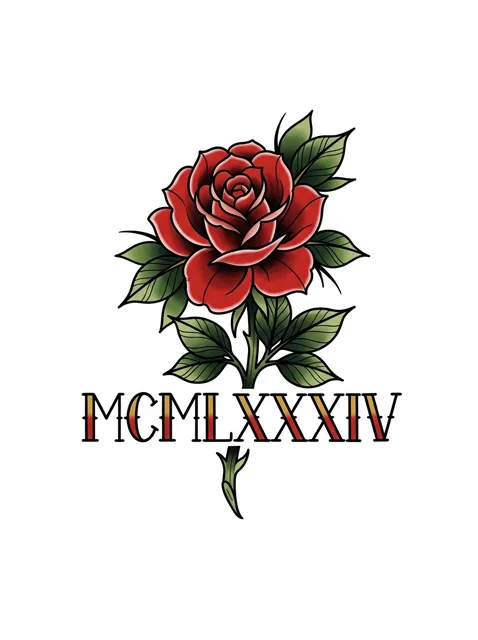
Color lettering roman numerals and rose tattoo design Try it on — Color lettering roman numerals and rose tattoo design


Tap any design to see it on your own skin in the try-on — no signup.
This set of 22 roman numeral designs, by the numbers
- Styles represented
- lettering (22)
- Black-and-grey vs colour
- 86% black-and-grey, 14% colour
- Most often drawn with
- star, rose, clock, leaf
Counted from the 22 designs shown on this page. Every one was drawn for InkCraft — none are scraped or reposted. Free to reference with a link to this page.
What a roman numeral tattoo means
A Roman numeral tattoo is nearly always a date, and the date is nearly always about one person: a birth, a wedding, the day someone died, the year a child arrived. The numerals are chosen because they hide the meaning in plain sight. Almost anyone reads 1998 at a glance; very few will stop to work out MCMXCVIII, so the wearer carries a number that is public in form and private in practice.
The letterforms are the second reason. These are the capitals Rome cut into stone, and a year set in them reads as something recorded rather than something written, closer to the date on a foundation stone than to a note. They also belong to no living language, so a year in numerals reads the same in Madrid, Manila and Minneapolis, which matters to people whose family is spread across several countries.
Single numerals work differently. A lone VII, XI, XIII or XXI is usually a lucky number, a birthday, an age reached or a shirt number, and it is often chosen as much for its shape as its value. VII and XI are close to symmetrical and sit centred on the body without help; a long numeral such as XXVIII behaves like a band and wants a strip of skin to run along. The III and the IV on this page might count three siblings or four children, the size of a family rather than a day.
What the numerals do not do is explain themselves. A date tells a stranger that something happened and nothing about what, so the wearer decides each time whether to say. That privacy is most of the appeal, and it is also why the conversion has to be right: an error goes unnoticed for years, until the one person who reads numerals fluently asks what happened on a day that never existed.
Where the design comes from
The signs most likely began as tally marks rather than letters. I, V and X look like the strokes and notches of counting on a stick, and they settled into the shapes of the alphabet only later; D for five hundred started life as half of the older sign for a thousand. The Romans were not strict about subtraction, and IIII and VIIII appear in their inscriptions alongside IV and IX. The tidy rules taught now were fixed long after the empire. Clock faces kept the older IIII for four, which is why the Great Clock of Westminster, running since 1859, is noticed for using IV. The letterforms most numeral tattoos descend from are the capitals cut at the base of Trajan's Column in Rome, dedicated in 113, which Carol Twombly drew as the Trajan typeface for Adobe in 1989. The numerals survive wherever something is meant to look permanent: regnal names, film copyright lines, and the Super Bowl, which the NFL has numbered this way since 1971, except in 2016, when a lone L was judged not to work on a logo and Super Bowl 50 went out in ordinary digits.
Choosing yours
- Check the numeral against the rules before anything else. Seven letters carry the values: I is 1, V is 5, X is 10, L is 50, C is 100, D is 500 and M is 1,000. Letters run from largest to smallest and are added together. A smaller letter placed before a larger one is subtracted instead, and the rules forbid all but six such pairs: IV (4), IX (9), XL (40), XC (90), CD (400) and CM (900). No letter is repeated more than three times in a row, and V, L and D are never repeated at all. So 49 is XLIX and never IL, 99 is XCIX and never IC, 8 is VIII and never IIX, and 1999 is MCMXCIX and never MIM.
- Settle the order of the date before converting it. European dates run day, month, year and American ones month, day, year, and nothing in the numerals says which you meant: XII·IV·MCMXCVIII is 12 April 1998 in London and 4 December in New York. The raised dots come from Roman inscriptions, which put a point between words, and they are doing work rather than decorating. Run together, XIIIV could be XII and IV or XIII and V, two different days. Dots, spaces or short bars all serve, as long as the three parts are unmistakably apart.
- Numerals are harder to keep legible small than their straight strokes suggest. A run of verticals, the III in VIII or MMXVIII, closes into a single bar as ink spreads, and serifs on neighbouring letters meet and fuse. Ask for letter spacing wider than looks right on paper, with the gap between strokes at least as wide as the strokes themselves. Heavy blackletter numerals look right at size and turn into a barcode when small; a light serif or a clean sans holds better under about 5 cm.
- Count the letters before choosing where it goes, because the year sets the length and you do not. MM, for 2000, is two letters; MCMLXXXVIII, for 1988, is eleven. A wrist that holds MMXX comfortably will not hold MCMLXXXVIII at the same height, and a full date often runs to fifteen characters once the separators are counted.
Size, cost and placement
How big, and what it costs
Most of these are short sittings. A year alone is often a shop minimum and a full date on one line is under an hour for most artists. What adds time is the letterform rather than the length: outlined, engraved or stippled numerals, like the Victorian and dotwork years here, take several times as long as a single-weight line, and a rose, a crown or a pocket watch hanging from the last numeral turns the piece into an illustration priced as one.
Where it sits, and how much it hurts
A date on one line wants a long, flat strip: the inner forearm, along the collarbone, down the side of the ribs or across the upper back below the neck. Written vertically, one letter above the next, a year fits the spine or the back of the arm; stacked in three short lines, a date sits well on the sternum or behind the ear. The collarbone, ribs and spine are the painful options and the forearm is mild. On the inner forearm, decide whether the line reads for you or for the people facing you.
What to ask your artist
- To check the conversion against the original date, letter by letter, before the stencil goes on.
- Which order the date is in, day first or month first, so the separators and the sequence are settled on paper.
- How wide to space the letters so that runs of I and X stay apart as the ink settles.
Prices vary widely by city and artist — treat these as session lengths rather than quotes, and expect a shop minimum on anything small. The cost guide turns hours into money by size, placement and style.
Common questions
How do you write a date in Roman numerals?
Convert the day, the month and the year separately and put a dot, a space or a short bar between them. 21 June 2015 becomes XXI·VI·MMXV written day first, and VI·XXI·MMXV in the American month-first order. Decide the order first, since the numerals give no hint which was meant.
Is four written IV or IIII?
IV, by the rules taught today. IIII is correct on a clock face, where watchmakers have used it for centuries, and the Romans often wrote it themselves. On a date it will be read as a mistake, so use IV unless the numerals sit on a dial.
Why is 1999 not written MIM?
Because subtraction is allowed only between a letter and the next two sizes up: I before V and X, X before L and C, C before D and M. I can never stand before M, so 1999 is built in parts as M, CM, XC and IX, which gives MCMXCIX. Treat any shortcut as a spelling error.
Is there a zero in Roman numerals?
No. There is no zero and no place value, so a month written 07 on a form is simply VII, and 2005 is MMV with nothing standing in for the empty places. A leading zero copied from a digital date has nothing to become, so drop it before converting.
Can I put a line over the numerals?
Carefully. In later Roman and medieval use a bar drawn over a numeral multiplied it by a thousand, so a rule sitting tight on top of MMXXIV can be read as a very large number by someone who knows. Rules that run well past both ends, above and below, read as a frame instead.
See it on your skin before you commit
InkCraft places any of these designs on a photo of you — scaled, wrapped and shaded to the placement you pick.