 InkCraft
Tulip Tattoo Ideas, Designs and Meaning
22 original tulip designs drawn for InkCraftBy Uladzimir TumanauUpdated
Before it was Dutch it was Ottoman, and before that a wild flower of the Central Asian mountains. One cup on a single unbranched stem with long leaves, it suits narrow vertical placements: the forearm, the spine, the side of the ribs.
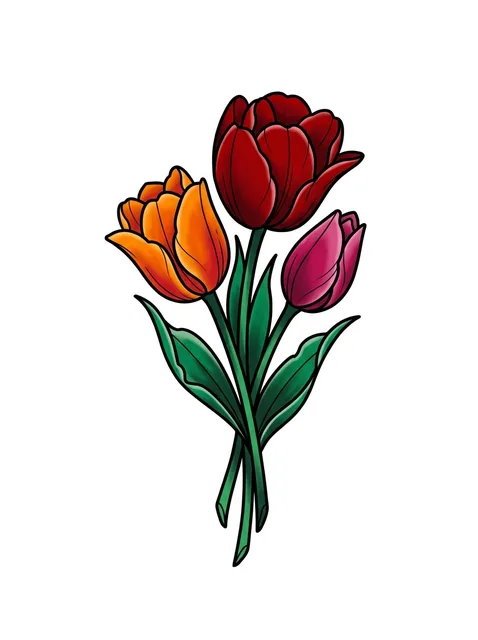
Color neo traditional tulip tattoo design Try it on — Color neo traditional tulip tattoo design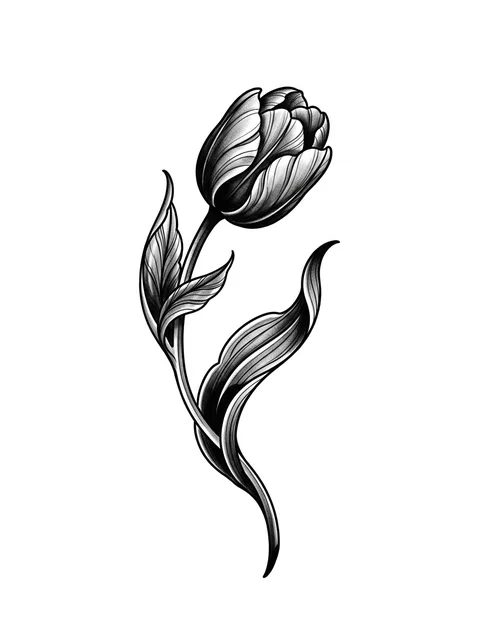
Black and grey illustrative tulip tattoo design Try it on — Black and grey illustrative tulip tattoo design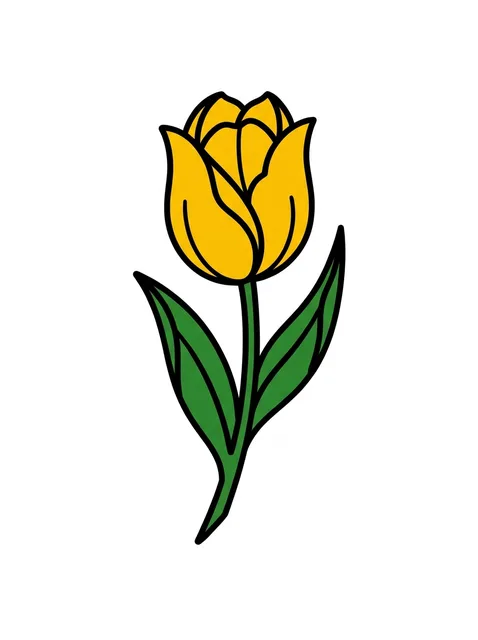
Color traditional tulip tattoo design Try it on — Color traditional tulip tattoo design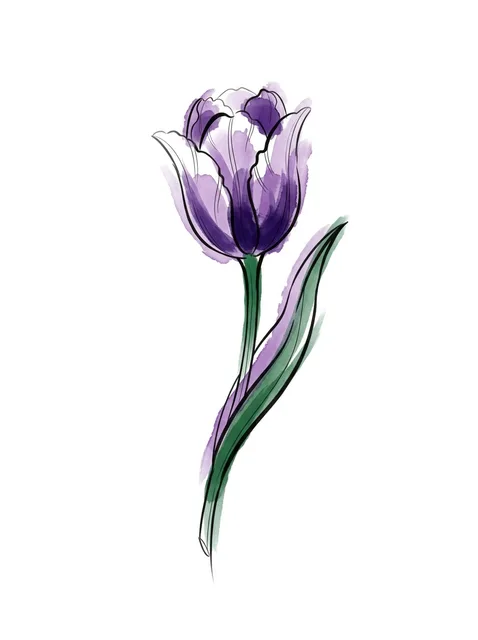
Color watercolor tulip tattoo design: the colour spilling softly past the outline Try it on — Color watercolor tulip tattoo design: the colour spilling softly past the outline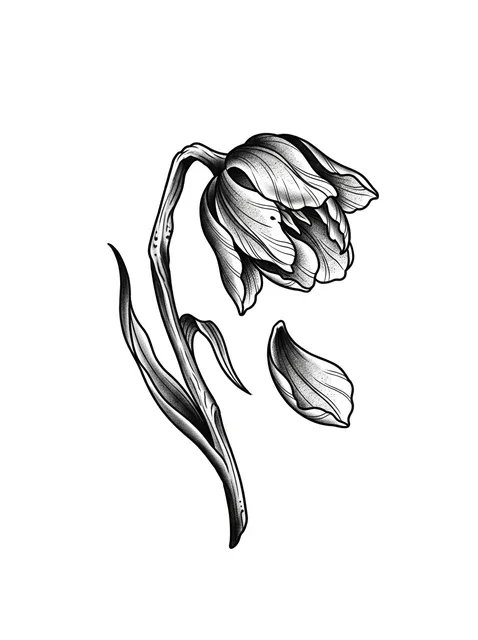
Black and grey illustrative tulip tattoo design Try it on — Black and grey illustrative tulip tattoo design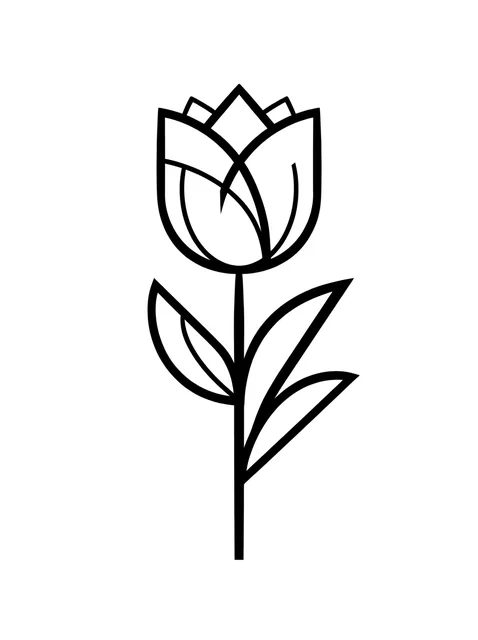
Black and white geometric tulip tattoo design, outline stencil Try it on — Black and white geometric tulip tattoo design, outline stencil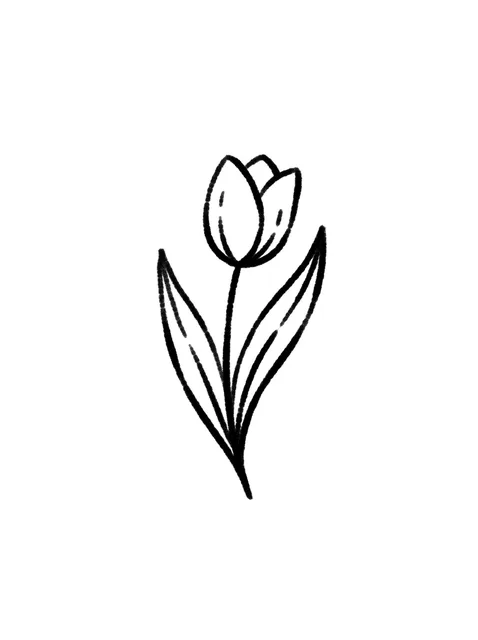
Black and white minimalist tulip tattoo design, outline stencil Try it on — Black and white minimalist tulip tattoo design, outline stencil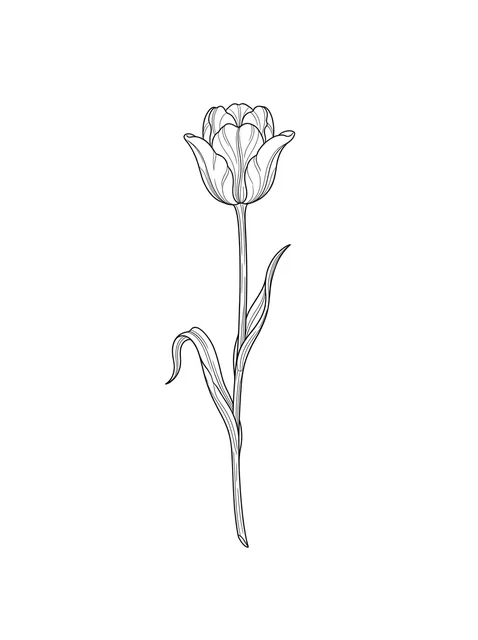
Black and grey fine line tulip tattoo design, outline stencil Try it on — Black and grey fine line tulip tattoo design, outline stencil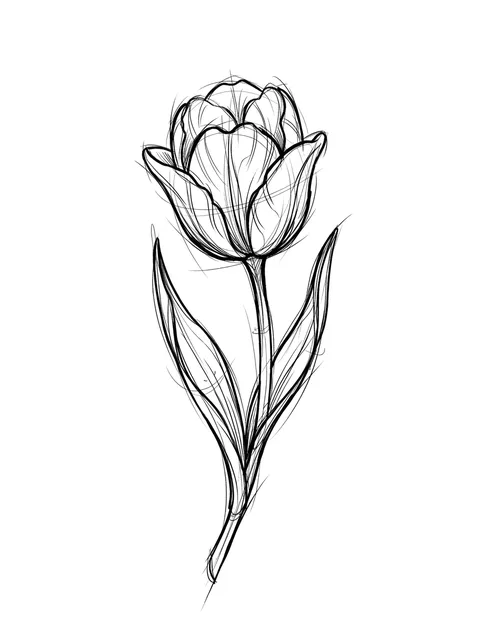
Black and grey sketch tulip tattoo design Try it on — Black and grey sketch tulip tattoo design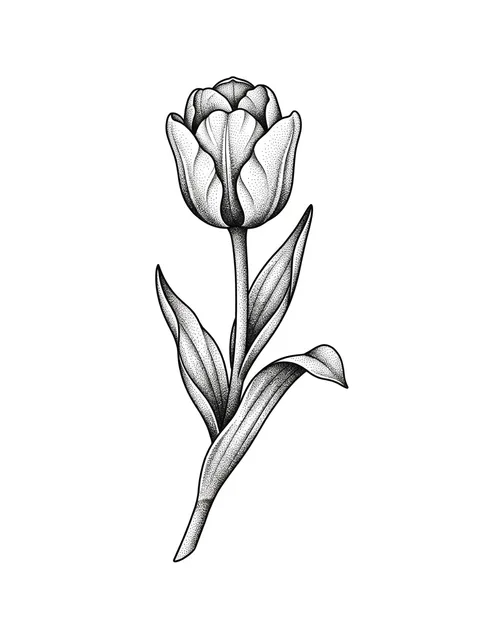
Black and grey dotwork tulip tattoo design Try it on — Black and grey dotwork tulip tattoo design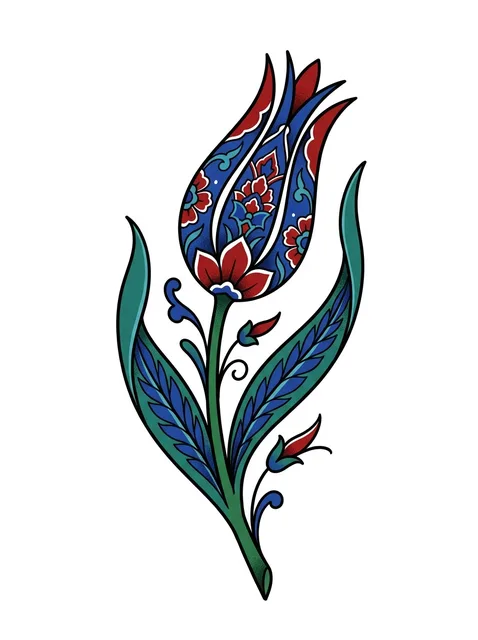
Color ornamental tulip tattoo design Try it on — Color ornamental tulip tattoo design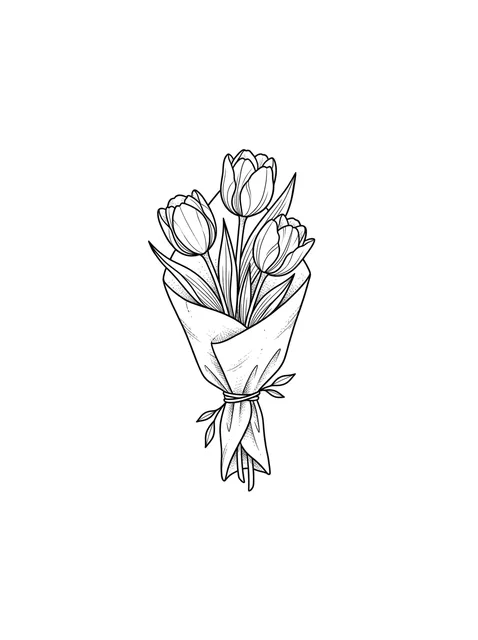
Black and white fine line tulip tattoo design, outline stencil Try it on — Black and white fine line tulip tattoo design, outline stencil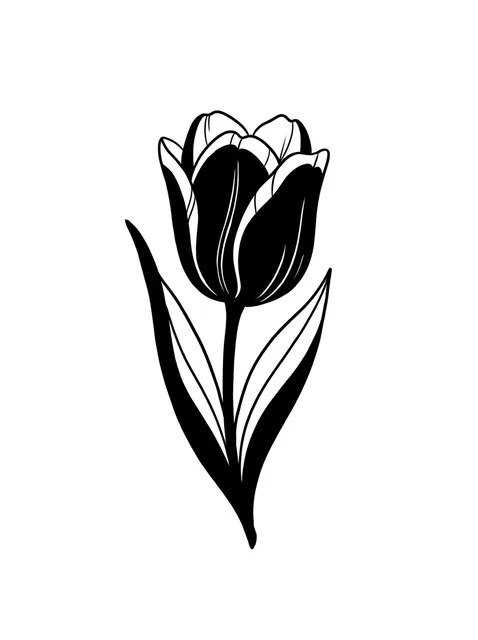
Black and white blackwork tulip tattoo design Try it on — Black and white blackwork tulip tattoo design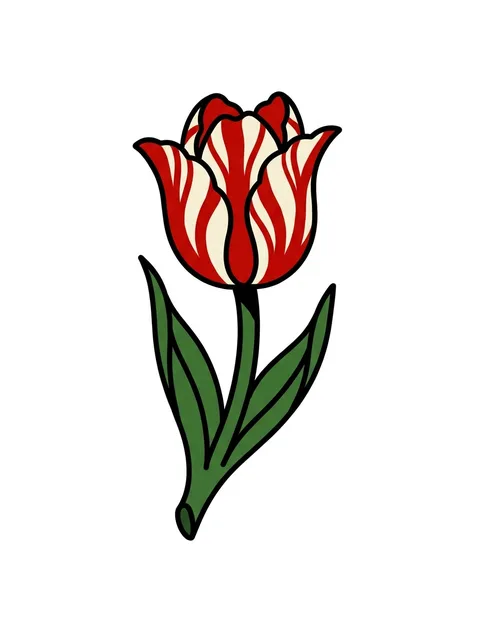
Color traditional tulip tattoo design Try it on — Color traditional tulip tattoo design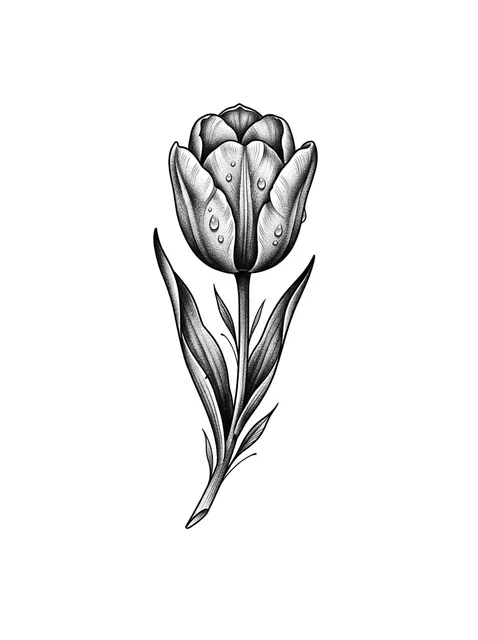
Black and grey realism tulip tattoo design Try it on — Black and grey realism tulip tattoo design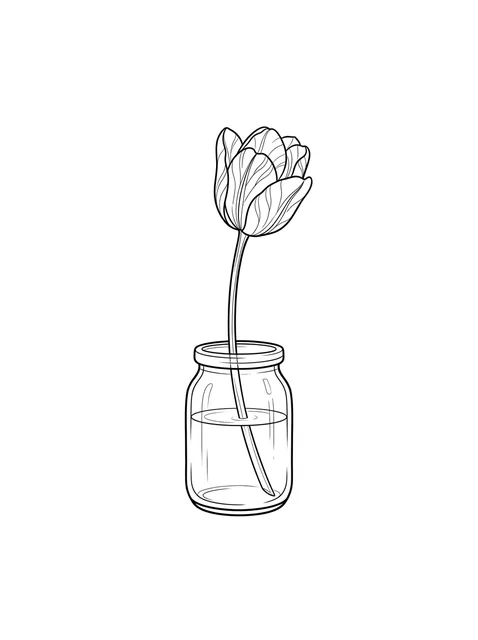
Black and white fine line tulip tattoo design, outline stencil Try it on — Black and white fine line tulip tattoo design, outline stencil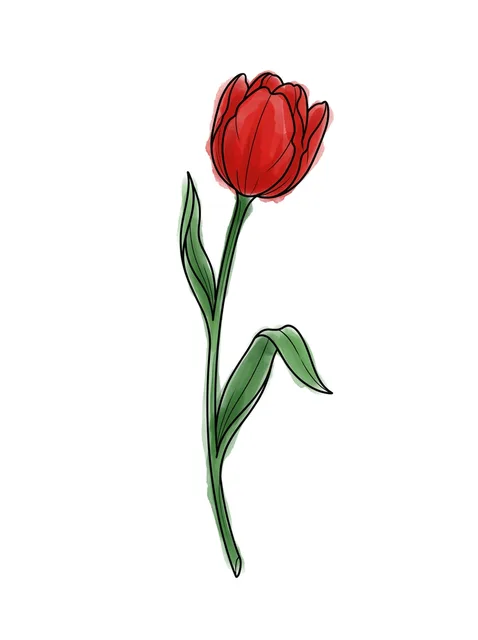
Color watercolor tulip tattoo design Try it on — Color watercolor tulip tattoo design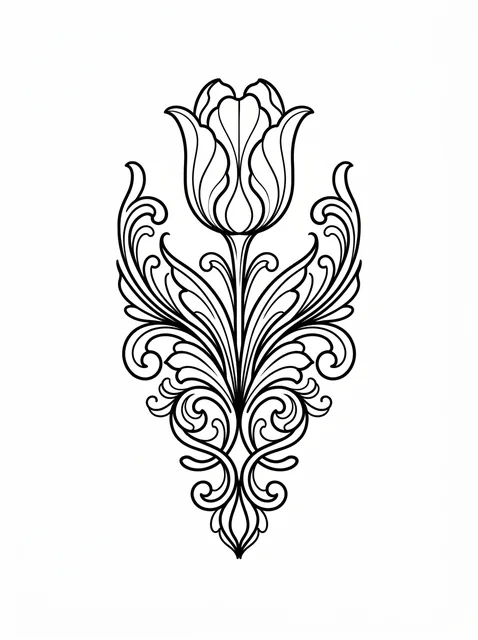
Black and grey ornamental tulip tattoo design Try it on — Black and grey ornamental tulip tattoo design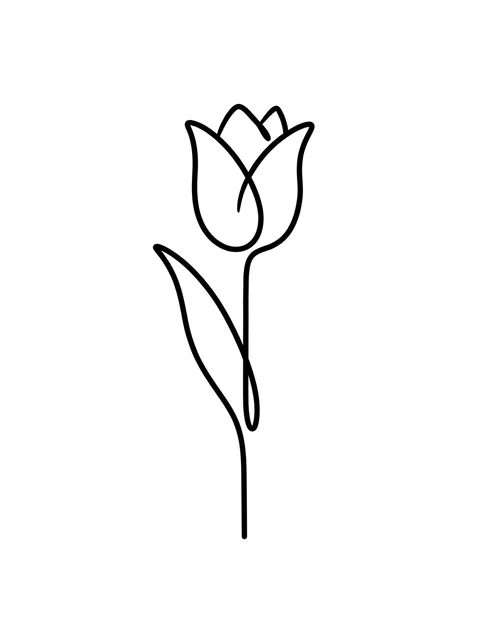
Black and white linework tulip tattoo design, outline stencil Try it on — Black and white linework tulip tattoo design, outline stencil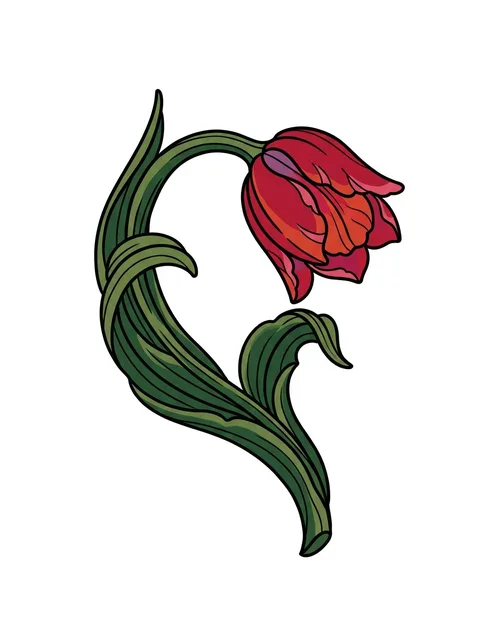
Color Japanese tulip tattoo design Try it on — Color Japanese tulip tattoo design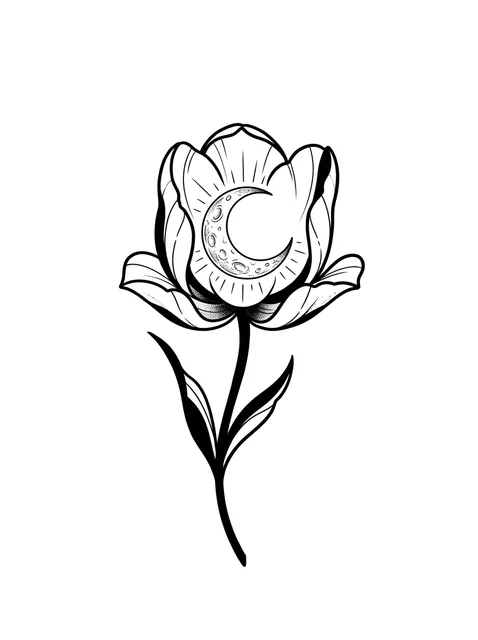
Black and grey illustrative tulip and moon tattoo design Try it on — Black and grey illustrative tulip and moon tattoo design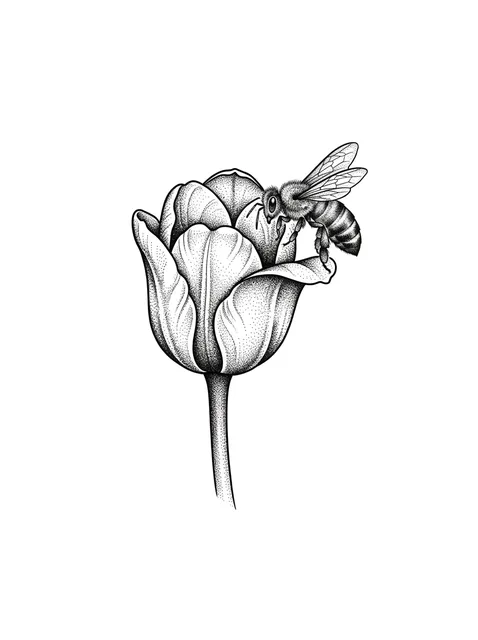
Black and grey dotwork tulip and bee tattoo design Try it on — Black and grey dotwork tulip and bee tattoo design


Tap any design to see it on your own skin in the try-on — no signup.
This set of 22 tulip designs, by the numbers
- Styles represented
- illustrative (3), fine line (3), traditional (2), watercolor (2), dotwork (2), ornamental (2)
- Black-and-grey vs colour
- 68% black-and-grey, 32% colour
- Most often drawn with
- moon, bee
Counted from the 22 designs shown on this page. Every one was drawn for InkCraft — none are scraped or reposted. Free to reference with a link to this page.
What a tulip tattoo means
A tulip is mostly worn for love, and its colour does the talking. The Victorian flower dictionaries fixed the readings still repeated today: Kate Greenaway's Language of Flowers of 1884 gives the red tulip as a declaration of love, the variegated one as beautiful eyes and the yellow as hopeless love, a meaning that has since softened into cheerfulness. Other colours carry no reading from that book, which leaves the purple, pink and orange tulips here free to mean what their wearer says.
In Persian poetry the red tulip with its dark centre is the lover's scorched heart and the martyr's blood, a reading still alive in Iran, whose national emblem is said to evoke one. For the Ottomans the flower was sacred as well as fashionable. Written in Ottoman script, lale, the Turkish word for tulip, uses the same letters as Allah, and read backwards it spells hilal, the crescent, so the tulip with a small crescent moon inside it on this page sits close to a pairing much older than tattooing.
The Dutch reading is value and how fast it goes. In the 1630s single bulbs of the flamed varieties changed hands for more than a skilled craftsman earned in a year, and the collapse of February 1637 made tulip mania the standing example of a bubble. Painters of the Dutch Golden Age set tulips beside skulls and insects in vanitas still lifes, and the wilting tulip here, its bloom bowed and a petal falling, belongs to that line.
Then there is spring itself. A tulip is one of the first large flowers of the year, and it keeps growing after it is cut, lengthening in the vase and bending toward the light, which is what the tulip leaning in its glass jar here shows. A bunch of three wrapped in paper is the ordinary gift of a new season, and it reads as a beginning rather than an ending.
Where the design comes from
Wild tulips grow on the slopes of the Tien Shan and the Pamirs, and Ottoman gardeners bred them towards a long, pointed bloom: the almond-shaped tulip of the Iznik tiles in mosques such as Rüstem Pasha's in Istanbul. The years 1718 to 1730, late in the reign of Ahmed III, are remembered as the Tulip Era. Europe named the flower after the Turkish word for turban cloth, and Carolus Clusius planted bulbs at Leiden in the 1590s. The flames prized in the mania were a virus carried by aphids, as Dorothy Cayley showed at the John Innes institution from 1928, and the historian Anne Goldgar argued in Tulipmania (2007) that the crash ruined far fewer people than its legend says.
Choosing yours
- Give the leaves their width. A tulip has a few broad, strap-shaped leaves that wrap the foot of a single unbranched stem, and those long leaves make half the silhouette; drawn thin like a rose's, they turn it into any flower. The cup has six petals, three outer and three inner, so a side view shows three, and a closed bloom should end in points rather than a smooth dome.
- Then match line weight to how it should look in ten years. Flat colour inside a heavy outline, as on the yellow and the flamed Dutch tulips here, keeps its colour longest; fine veins inside the petals are the most fragile detail.
Size, cost and placement
How big, and what it costs
A single stem with its leaves is a tall shape, 6 to 15 cm long, and a line-only tulip at that size is about an hour. Stippled petals, or realism with dew on the cup, run two to three hours. The Iznik tulip, with small flowers packed inside the bloom and three colours to lay, is the longest sitting here at close to half a day.
Where it sits, and how much it hurts
The shape wants a narrow vertical field where the stem can rise: the inner forearm, the spine, the side of the ribs, the back of the calf or behind the ankle. A bunch of three spreads wider and suits the upper arm or the shoulder blade. The ribs and spine are sharp; the forearm and calf are mild.
What to ask your artist
- How wide the leaves will be, since thin ones make it any flower.
- For a flamed tulip, how the red and cream stripes will be spaced so they stay separate as they heal.
- For an Iznik tulip, whether they have worked in Ottoman ornament before and can keep the small flowers inside the bloom open.
Prices vary widely by city and artist — treat these as session lengths rather than quotes, and expect a shop minimum on anything small. The cost guide turns hours into money by size, placement and style.
Common questions
Which tulip colour means love?
Red. The Victorian flower books called it a declaration of love. Yellow once meant hopeless love and now reads as cheerful, and the flamed red and cream tulip of the Dutch Golden Age says more about wealth and fragility than about romance.
Is a tulip Turkish or Dutch?
Both, in that order: it was revered at the Ottoman court long before it reached the Netherlands. An Iznik-style tulip in cobalt, red and green is Turkish; the flamed bloom is Dutch.
Why would a tulip bend in a vase?
Because cut tulips keep growing. They lengthen after cutting and turn toward the light, so a leaning stem is an honest observation rather than a dying flower; the bowed tulip with a petal falling away is the one here that means an ending.
Will a closed tulip bud read at 3 cm?
Yes. A closed cup on a stem with two leaves holds at 3 to 4 cm in solid line; petal veins, stipple and flamed stripes need 8 cm or more to stay apart.
See it on your skin before you commit
InkCraft places any of these designs on a photo of you — scaled, wrapped and shaded to the placement you pick.