 InkCraft
Guitar Tattoo Ideas, Designs and Meaning
27 original guitar designs drawn for InkCraftBy Uladzimir TumanauUpdated
A music note is about a song; a guitar is about the person playing it, often one particular instrument with a name. Players will count the strings against the tuning pegs, and a left-handed guitar has its pickguard mirrored.
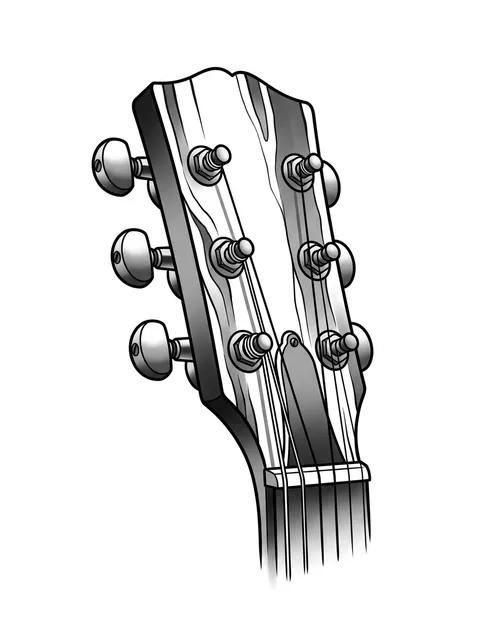
Black and grey illustrative guitar tattoo design Try it on — Black and grey illustrative guitar tattoo design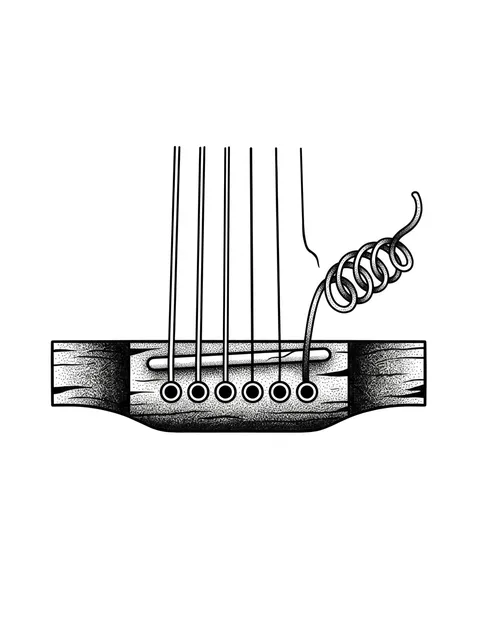
Black and white dotwork guitar tattoo design: the bridge of an acoustic guitar with six strings Try it on — Black and white dotwork guitar tattoo design: the bridge of an acoustic guitar with six strings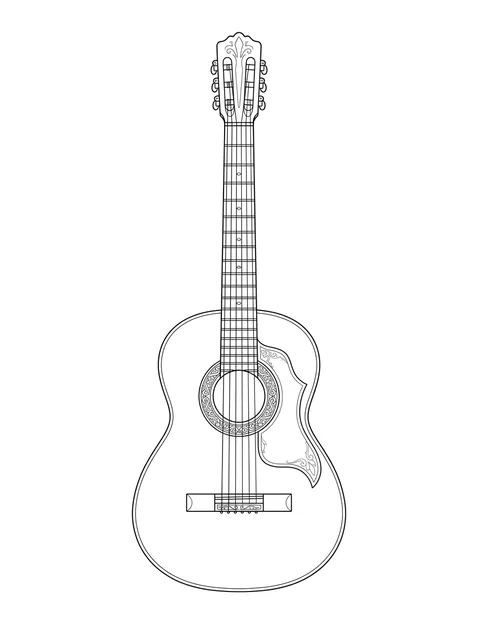
Black and white fine line guitar tattoo design, outline stencil Try it on — Black and white fine line guitar tattoo design, outline stencil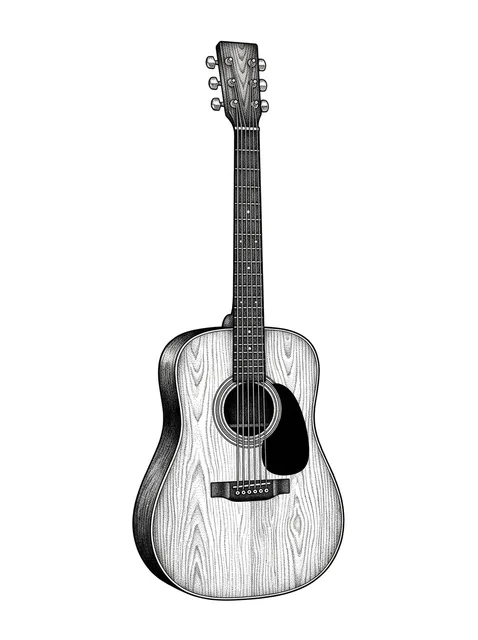
Black and grey realism guitar tattoo design Try it on — Black and grey realism guitar tattoo design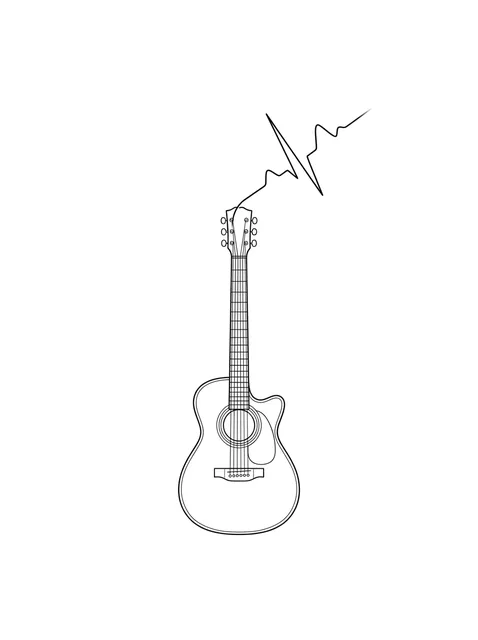
Black and white fine line guitar tattoo design, outline stencil Try it on — Black and white fine line guitar tattoo design, outline stencil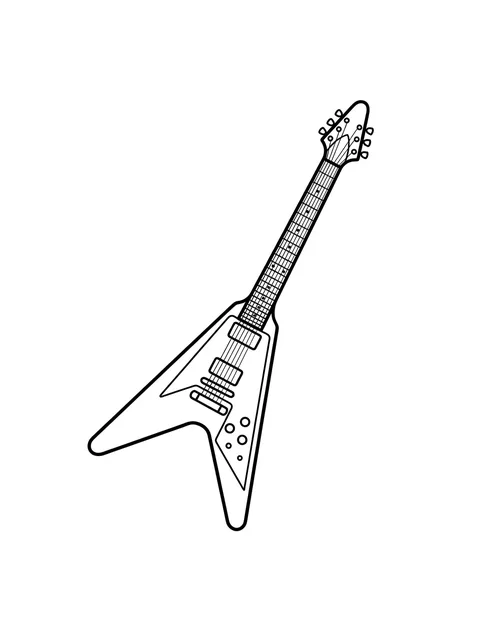
Black and white fine line guitar tattoo design, outline stencil Try it on — Black and white fine line guitar tattoo design, outline stencil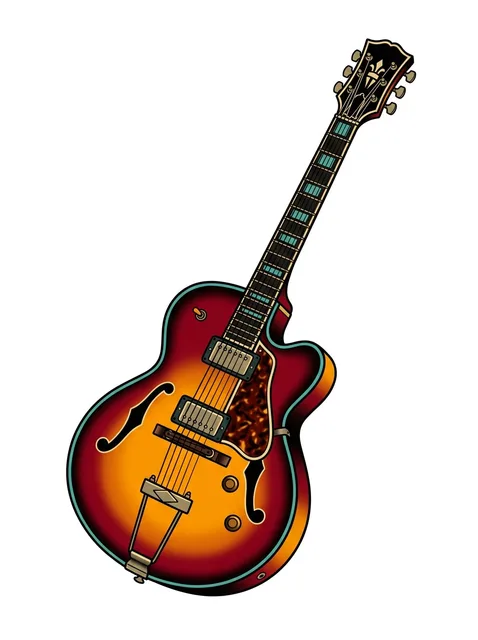
Color neo traditional guitar tattoo design Try it on — Color neo traditional guitar tattoo design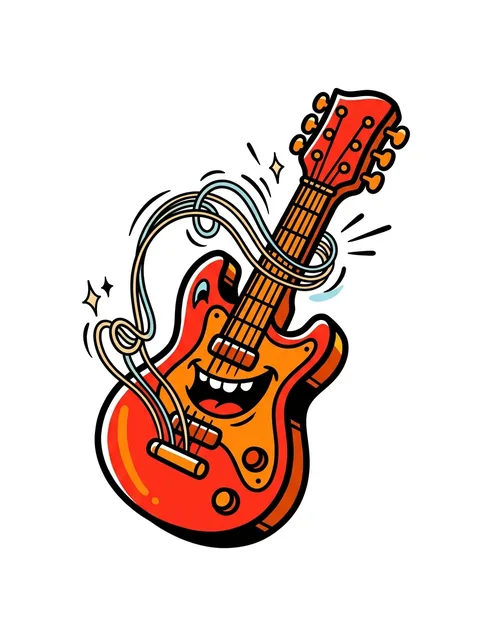
Color new school guitar tattoo design Try it on — Color new school guitar tattoo design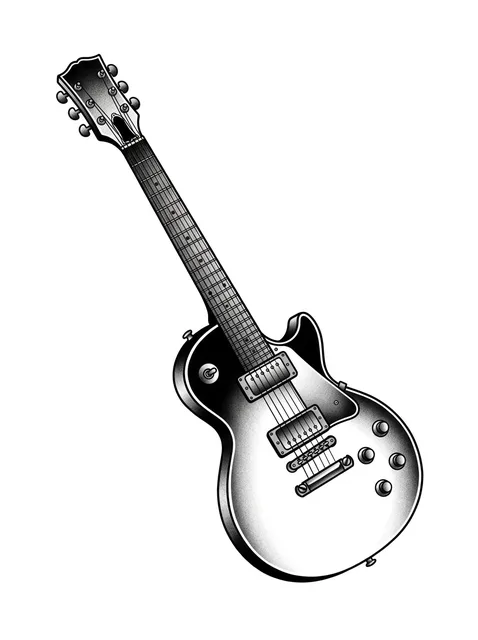
Black and grey illustrative guitar tattoo design Try it on — Black and grey illustrative guitar tattoo design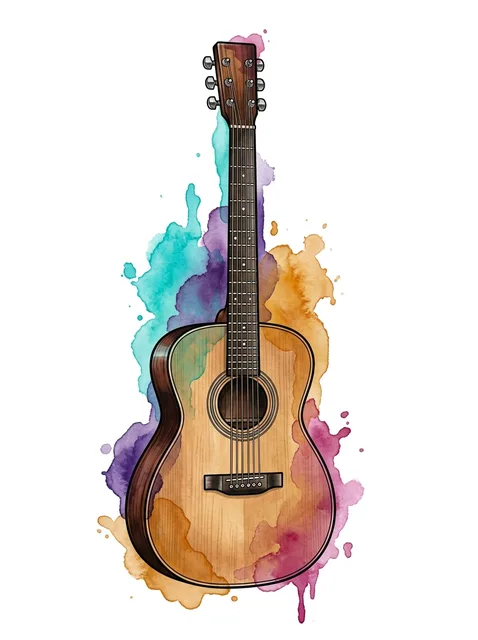
Color watercolor guitar tattoo design Try it on — Color watercolor guitar tattoo design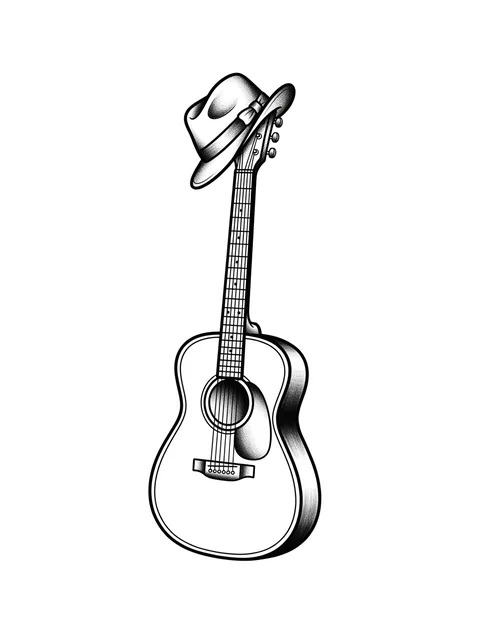
Black and grey neo traditional guitar tattoo design Try it on — Black and grey neo traditional guitar tattoo design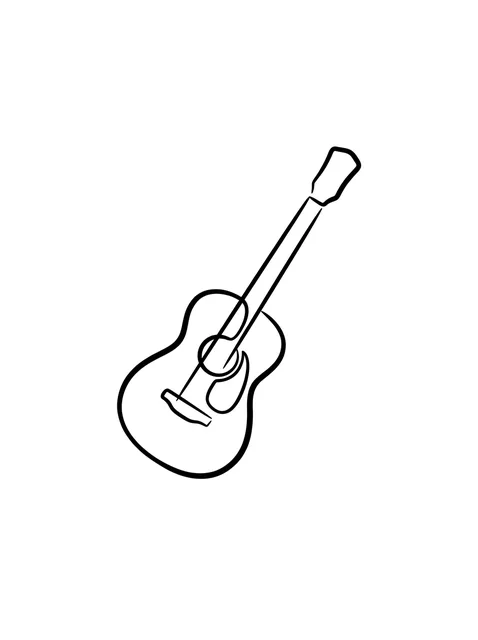
Black and white minimalist guitar tattoo design, outline stencil Try it on — Black and white minimalist guitar tattoo design, outline stencil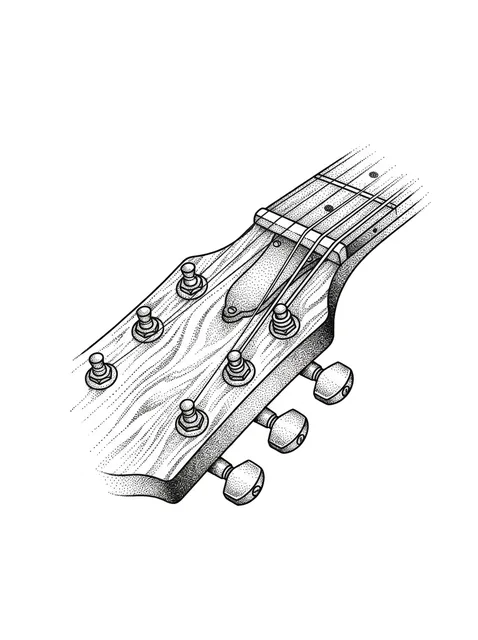
Black and grey dotwork guitar tattoo design Try it on — Black and grey dotwork guitar tattoo design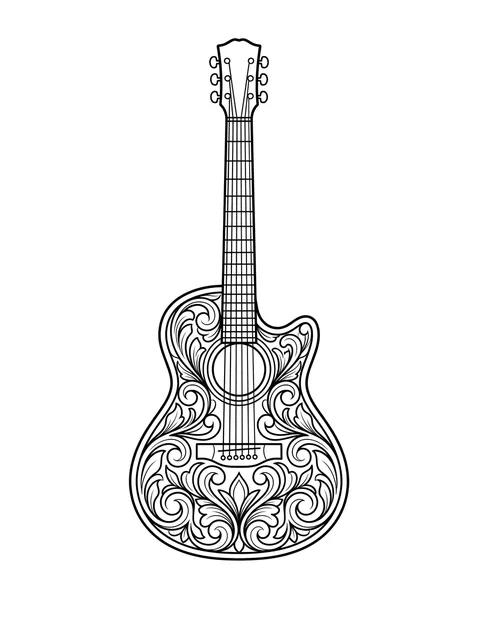
Black and grey ornamental guitar tattoo design Try it on — Black and grey ornamental guitar tattoo design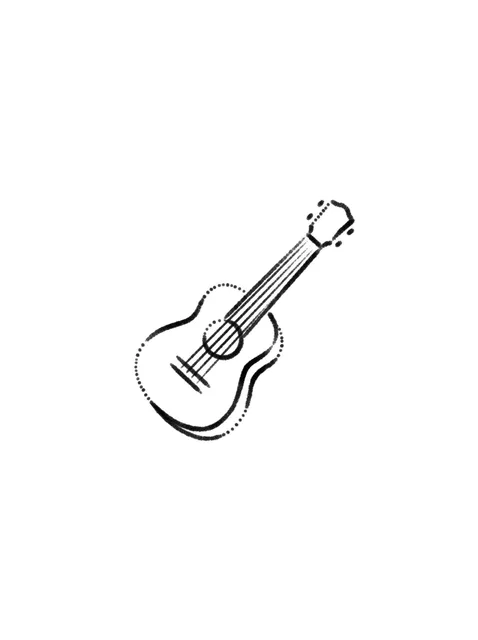
Black and grey stick and poke guitar tattoo design Try it on — Black and grey stick and poke guitar tattoo design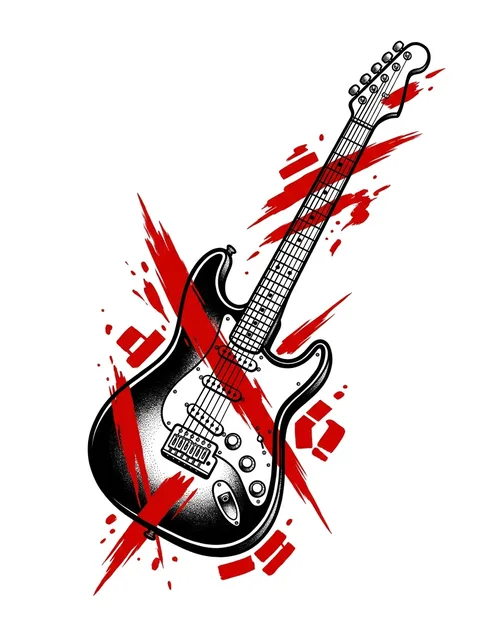
Color trash polka guitar tattoo design Try it on — Color trash polka guitar tattoo design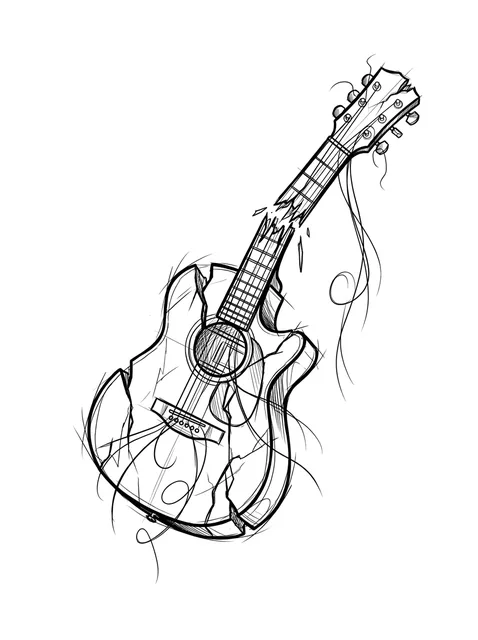
Black and grey sketch guitar tattoo design Try it on — Black and grey sketch guitar tattoo design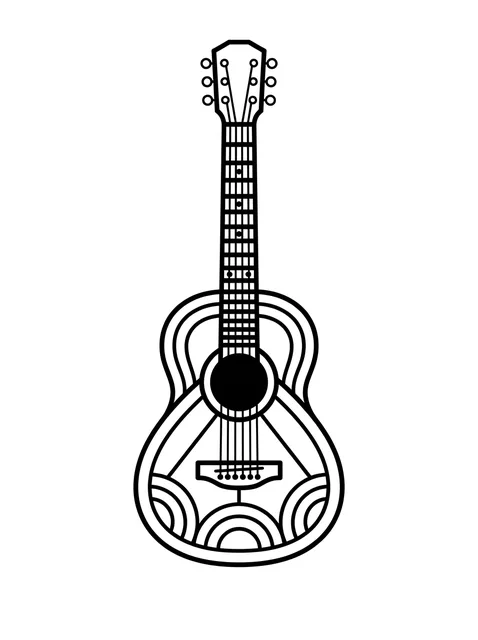
Black and white geometric guitar tattoo design, outline stencil Try it on — Black and white geometric guitar tattoo design, outline stencil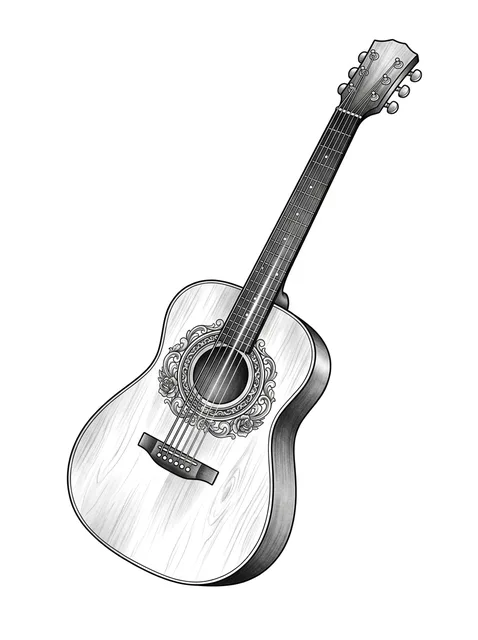
Black and grey illustrative guitar and rose tattoo design: an acoustic guitar Try it on — Black and grey illustrative guitar and rose tattoo design: an acoustic guitar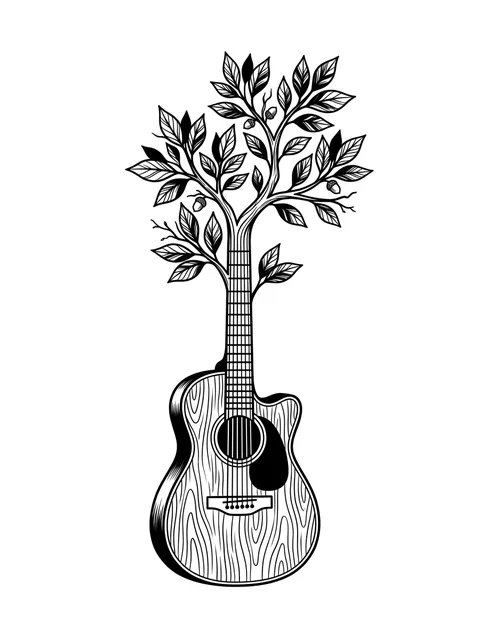
Black and grey surreal guitar and tree tattoo design Try it on — Black and grey surreal guitar and tree tattoo design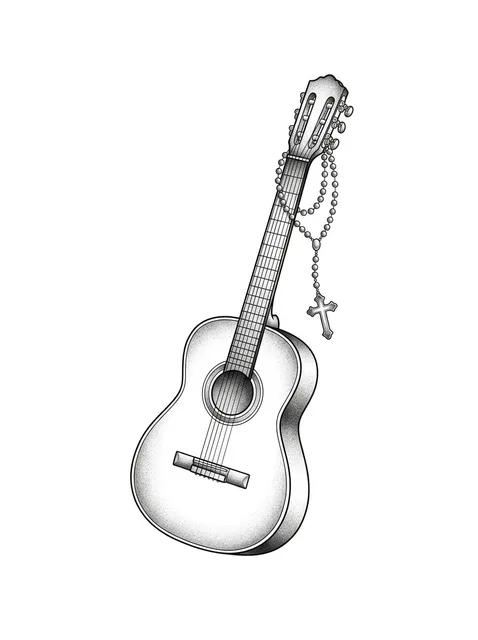
Black and grey chicano guitar and cross tattoo design Try it on — Black and grey chicano guitar and cross tattoo design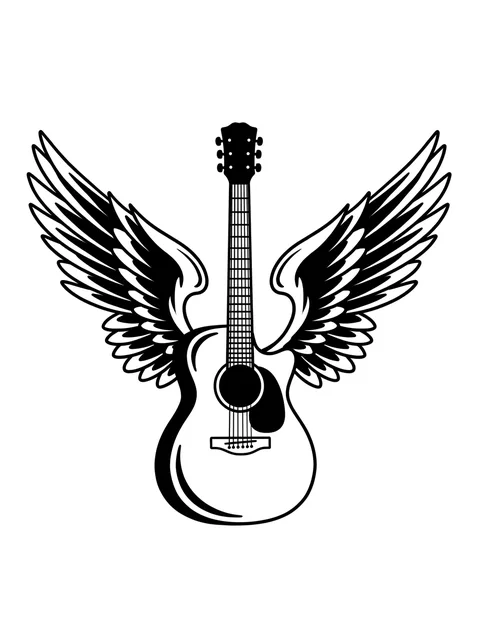
Black and white blackwork guitar and angel wings tattoo design Try it on — Black and white blackwork guitar and angel wings tattoo design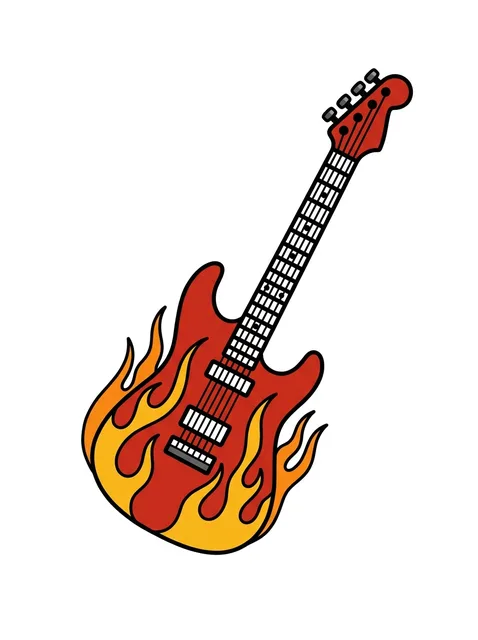
Color traditional guitar and fire tattoo design Try it on — Color traditional guitar and fire tattoo design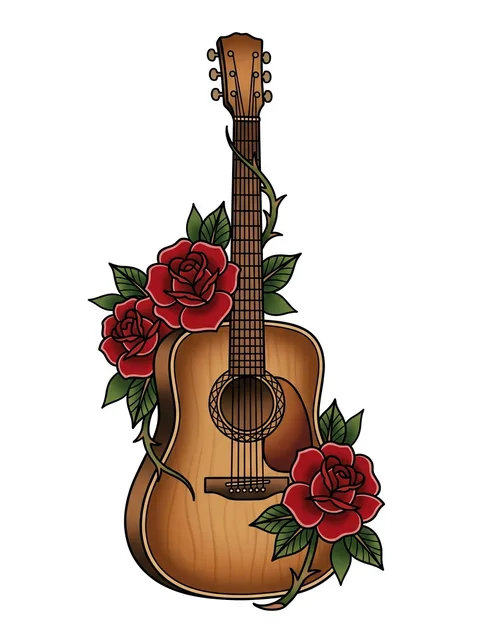
Color neo traditional guitar and rose tattoo design Try it on — Color neo traditional guitar and rose tattoo design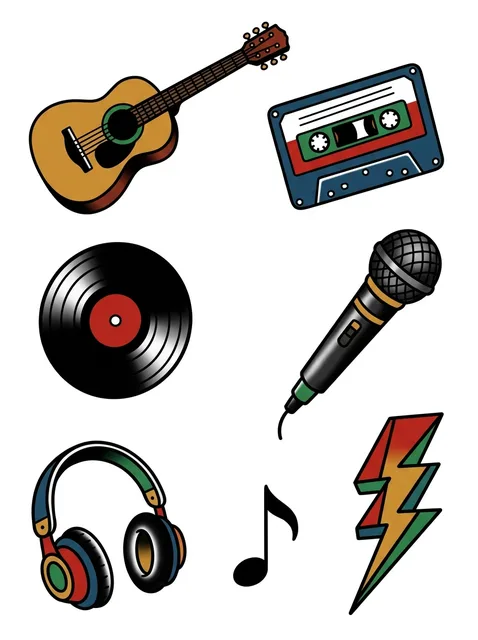
Color patchwork guitar and music note tattoo design Try it on — Color patchwork guitar and music note tattoo design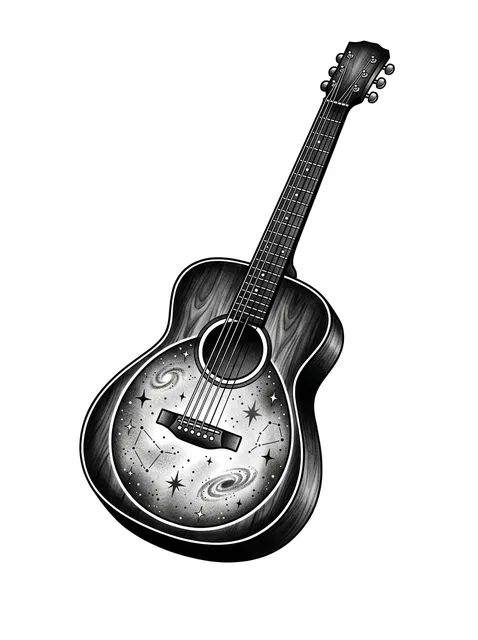
Black and grey illustrative guitar and galaxy tattoo design Try it on — Black and grey illustrative guitar and galaxy tattoo design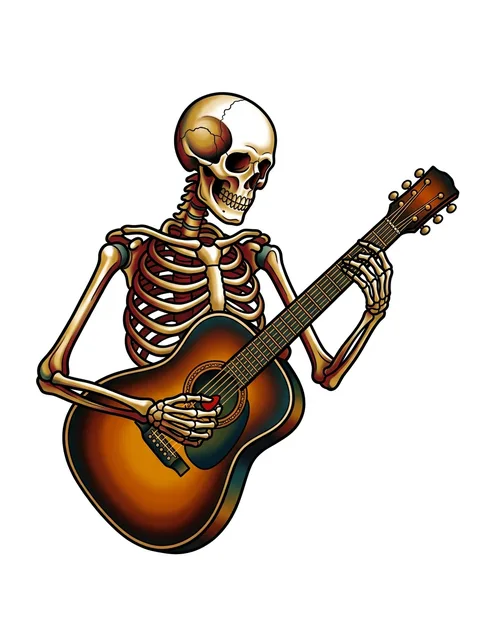
Color traditional guitar and skeleton tattoo design: a skeleton playing an acoustic guitar Try it on — Color traditional guitar and skeleton tattoo design: a skeleton playing an acoustic guitar


Tap any design to see it on your own skin in the try-on — no signup.
This set of 27 guitar designs, by the numbers
- Styles represented
- illustrative (4), fine line (3), neo traditional (3), dotwork (2), traditional (2), realism (1)
- Black-and-grey vs colour
- 70% black-and-grey, 30% colour
- Most often drawn with
- rose, tree, cross, angel wings
Counted from the 27 designs shown on this page. Every one was drawn for InkCraft — none are scraped or reposted. Free to reference with a link to this page.
What a guitar tattoo means
A guitar tattoo is almost never about music in general. A note or a clef stands for a song, while an instrument stands for the hands that played it, and most guitar pieces are portraits of a player: the wearer, or someone they have lost. That changes what matters. The right body shape and headstock for a real guitar count for more than any symbolism.
Plenty are portraits of one guitar in particular, because players name their instruments and wear them out. Willie Nelson's classical guitar Trigger has a hole worn clean through its top beside the sound hole. BB King named his guitars Lucille after a 1949 dance-hall fire in Twist, Arkansas: two men fighting over a woman called Lucille started the blaze, and King ran back into the burning building for his guitar. A tattoo of a specific instrument should be drawn from photographs of it, scars included.
The kind of guitar says which music. A classical or flamenco guitar, round sound hole and nylon strings, with a tap plate on the flamenco version, belongs to Spain. A steel-string acoustic belongs to folk and country, a hollow-body archtop with f-holes to jazz, a solid-body electric to blues and rock, and a Flying V to hard rock and metal. Pick the wrong body and a jazz player's memorial becomes a rock tattoo.
Fire and wreckage have their own history. Pete Townshend of The Who began smashing guitars on stage in 1964, and Jimi Hendrix set his Stratocaster alight at the Monterey Pop Festival in 1967, so a burning or broken guitar on skin quotes that moment of excess rather than any song. The winged guitar is its quiet opposite and usually a memorial for a musician. A guitar with a rosary hanging from the headstock, drawn in soft single-needle black and grey, ties the instrument to faith and family in the Chicano tradition.
Where the design comes from
The modern guitar has a short and well-documented history. Antonio de Torres, working in Seville and Almería in the middle of the nineteenth century, fixed the classical guitar's larger body and fan bracing, and every nylon-string guitar since descends from his. Steel strings and the big flat-top body came from American makers, Martin above all. Gibson's L-5 of the early 1920s put f-holes on a carved archtop for jazz; the solid-body electric arrived with Fender's Telecaster at the start of the 1950s and the Gibson Les Paul in 1952; and the set of shapes was complete by 1958, when Gibson released the Flying V and the Explorer. Painters had claimed the guitar as an object long before tattooists did. Picasso painted The Old Guitarist in 1903 and 1904, and in 1912 he built a guitar out of cardboard that the Museum of Modern Art in New York now owns, one of the cubist constructions that turned the instrument into flat planes and arcs.
Choosing yours
- Draw a real guitar or none. Players notice at once when the body, the headstock and the hardware come from three different instruments, and they will count the strings against the tuning pegs: six of each on a standard guitar, three a side or six in a line depending on the maker. Work from a photograph of the model you mean, or of the actual instrument if it belonged to someone.
- Decide which hand it is for. The pickguard sits where the strumming hand strikes, so a guitar built for a left-handed player is mirrored, pickguard and all, and a stock reference is almost always right-handed. If the tattoo is a portrait of a left-handed player's instrument, say so at the consultation, and if you play, hold your own guitar against the drawing.
- Strings are the ageing problem. Six fine parallel lines running the length of the neck are exactly what spreads together first, and on a small guitar they turn into a grey bar over the years. Below about 10 cm, draw fewer strings, leave them off the neck, or let the frets carry the detail; the continuous-line guitar here leaves them out entirely and loses nothing.
Size, cost and placement
How big, and what it costs
An outline guitar at 6 to 8 cm is a short sitting, often the shop minimum. A realistic acoustic with wood grain, strings and tuning pegs runs 15 to 20 cm and three to five hours, because grain is slow to shade and the strings have to be ruler straight. A colour sunburst, flames or roses add a session, and a full guitar with a name and dates worked in is quoted as a half or whole day.
Where it sits, and how much it hurts
A guitar is long and narrow and wants a field of the same shape: the forearm, the outer arm down to the elbow, the calf or the side of the ribs, with the neck running along the limb. A headstock or sound-hole close-up fits the wrist or the inner arm. The forearm and calf are moderate; the ribs are the painful choice for the long composition.
What to ask your artist
- To work from a photograph of the actual model or instrument, and to check the string and tuning-peg count against it.
- Whether the guitar should be mirrored for a left-handed player.
- How the strings will be handled at your size, since six fine lines are the first thing to merge.
Prices vary widely by city and artist — treat these as session lengths rather than quotes, and expect a shop minimum on anything small. The cost guide turns hours into money by size, placement and style.
Common questions
What does a guitar say about the person wearing it?
Usually that they play, or loved someone who did: it stands for a person more than an idea. The kind of guitar adds the music, from flamenco to jazz to metal, and what surrounds it sets the tone: wings for a memorial, flames for rock and roll, a rosary for faith, roses for love.
How is a guitar tattoo different from a music note tattoo?
A note or clef stands for a song, or for music as a whole. A guitar stands for the playing and for one kind of music, so it is the more personal and more specific choice. It is also a larger drawing, with a body, a neck and a headstock that all need room.
Should I tattoo my own guitar?
If that guitar is the reason for the tattoo, yes, and draw it from photographs of the instrument rather than from a catalogue picture of the same model. Wear on the finish, a crack, a sticker or a patch rubbed pale by a strumming arm are what make it yours rather than any guitar of that make.
Can a guitar tattoo be small?
Yes, if it gives up the strings. At 5 or 6 cm a guitar reads clearly as an outline with a sound hole, but six strings at that size close into one grey band. For a small piece choose an outline, a headstock on its own, or a single continuous line.
Which way round should the guitar be drawn?
Right-handed unless the player was not. Jimi Hendrix, for one, was left-handed and played right-handed Stratocasters turned upside down and restrung, so a faithful portrait of his guitar has the knobs and the row of tuning pegs on the opposite side from any catalogue Stratocaster.
See it on your skin before you commit
InkCraft places any of these designs on a photo of you — scaled, wrapped and shaded to the placement you pick.