 InkCraft
Crown of Thorns Tattoo Ideas, Designs and Meaning
22 original crown of thorns designs drawn for InkCraftBy Uladzimir TumanauUpdated
Roman soldiers plaited it to mock a man hailed as king, and Christians have worn it since as kingship reached through humiliation. Thorns are fine points that thicken as the ink settles, so a small ring wants few bold thorns rather than many thin ones.
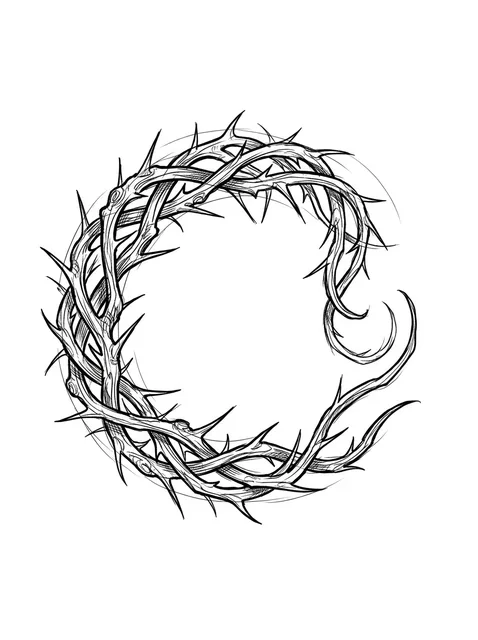
Black and grey sketch crown of thorns tattoo design Try it on — Black and grey sketch crown of thorns tattoo design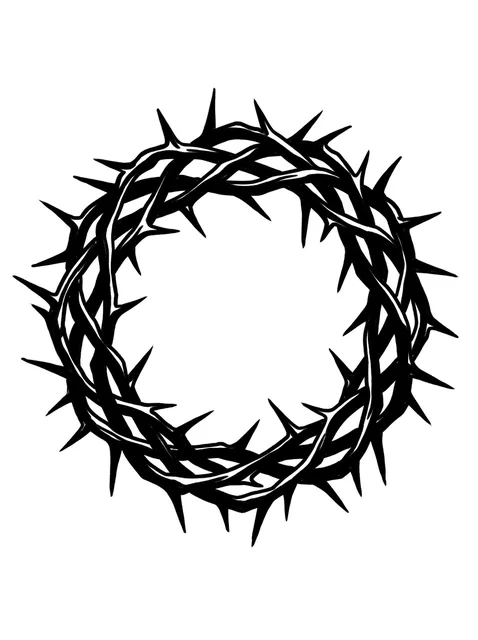
Black and white blackwork crown of thorns tattoo design Try it on — Black and white blackwork crown of thorns tattoo design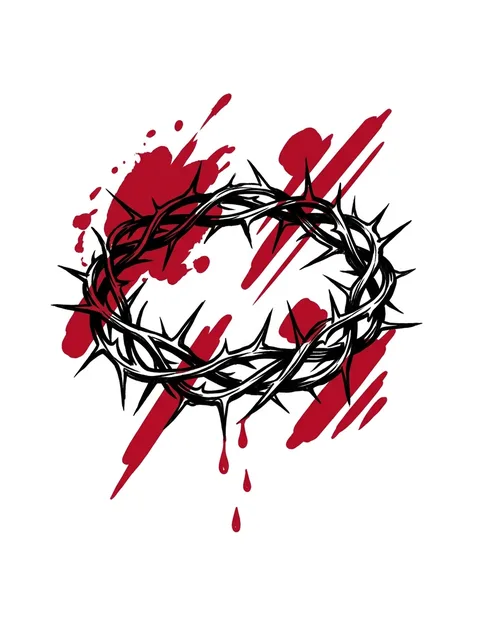
Color trash polka crown of thorns tattoo design Try it on — Color trash polka crown of thorns tattoo design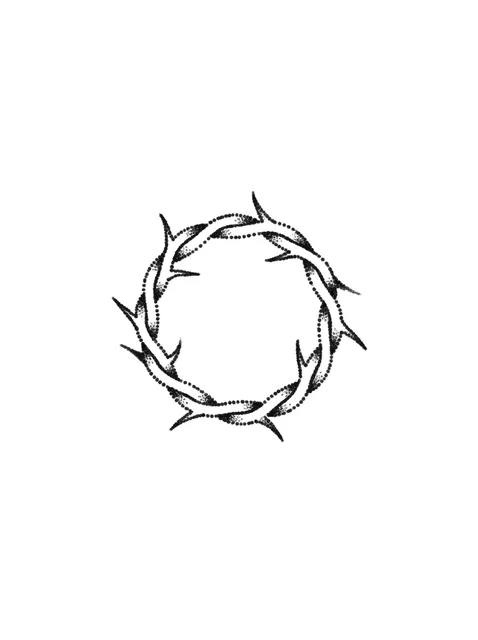
Black and grey fine line crown of thorns tattoo design, outline stencil: a few short sharp thorns Try it on — Black and grey fine line crown of thorns tattoo design, outline stencil: a few short sharp thorns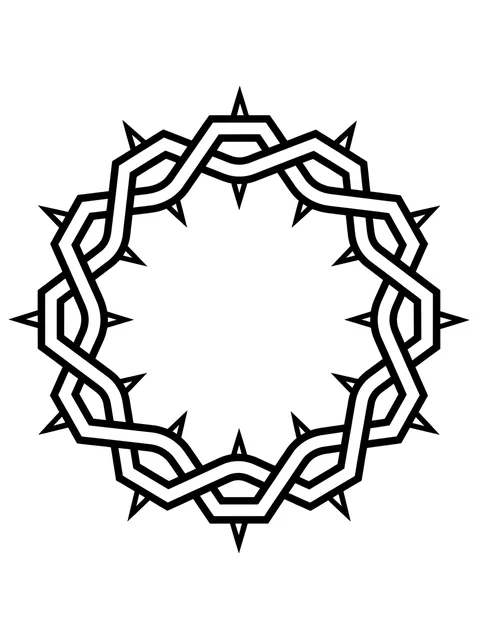
Black and white geometric crown of thorns tattoo design, outline stencil Try it on — Black and white geometric crown of thorns tattoo design, outline stencil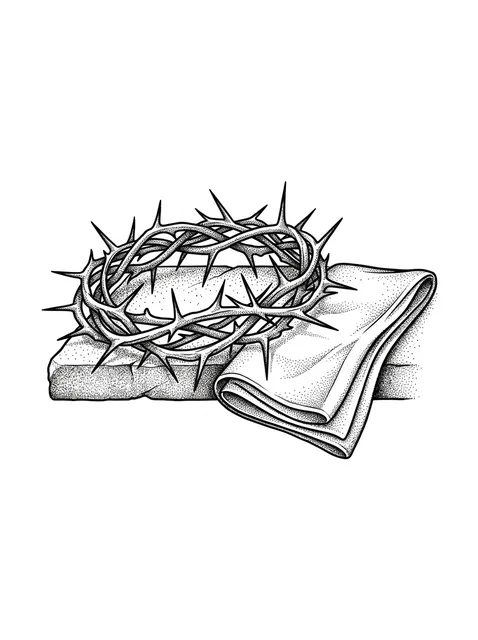
Black and grey dotwork crown of thorns tattoo design Try it on — Black and grey dotwork crown of thorns tattoo design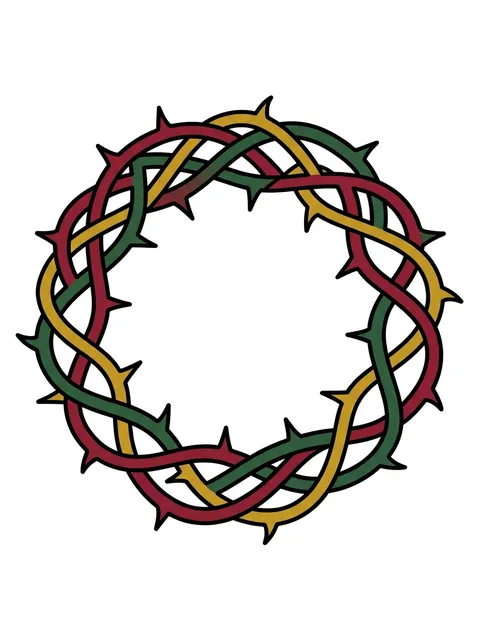
Color celtic crown of thorns tattoo design Try it on — Color celtic crown of thorns tattoo design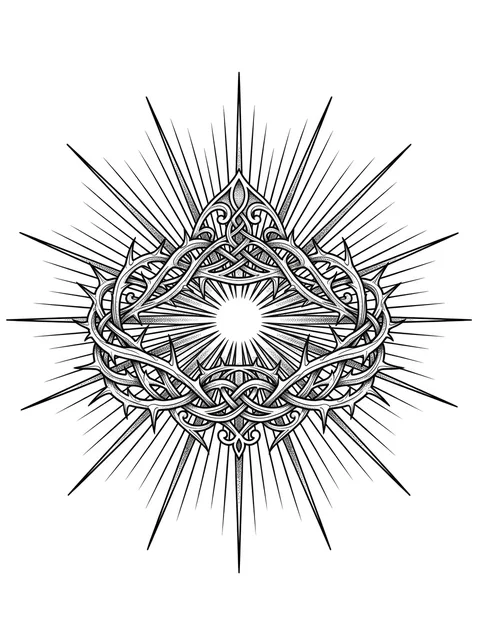
Black and grey ornamental crown of thorns tattoo design Try it on — Black and grey ornamental crown of thorns tattoo design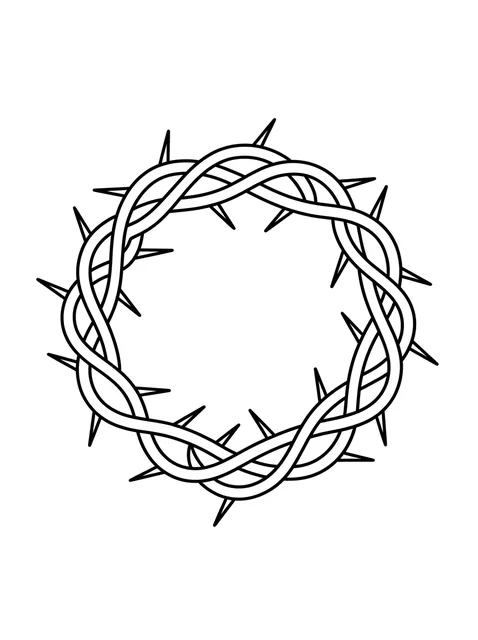
Black and white linework crown of thorns tattoo design, outline stencil Try it on — Black and white linework crown of thorns tattoo design, outline stencil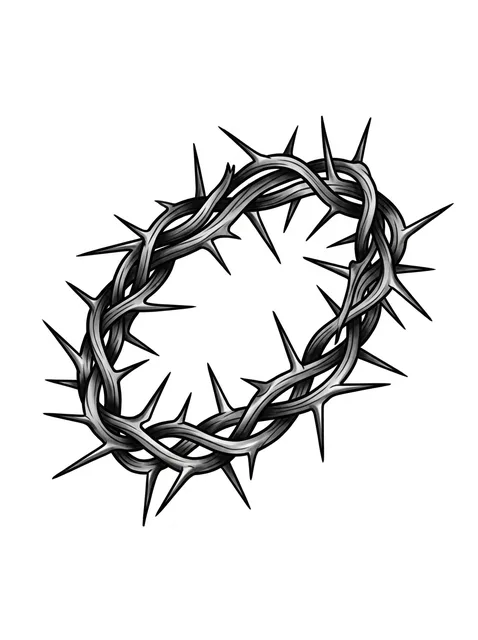
Black and grey realism crown of thorns tattoo design Try it on — Black and grey realism crown of thorns tattoo design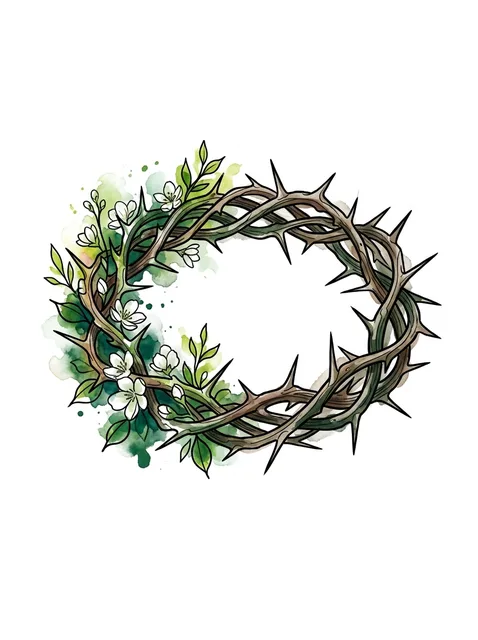
Color watercolor crown of thorns tattoo design Try it on — Color watercolor crown of thorns tattoo design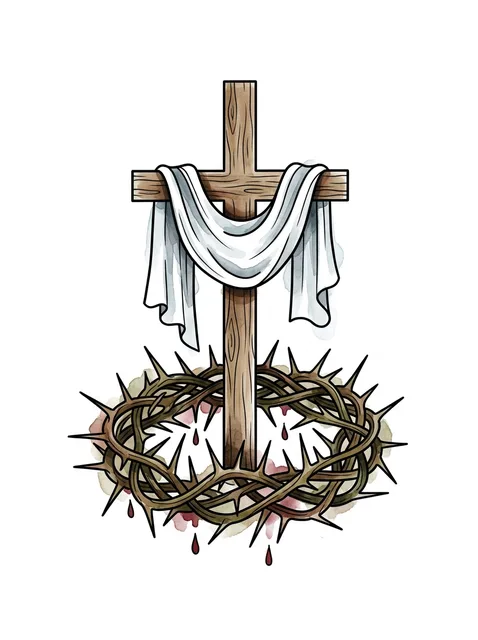
Color illustrative crown of thorns and cross tattoo design Try it on — Color illustrative crown of thorns and cross tattoo design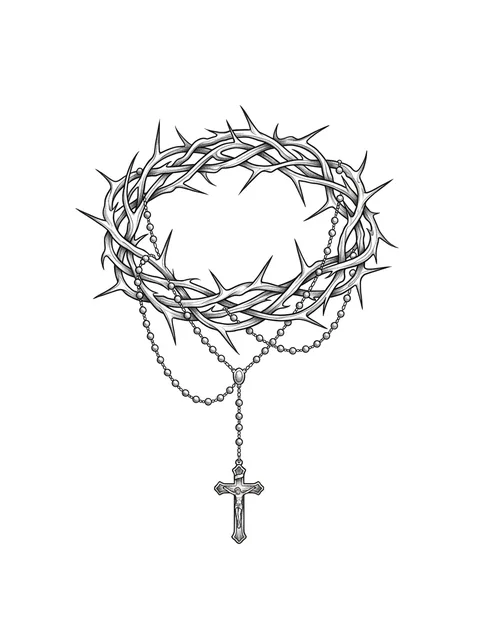
Black and grey fine line crown of thorns and rosary tattoo design, outline stencil Try it on — Black and grey fine line crown of thorns and rosary tattoo design, outline stencil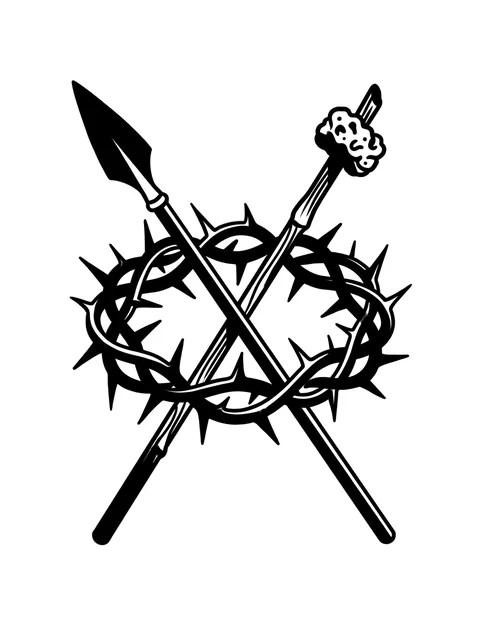
Black and white blackwork crown of thorns and lance tattoo design Try it on — Black and white blackwork crown of thorns and lance tattoo design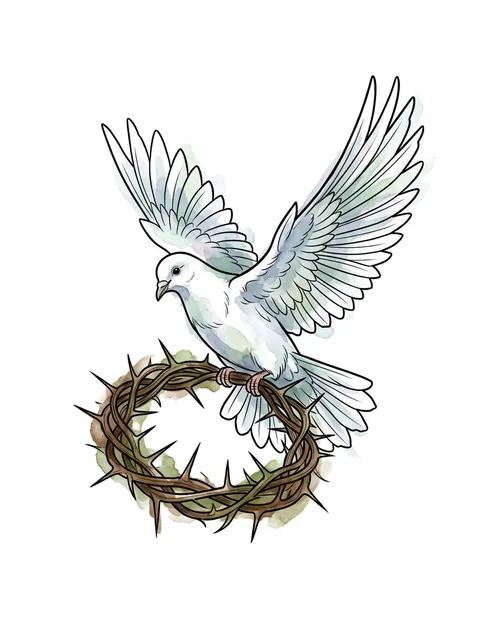
Color watercolor crown of thorns and dove tattoo design Try it on — Color watercolor crown of thorns and dove tattoo design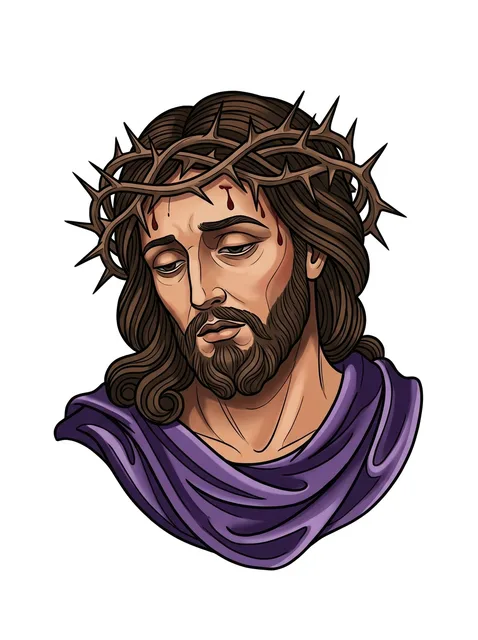
Color neo traditional crown of thorns and jesus tattoo design Try it on — Color neo traditional crown of thorns and jesus tattoo design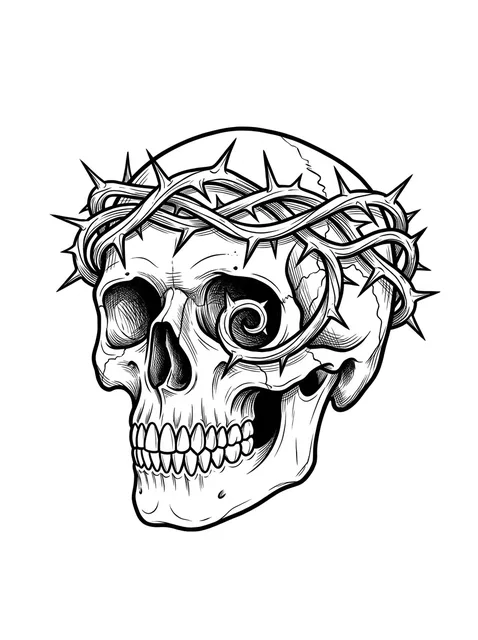
Black and grey illustrative crown of thorns and skull tattoo design Try it on — Black and grey illustrative crown of thorns and skull tattoo design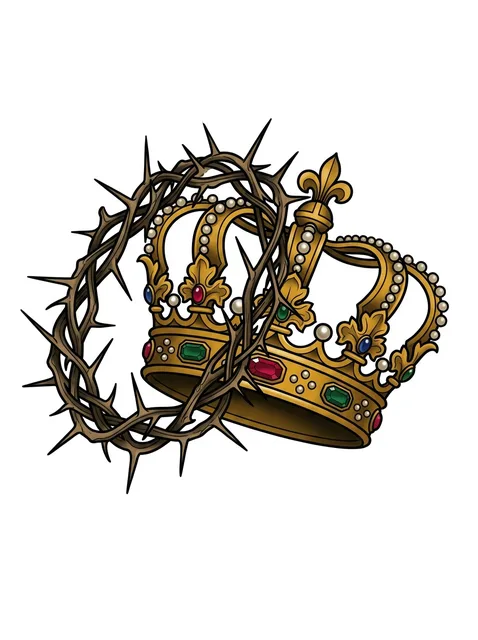
Color neo traditional crown of thorns and crown tattoo design Try it on — Color neo traditional crown of thorns and crown tattoo design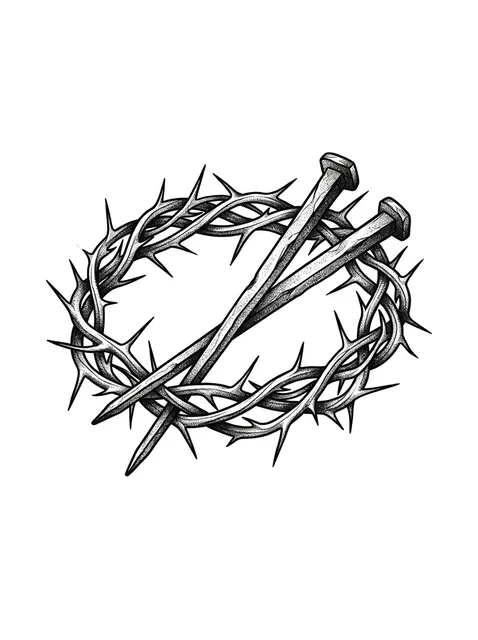
Black and grey illustrative crown of thorns and nail tattoo design Try it on — Black and grey illustrative crown of thorns and nail tattoo design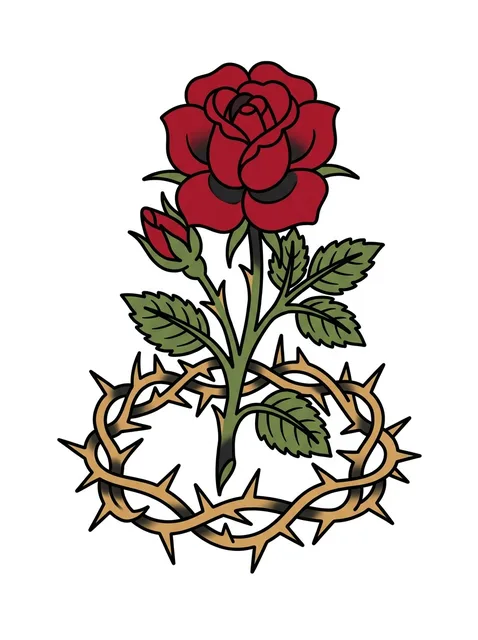
Color traditional crown of thorns and rose tattoo design Try it on — Color traditional crown of thorns and rose tattoo design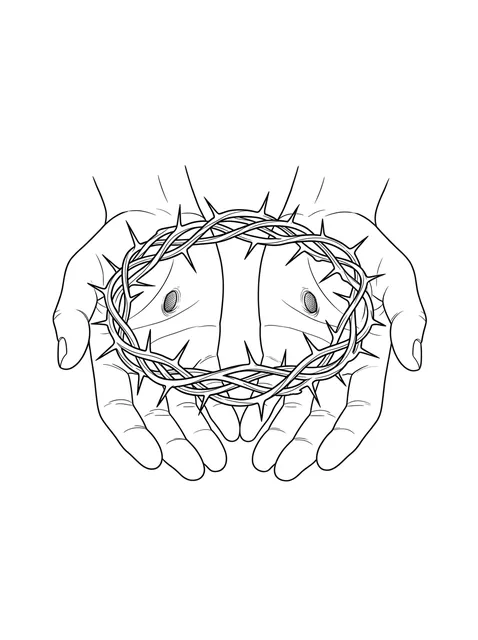
Black and white fine line crown of thorns and hand tattoo design, outline stencil Try it on — Black and white fine line crown of thorns and hand tattoo design, outline stencil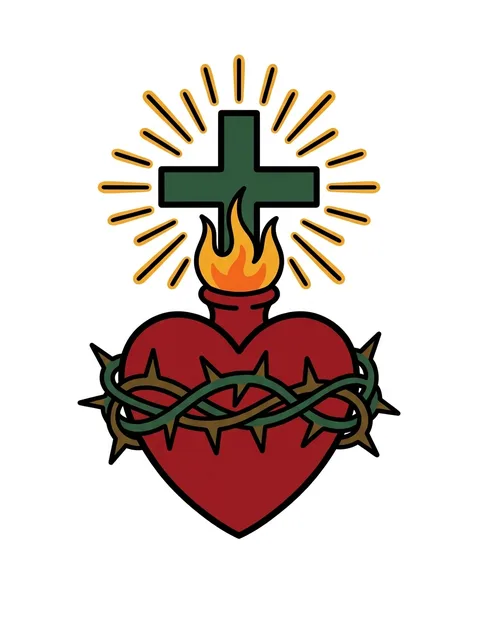
Color traditional crown of thorns and heart tattoo design Try it on — Color traditional crown of thorns and heart tattoo design


Tap any design to see it on your own skin in the try-on — no signup.
This set of 22 crown of thorns designs, by the numbers
- Styles represented
- fine line (3), illustrative (3), blackwork (2), watercolor (2), neo traditional (2), traditional (2)
- Black-and-grey vs colour
- 59% black-and-grey, 41% colour
- Most often drawn with
- cross, rosary, lance, dove
Counted from the 22 designs shown on this page. Every one was drawn for InkCraft — none are scraped or reposted. Free to reference with a link to this page.
What a crown of thorns tattoo means
The crown was an insult before it was a symbol. In the Gospels of Matthew, Mark and John, soldiers twist thorny branches into a crown, put a purple or scarlet cloak on Jesus and a reed in his hand for a sceptre, then kneel and hail him as king of the Jews. Every piece of it is royal costume made out of pain, and the Christian reading turns the joke round: the mockery was accurate, and this is what his kingship looked like.
On its own it says suffering accepted rather than escaped, and because it shows no body it moves easily between churches. Catholics pray the Crowning with Thorns as the third Sorrowful Mystery of the Rosary, Lutherans sing Paul Gerhardt's O Sacred Head, Now Wounded, and during Orthodox Holy Week the icon of Christ the Bridegroom shows him wearing it, a reed in his bound hands.
What goes with it changes the sentence. With nails, a lance and a sponge on a reed it joins the Arma Christi, the instruments of the Passion. Bound round a burning heart under a cross it is the Sacred Heart as Margaret Mary Alacoque described it at Paray-le-Monial in the 1670s. Left on a stone ledge by folded linen it points past the Passion to the empty tomb, and a rose or white blossom growing through the ring says the same in plants.
The image has a secular life too: at the 1896 Democratic convention William Jennings Bryan warned against pressing a crown of thorns on the brow of labour, and the hall understood him. What some Christians object to is the crown used for shock or as a joke, drenched in blood for effect, or placed on the feet. The skull crowned with thorns here reads as a memento mori, mortality under the same crown.
Where the design comes from
The relic kept in Paris as the crown is a circlet of bundled rushes; its thorns were detached over the centuries and given away separately. Pilgrims to Jerusalem mention a crown by the fifth century; it later went to Constantinople, where the Latin emperor Baldwin II pledged it to Venetian lenders and then sold it to Louis IX of France. Louis brought it to Paris in 1239 and built the Sainte-Chapelle, finished in 1248, to house it. Firefighters carried it out of Notre-Dame during the fire of April 2019, and it returned there in December 2024. The plant is unknown: Christ's thorn jujube, Ziziphus spina-christi, is the usual candidate, while the house plant sold as crown of thorns, Euphorbia milii, comes from Madagascar and never grew in Judea.
Choosing yours
- Decide between an object and a band. Every crown here is drawn as a thing: flat from above, tilted into an oval, resting on a ledge, carried by a dove or held in wounded hands. A band round the arm is a different drawing, since the strands must meet behind the limb with no visible join, and most artists draw it freehand on the skin.
- Fewer, bolder thorns last longer. Fine points thicken as the ink spreads, so a ring bristling with needle-thin spikes becomes a furry circle within ten years; the blackwork and geometric rings here keep theirs as solid wedges, and the fine-line ring keeps them short and few.
- Choose how much blood. A few drops, as on the trash-polka ring and the Ecce Homo head, mark the Passion; much more reads as gore, which many Christians find out of place.
Size, cost and placement
How big, and what it costs
A plain ring in line or fine line is shop-minimum work at 5 to 7 cm. A shaded ring, or one crossed with nails, runs 8 to 12 cm and one to two hours. The Sacred Heart, the dove and the Ecce Homo head are 12 to 18 cm and three to five hours, the head the longest of them.
Where it sits, and how much it hurts
A flat ring suits round fields: the shoulder cap, the back of the upper arm, the centre of the chest or between the shoulder blades. A tilted ring is wider than tall and sits across the forearm or along the collarbone. The sternum and collarbone hurt most; the outer arm least.
What to ask your artist
- How many thorns the ring keeps at your size, and how thick.
- For a band, whether they will draw it freehand so the join disappears.
- How much blood, if any, and that the drops stay small.
Prices vary widely by city and artist — treat these as session lengths rather than quotes, and expect a shop minimum on anything small. The cost guide turns hours into money by size, placement and style.
Common questions
Do I have to be Christian to wear one?
No, but it stays a Christian image whoever wears it, and most people will think of Christ before they think of you. Believers tend to object more to gore, jokes and low placement than to the wearer's own faith.
Why does the Sacred Heart have thorns round it?
Because that is how Margaret Mary Alacoque, a Visitation nun at Paray-le-Monial, described the heart of Christ in visions from 1673: ringed with thorns for the pricks sin gives it, a cross planted on top, and flames. The traditional Sacred Heart on this page follows her account.
Will a thorn ring work as a wristband?
Only redrawn for the wrist: narrow strands, with the thorns lying almost flat along them, since tall spikes on a narrow band blur first. The inner wrist fades faster than the forearm, so plan a touch-up.
What are the lance and the sponge doing with it?
They are two more instruments of the Passion. The lance pierced Jesus's side in John's Gospel, and later legend named its soldier Longinus; the sponge on a reed held the sour wine offered to him on the cross.
What a crown of thorns tattoo can mean
The meanings this motif carries on the pages that argue them. Each line is that page's own reason for including it.
- Christian tattoos
- The one element in the set that is a humiliation rather than a glory, which is exactly why it is chosen. It also works as a band, so it is the version that suits a ring of the forearm or a wrist.
See it on your skin before you commit
InkCraft places any of these designs on a photo of you — scaled, wrapped and shaded to the placement you pick.