 InkCraft
Tribal tattoos for men, and where they came from
40 men's tribal tattoos photographed on skin for InkCraftBy Uladzimir TumanauUpdated
These are our own tribal designs, photographed on men: almost all solid black, on the back, chest, ribs, arms and legs, with a few animals drawn the same way. They descend from the 1990s band, not from any one tradition, and the notes below say where that line runs.
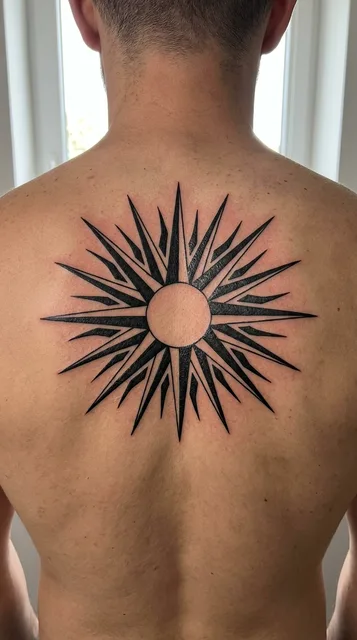
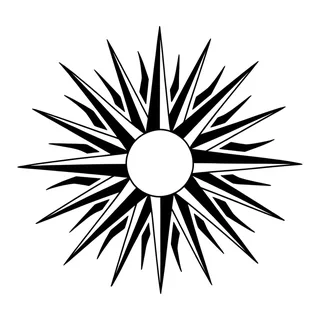
- tribal · black and whiteTry it on — Black and white tribal tattoo on a man's back
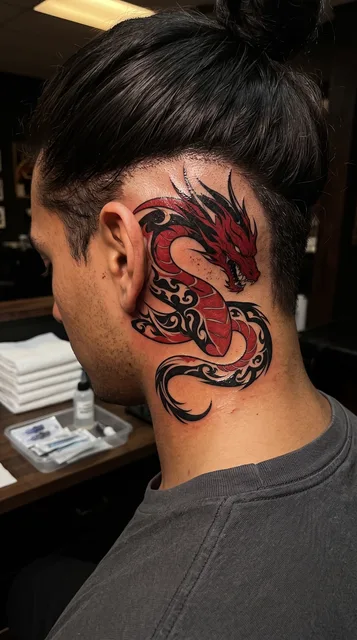
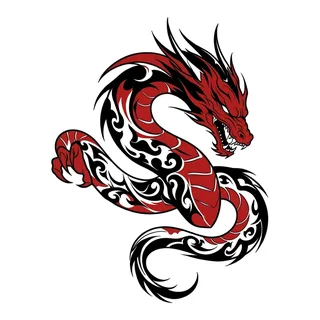
- tribal · colourTry it on — Color tribal dragon tattoo behind a man's ear
- tribal · black and whiteTry it on — Black and white tribal ornament tattoo on a man's bicep
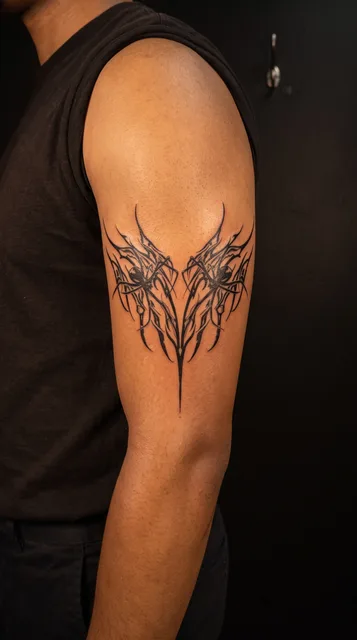
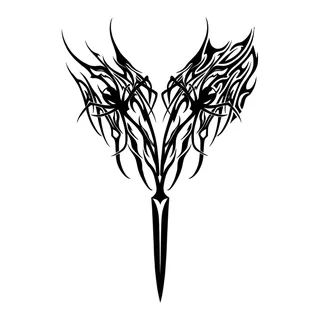
- tribal · black and whiteTry it on — Black and white tribal cherry blossom tattoo on a man's calf
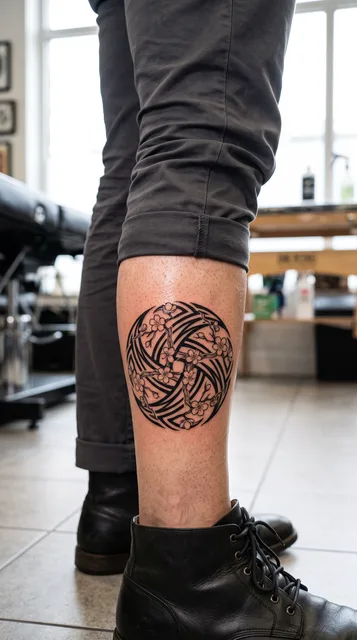
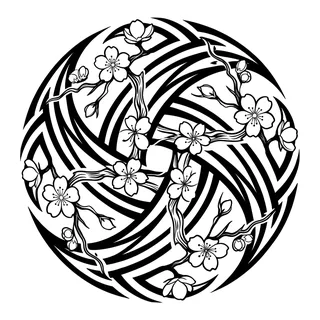
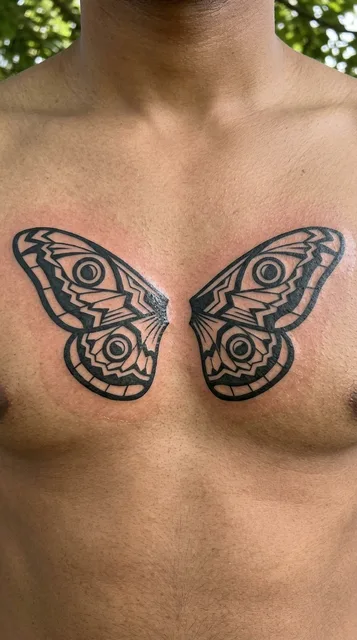
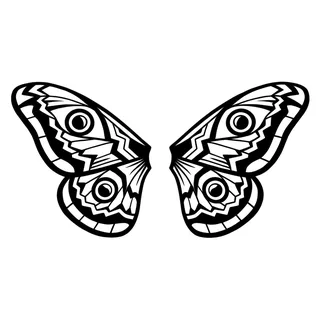
- tribal · black and whiteTry it on — Black and white tribal tattoo on a man's chest
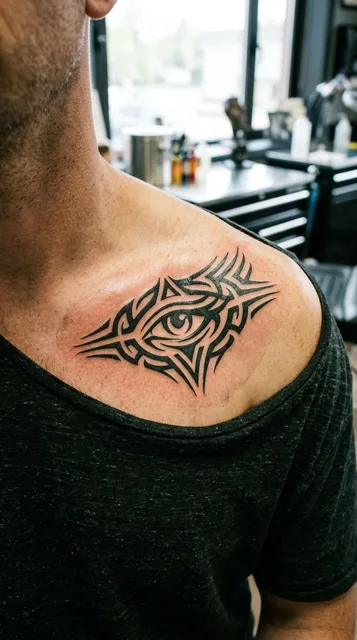
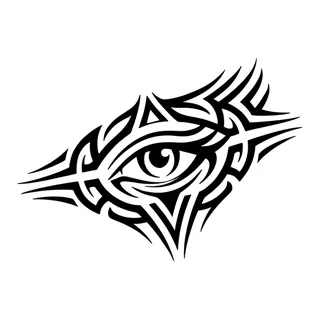
- tribal · black and whiteTry it on — Black and white tribal eye tattoo on a man's collarbone
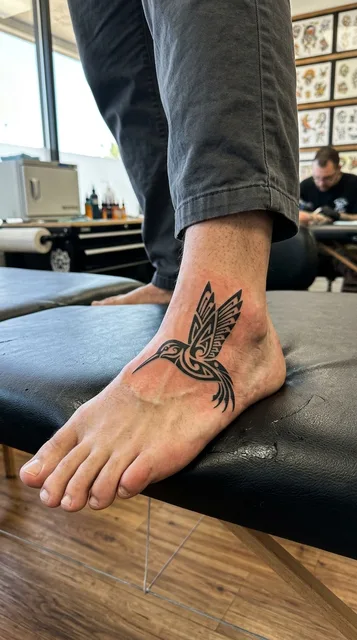
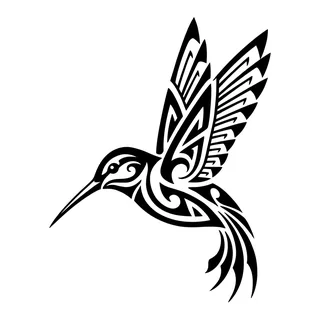
- tribal · black and whiteTry it on — Black and white tribal hummingbird tattoo on a man's foot
- tribal · black and whiteTry it on — Black and white tribal compass rose tattoo on a man's forearm
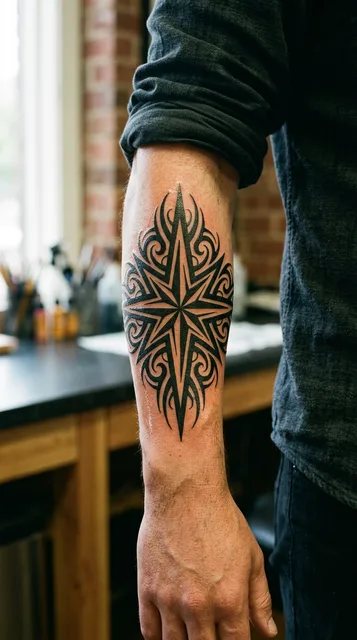
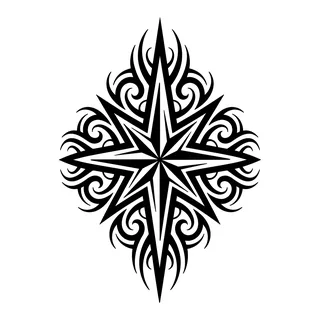
- tribal · black and whiteTry it on — Black and white tribal stars tattoo as a full sleeve on a man
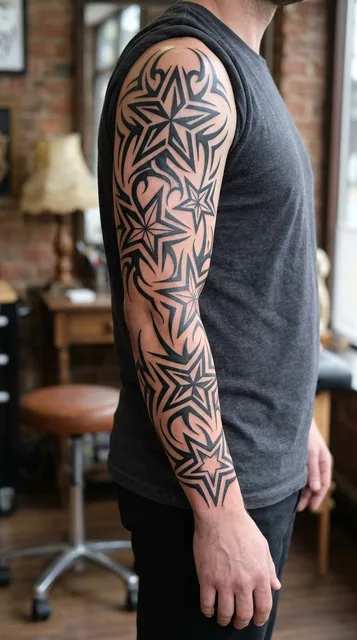
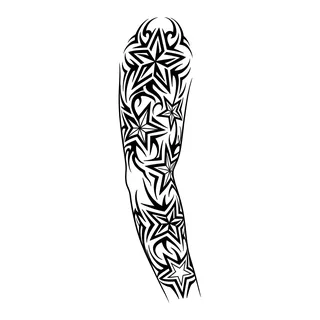
- tribal · black and whiteTry it on — Black and white tribal tattoo on a man's hip
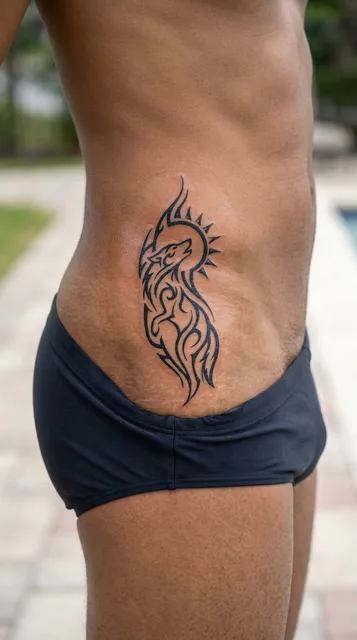
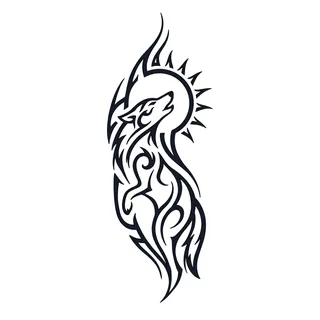
- tribal · black and whiteTry it on — Black and white tribal ornament tattoo on a man's knee
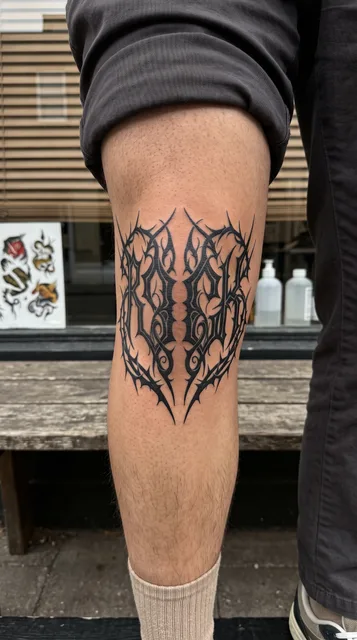
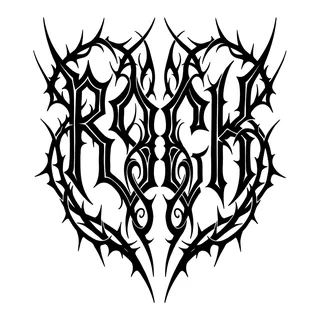
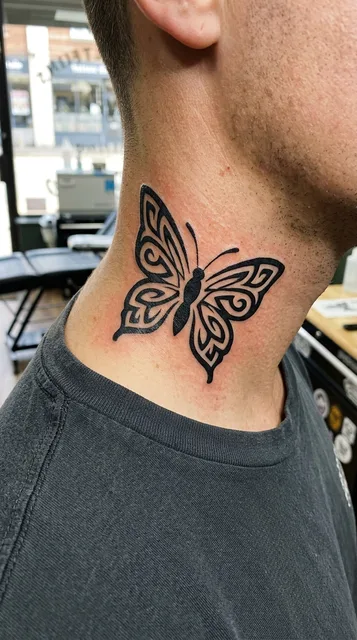
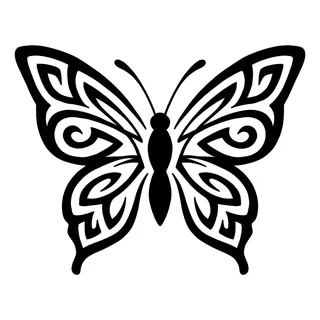
- tribal · black and whiteTry it on — Black and white tribal butterfly tattoo on a man's neck
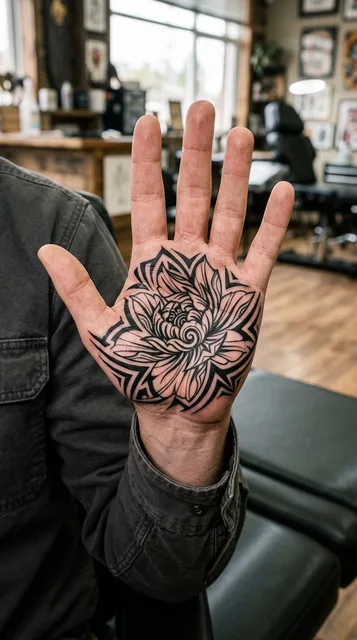
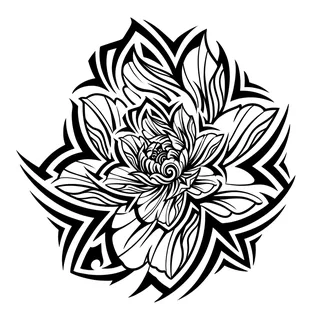
- tribal · black and whiteTry it on — Black and white tribal flower tattoo on a man's palm
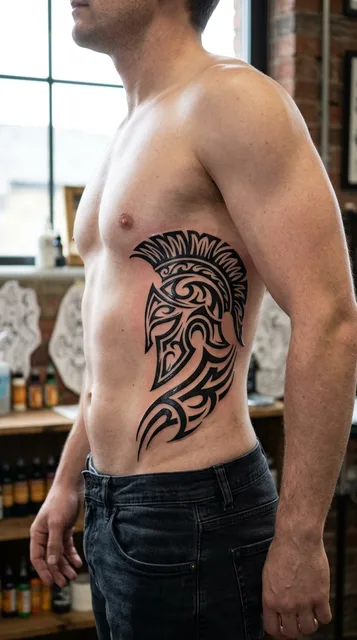
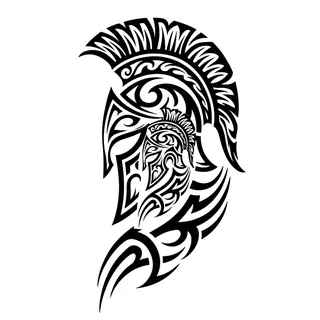
- tribal · black and whiteTry it on — Black and white tribal tattoo on a man's ribs
- tribal · black and whiteTry it on — Black and white tribal butterfly tattoo on a man's shoulder
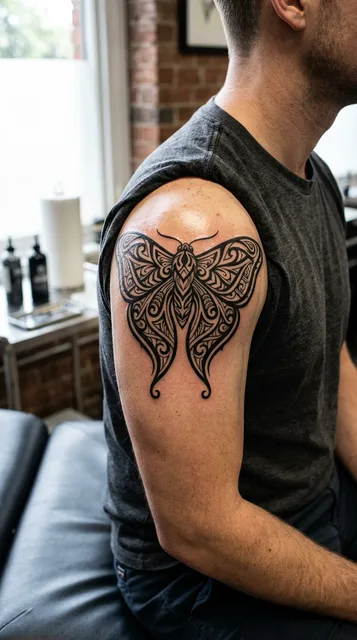
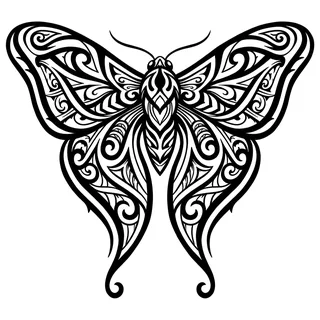
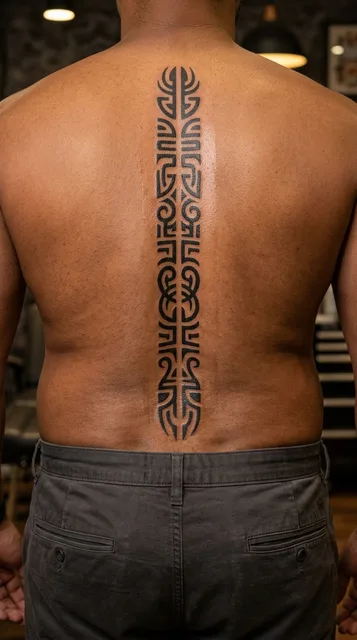
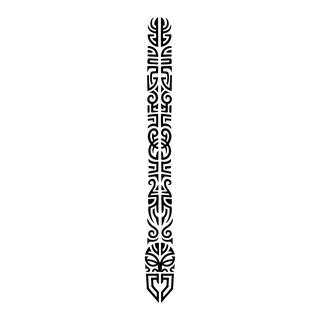
- tribal · black and whiteTry it on — Black and white tribal tattoo on a man's spine
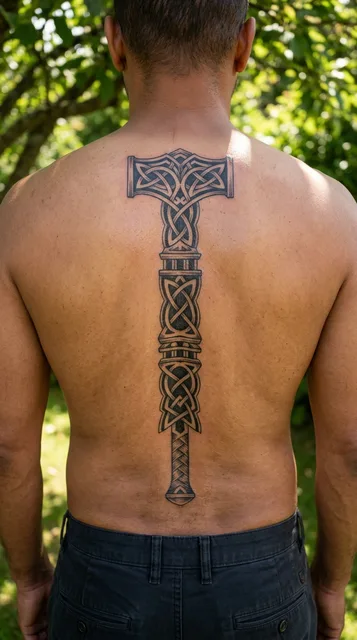
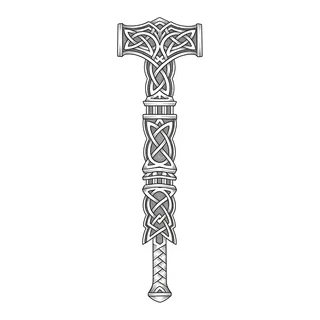
- tribal · black and whiteTry it on — Black and white tribal tattoo on a man's stomach
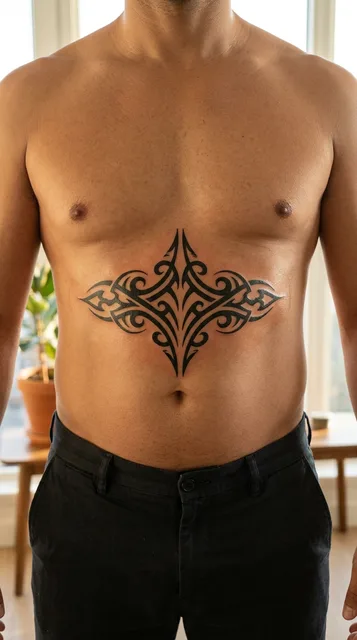
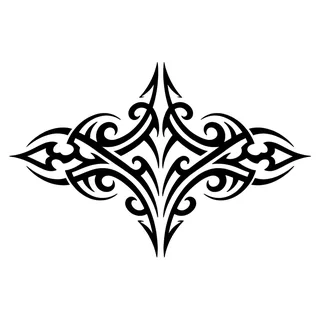
- tribal · black and whiteTry it on — Black and white tribal tattoo on a man's thigh
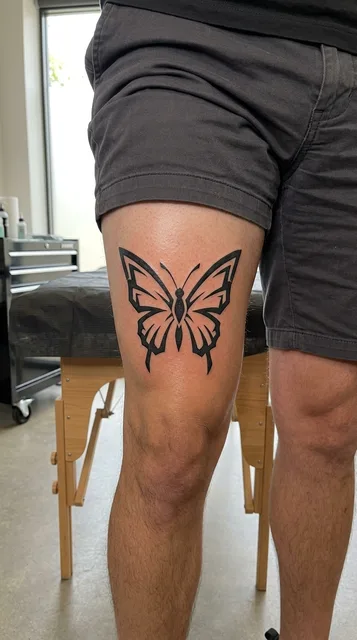
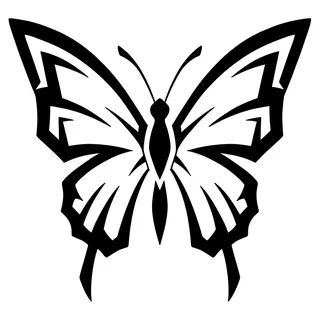
- tribal · black and whiteTry it on — Black and white tribal tattoo on a man's wrist
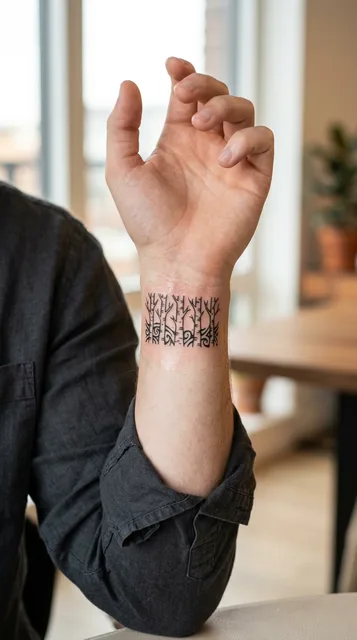
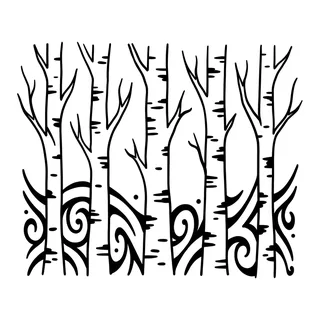
- tribal · black and whiteTry it on — Black and white tribal tattoo on a man's back
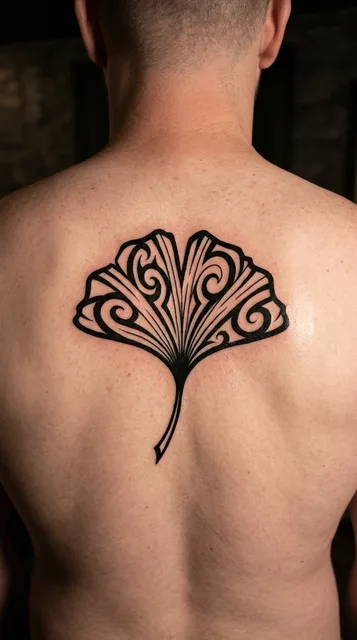
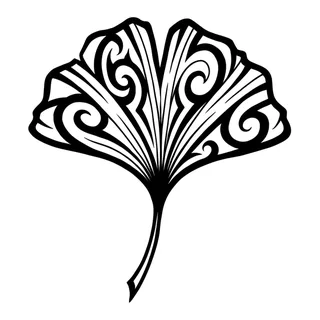
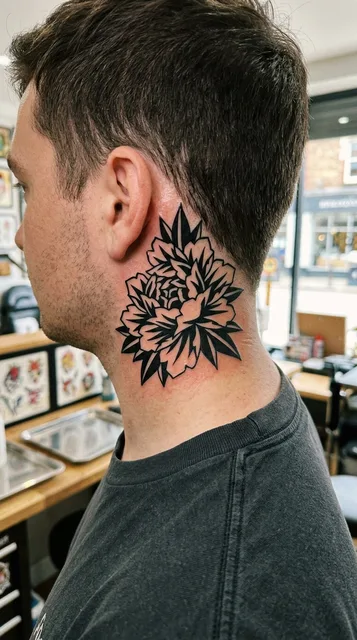
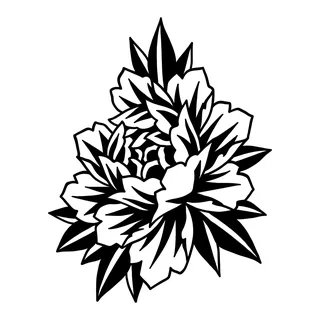
- tribal · black and whiteTry it on — Black and white tribal flower tattoo behind a man's ear
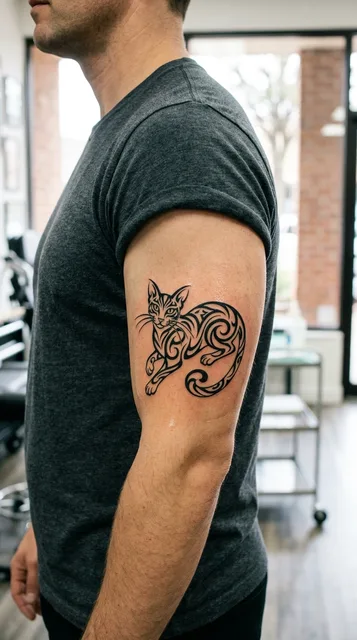
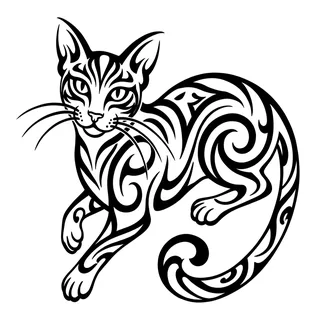
- tribal · black and whiteTry it on — Black and white tribal cat tattoo on a man's bicep
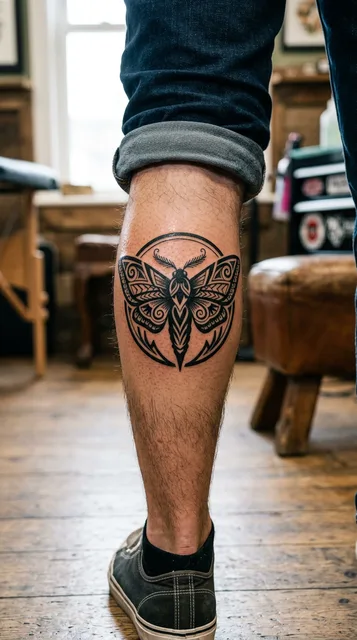
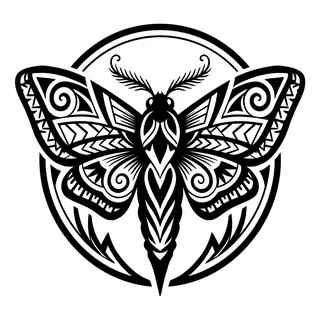
- tribal · black and whiteTry it on — Black and white tribal moth tattoo on a man's calf
- tribal · black and whiteTry it on — Black and white tribal tattoo on a man's chest
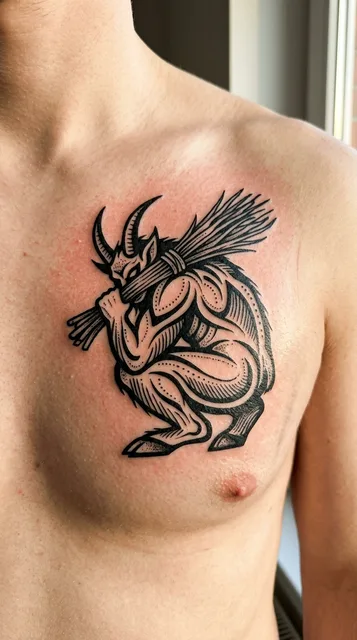
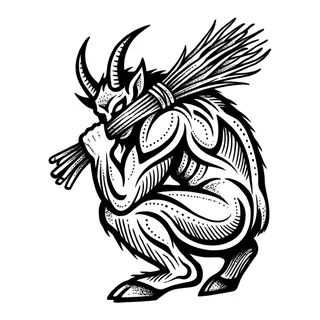
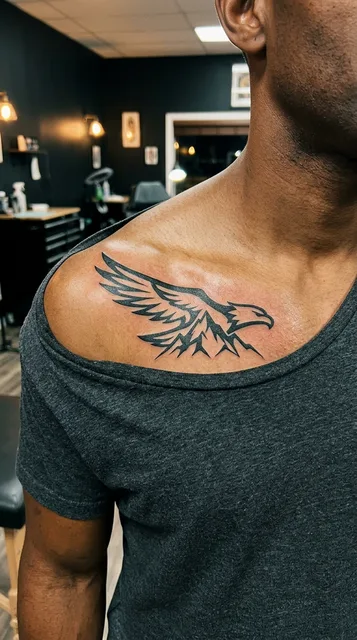
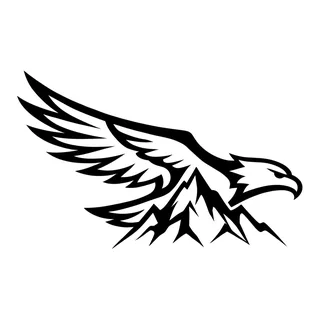
- tribal · black and whiteTry it on — Black and white tribal tattoo on a man's collarbone
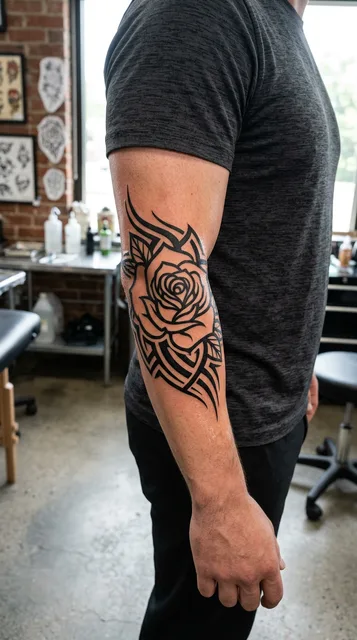
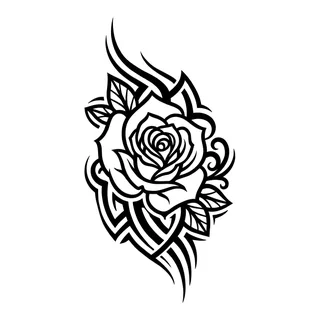
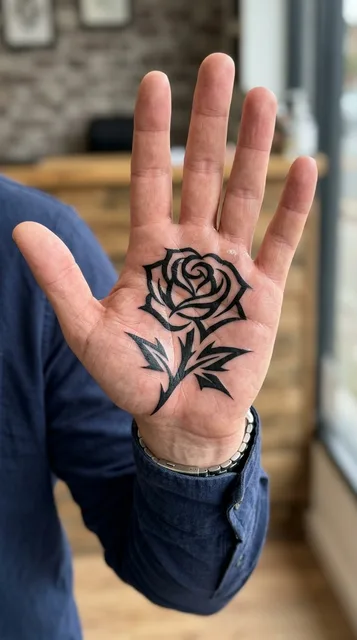
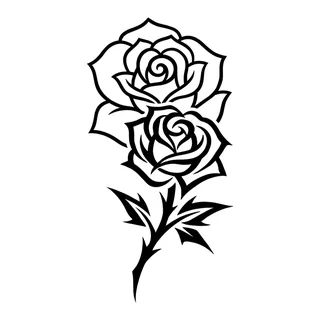
- tribal · black and whiteTry it on — Black and white tribal rose tattoo on a man's forearm
- tribal · black and whiteTry it on — Black and white tribal tattoo on a man's palm
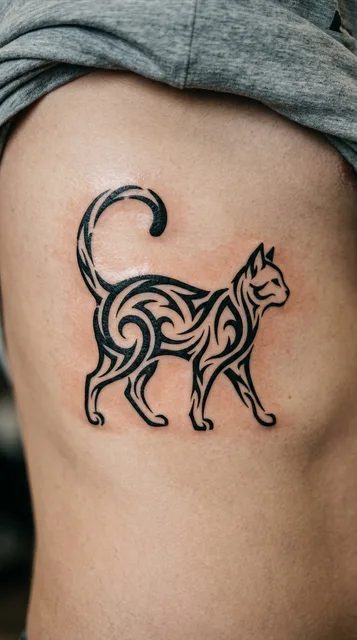
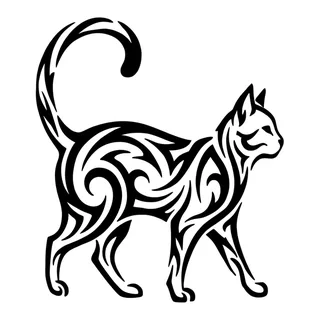
- tribal · black and whiteTry it on — Black and white tribal cat tattoo on a man's ribs
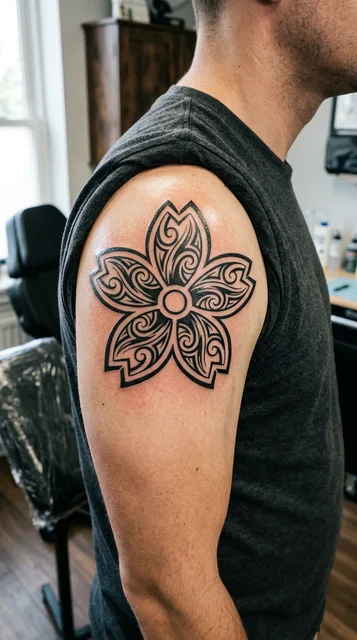
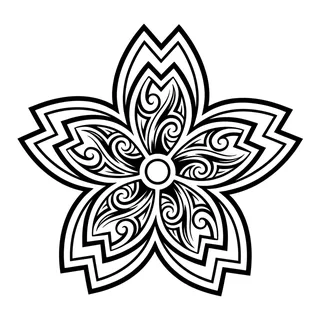
- tribal · black and whiteTry it on — Black and white tribal cherry blossom tattoo on a man's shoulder
- tribal · black and whiteTry it on — Black and white tribal tattoo on a man's spine
- tribal · black and whiteTry it on — Black and white tribal tattoo on a man's thigh
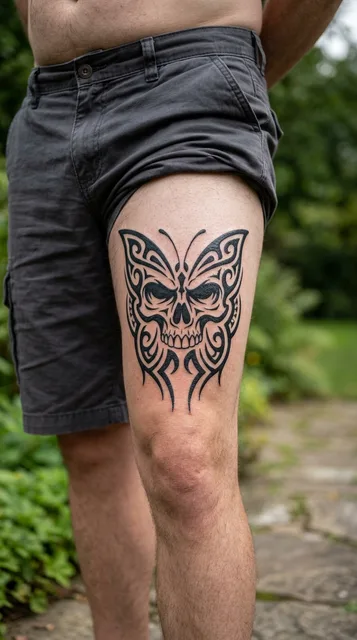
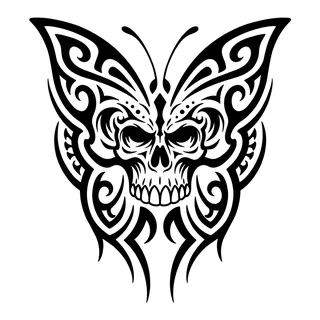
- tribal · black and whiteTry it on — Black and white tribal tattoo on a man's back
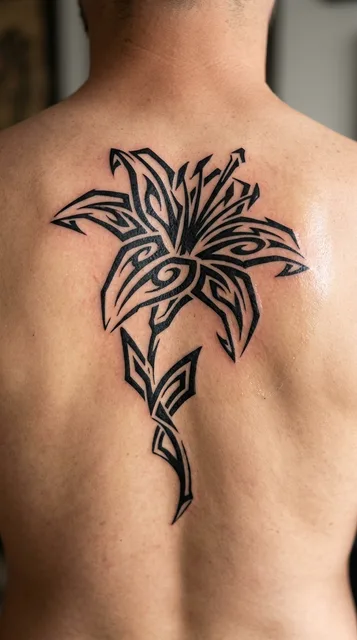
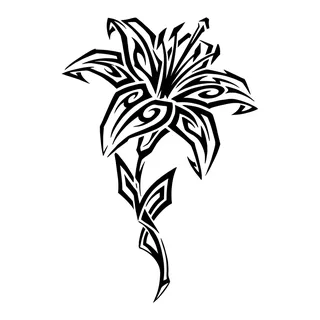
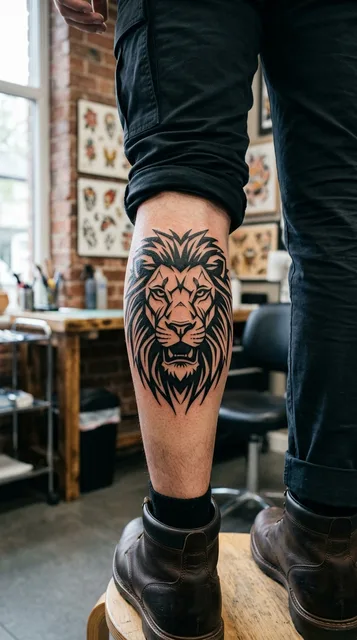
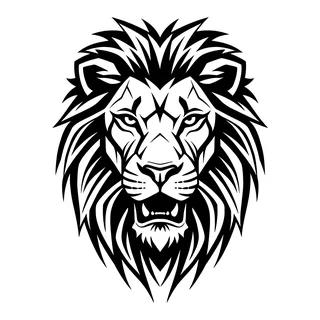
- tribal · black and whiteTry it on — Black and white tribal tattoo on a man's calf
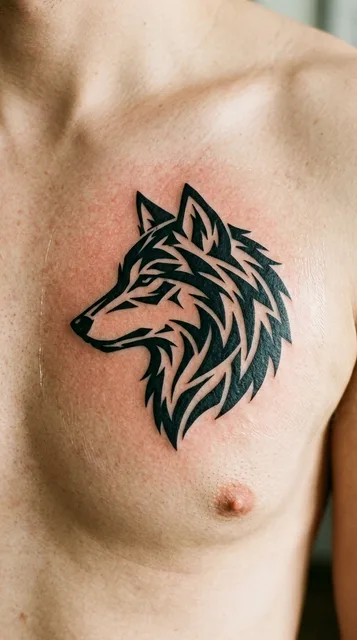
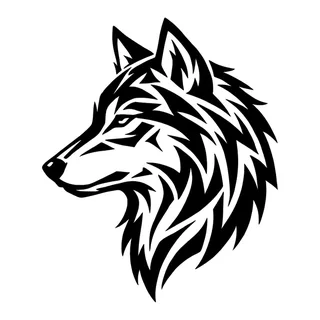
- tribal · black and whiteTry it on — Black and white tribal wolf tattoo on a man's chest
- tribal · black and whiteTry it on — Black and white tribal tattoo on a man's ribs
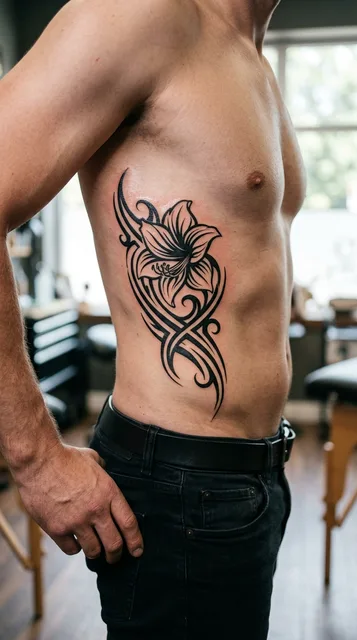
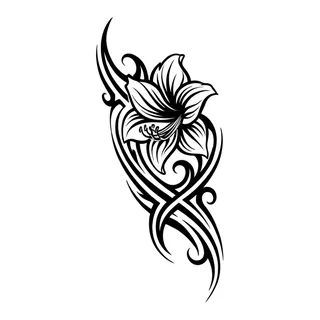
- tribal · black and whiteTry it on — Black and white tribal tattoo on a man's shoulder
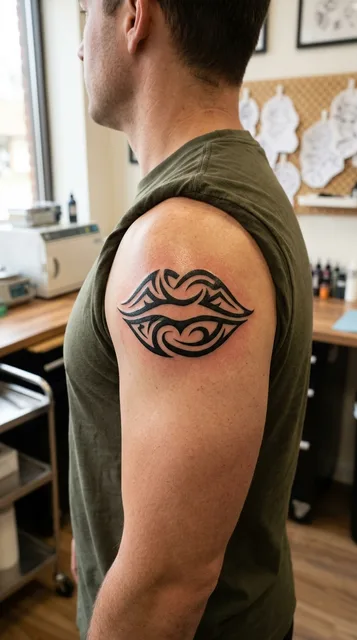
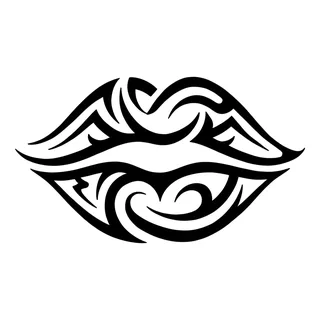
- tribal · black and whiteTry it on — Black and white tribal tattoo on a man's spine
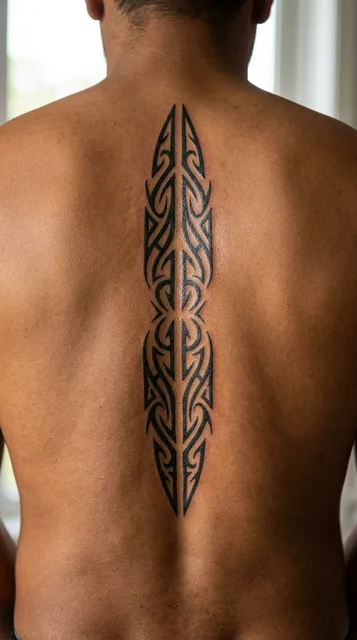
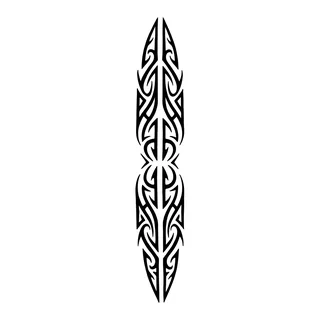
- tribal · black and whiteTry it on — Black and white tribal tattoo on a man's back
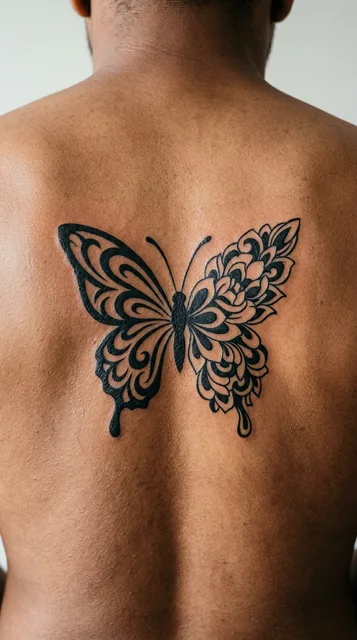
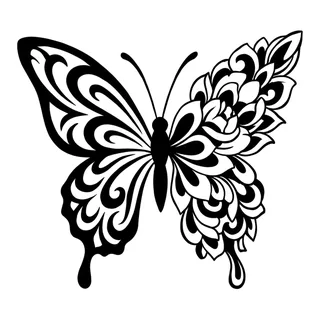
- tribal · black and whiteTry it on — Black and white tribal tattoo on a man's chest
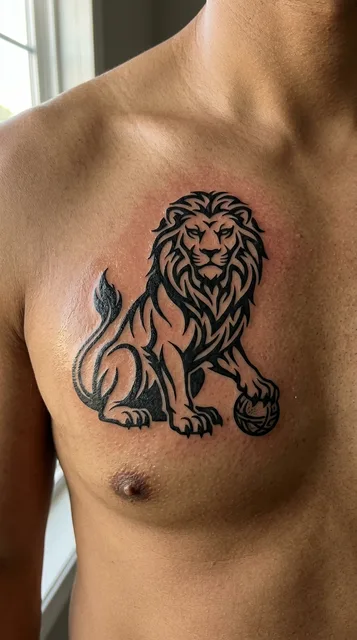
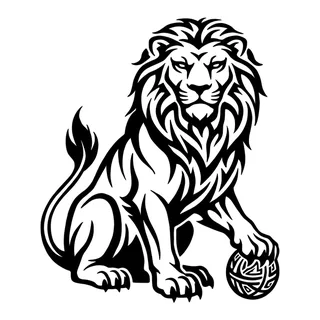
- tribal · black and whiteTry it on — Black and white tribal tattoo on a man's ribs
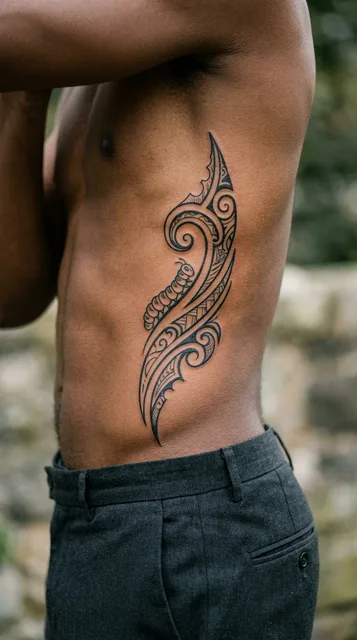
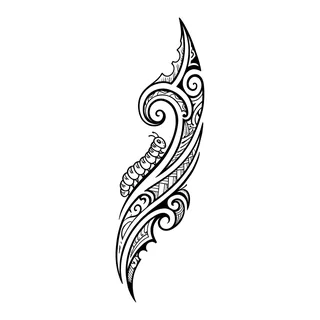


Every pair is one tattoo: the design as it was drawn, and a photograph of that same design on the body.
These 40 tattoos in tribal style on men, in numbers
- Body parts
- 19
- Black and grey
- 39
- Colour
- 1
- Most common style
- tribal
The band California built
The look most studios call tribal was put together in California around 1980. Leo Zulueta, a Filipino-American tattooer often credited as the father of the modern style, reworked patterns he had studied from Borneo and the Pacific into flowing black shapes, and Ed Hardy's magazine Tattootime called its first issue, in 1982, New Tribalism. By the mid-1990s a black band round the upper arm was a stock request in high-street studios on both sides of the Atlantic.
What the new style kept was the surface: solid black, points that taper to nothing, shapes that follow a muscle. What it left behind was the reading. In the source traditions a mark meant something because of where it sat, in what order it was applied and who applied it. In the band nothing depends on anything else, so a design can be mirrored for the other arm or stretched across a back without changing what it says.
The photographs here belong to that second family. Most are abstract black forms with no subject at all; the rest are ordinary subjects rendered in the same solid black, among them a wolf across a chest, a moth on a calf and a hummingbird on a foot. No Pacific or Bornean tradition drew a wolf or a hummingbird, since neither animal lives there, which settles their lineage at a glance.
Earned, inherited or free to wear
Every tradition the band borrowed from had men's marks that could not simply be chosen. The Samoan pe'a, from the waist to the knees, is still the rite by which many Samoan men show they are ready to serve family and village, and what makes it a pe'a is who taps it and the sittings it takes to finish, not the pattern. A Māori man's moko records his descent and is his alone; for everyone else Māori artists offer kirituhi, explained on the Polynesian page.
Borneo and the northern Philippines drew the same line. Among the Iban of Sarawak, a young man was often given the bunga terung, a rosette on each shoulder, before his first long journey from home, while marks on the backs of the hands were once reserved for men who had taken a head. In Kalinga, in the mountains of northern Luzon, the chest designs of warriors were likewise earned in war. Spanish chroniclers of the 1500s called the tattooed islanders of the Visayas los pintados, the painted ones.
A fair rule follows. Where a design means something because of who you are or what you did, whether descent, rank, a finished rite or a deed in war, it is not something to lift from a gallery, this one included. Where it means only what it looks like, as with the band and every photograph here, it is ornament and free to wear. Some practitioners do tattoo outsiders on their own terms: Apo Whang-Od, who gives her birth year as 1917 and was on the cover of Vogue Philippines in 2023, was still hand-tapping visitors in Buscalan with a citrus thorn and soot past her hundredth year.
Solid black on a broad frame
Look down the grid and the torso outnumbers the arms: the back, chest, ribs and spine between them hold more of these photographs than the upper arm, forearm and shoulder do. That follows from the drawing. A tribal shape needs room for its points to run out, and on most men the back and chest are the widest unbroken surfaces there are, with the edge of the lats and the lower line of the pectoral giving the tapers something to follow.
Training is the variable to plan for. Muscle gained later stretches a solid shape evenly and it still looks drawn for the body, but a point placed to end exactly on the line of a shoulder or the edge of a lat can drift off it. Ask for edges that follow the anatomy loosely rather than to the millimetre.
The small pieces here, on a wrist, a palm, the neck and behind the ear, are the style at its least forgiving. A taper needs length to read as a taper, and at a few centimetres the points thicken into blunt ends as the ink settles. The palm sheds ink faster than almost anywhere else, so a black shape there is one to redo rather than touch up. Put a shape on a photo of your own back or chest before settling its size.
Common questions
- Is the 1990s tribal armband Polynesian?
- No. It borrows the solid black and tapering points of Pacific and Bornean work, but its layout was invented by Californian tattooers around 1980 and spread through studio flash in the 1990s. It records no descent, rank or deed, which is why it can be mirrored, resized or extended without saying anything false.
- Which traditional men's tattoos should an outsider not copy?
- The ones that stand for who a man is or what he did: a Māori moko, which records descent; a Samoan pe'a, taken through a tufuga over many sittings; Iban hand marks and the chest designs of Kalinga warriors, both once earned in war. Reproducing their layout on someone without that claim reads as a false statement to anyone who knows them.
- Can an old tribal band be turned into a bigger piece?
- Yes, and it is the usual way to deal with one. Solid black cannot be lightened by tattooing over it, but an artist can draw new shapes out from the band's points onto the shoulder, chest or forearm, so the old piece becomes the root of a larger composition. It can only grow, never shrink.
- Does chest or back hair hide a tribal tattoo?
- Very little. A tribal piece has no fine interior to lose, so the silhouette reads through regrowth almost as clearly as on shaved skin. What hair does soften is the edge, which makes a crisp taper look blunter close up; from across a room the shape is unchanged.
See it on your own skin first
InkCraft places a design on a photo of you — scaled, wrapped and shaded to the spot you pick, so you can judge the size against your own body before it is permanent.