 InkCraft
Flower tattoos for men, from sailor rose to lotus
39 men's flower tattoos photographed on skin for InkCraftBy Uladzimir TumanauUpdated
Flowers have been men's tattoos for as long as there has been Western flash. These are our own roses, lilies, lotuses, sunflowers and cherry blossoms photographed on men, about half of them in colour, many on the arm, the chest and behind the ear.
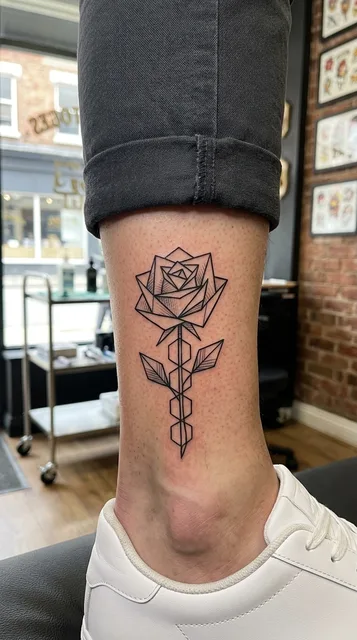
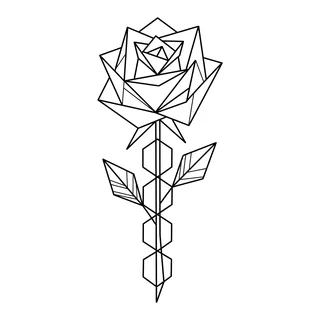
- geometric · black and whiteTry it on — Black and white geometric rose tattoo on a man's ankle
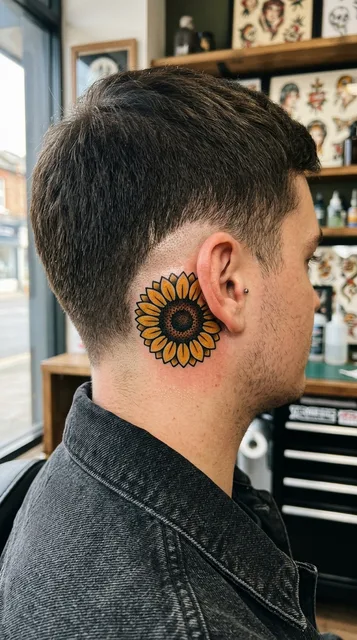
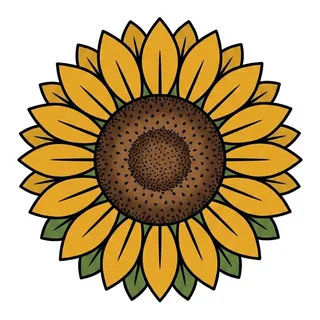
- traditional · colourTry it on — Color traditional sunflower tattoo behind a man's ear
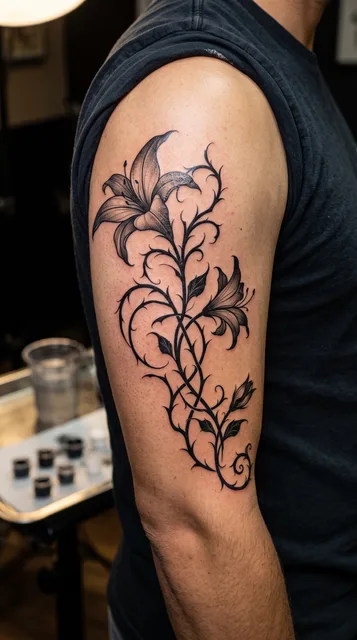
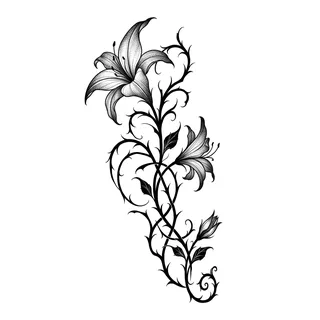
- dotwork · black and greyTry it on — Black and grey dotwork lily tattoo on a man's bicep
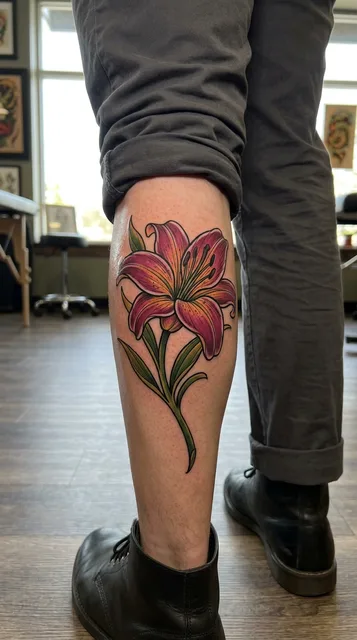
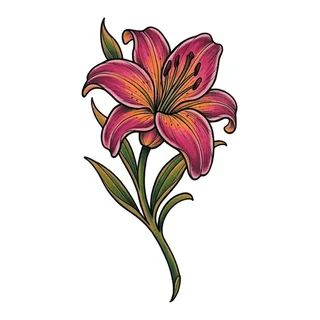
- neo traditional · colourTry it on — Color neo traditional lily tattoo on a man's calf
- linework · black and whiteTry it on — Black and white linework flower tattoo on a man's chest
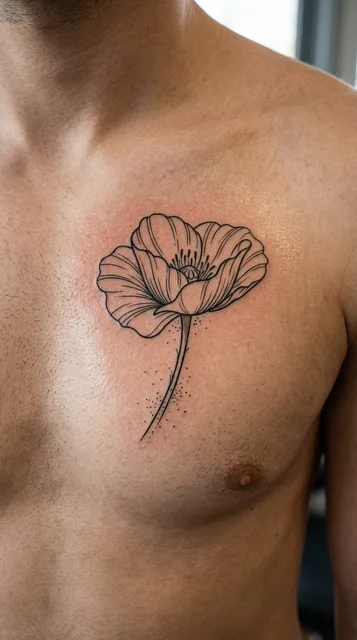
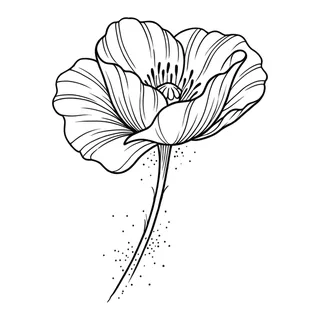
- illustrative · black and greyTry it on — Black and grey illustrative flower tattoo on a man's collarbone
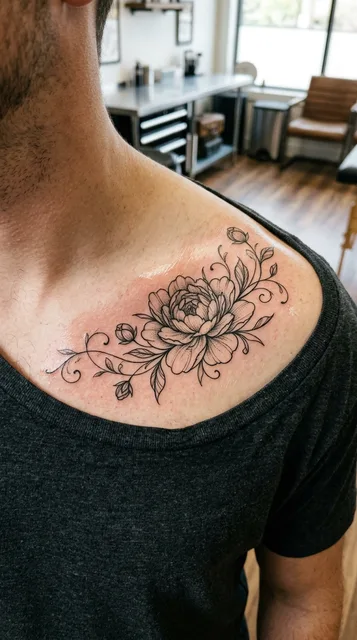
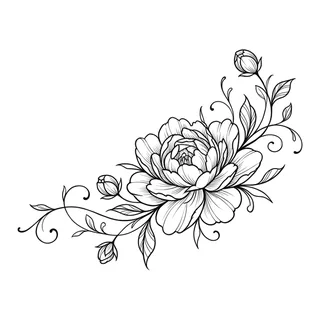
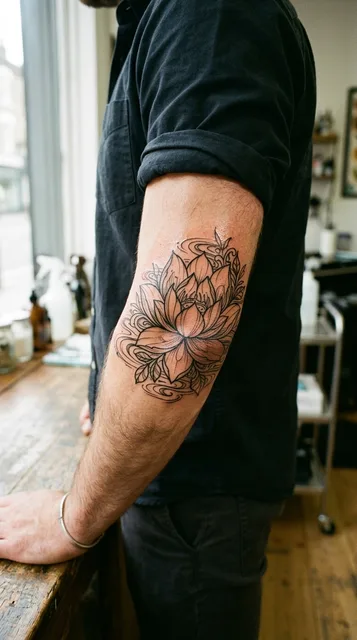
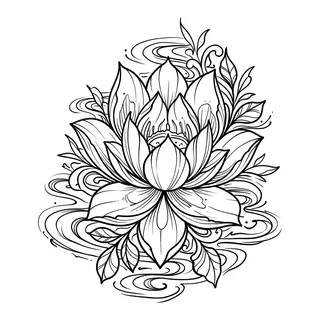
- illustrative · black and greyTry it on — Black and grey illustrative lotus tattoo on a man's elbow
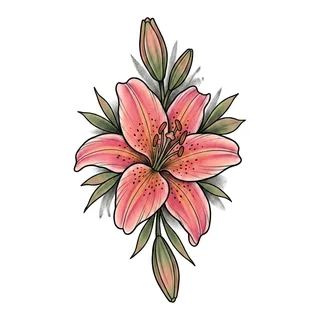
- neo traditional · colourTry it on — Color neo traditional lily tattoo on a man's forearm

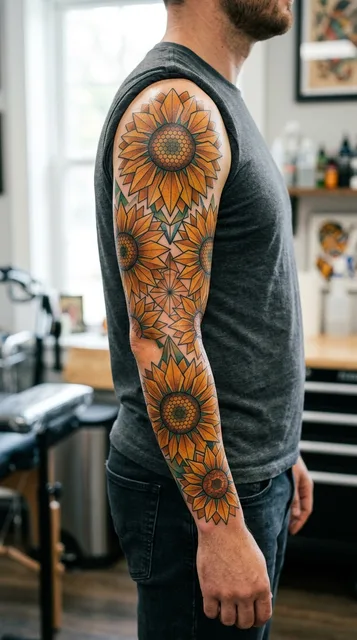
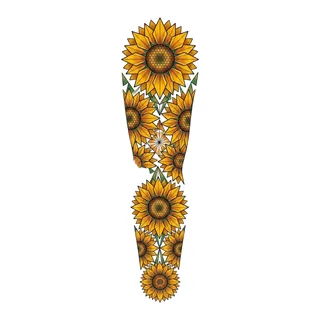
- geometric · colourTry it on — Color geometric sunflower tattoo as a full sleeve on a man
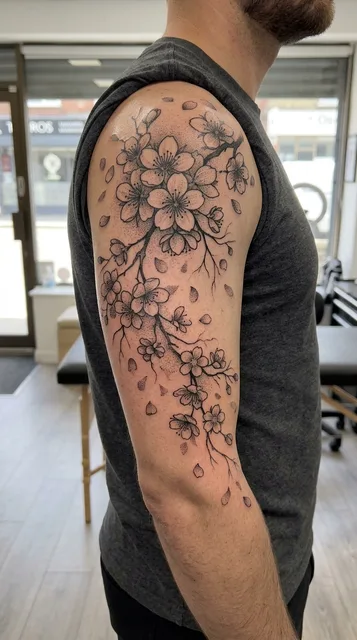
- dotwork · black and greyTry it on — Black and grey dotwork cherry blossom tattoo as a half sleeve on a man
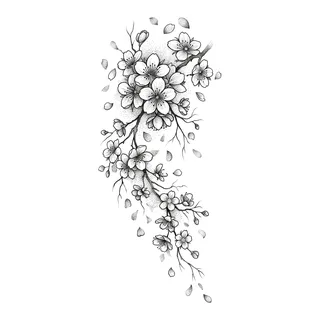
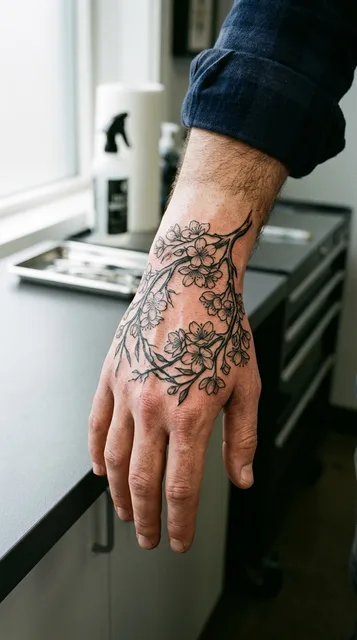
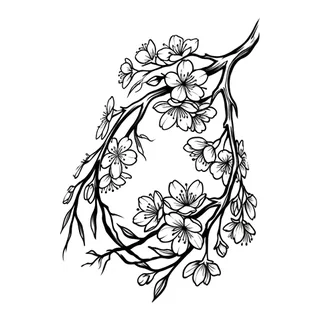
- blackwork · black and whiteTry it on — Black and white blackwork cherry blossom tattoo on a man's hand
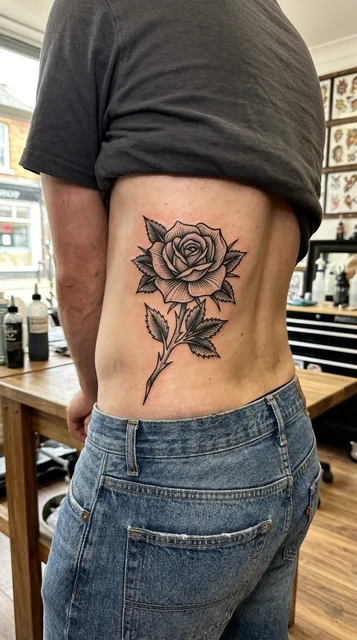
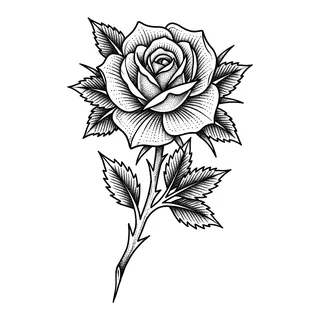
- blackwork · black and whiteTry it on — Black and white blackwork rose tattoo on a man's lower back
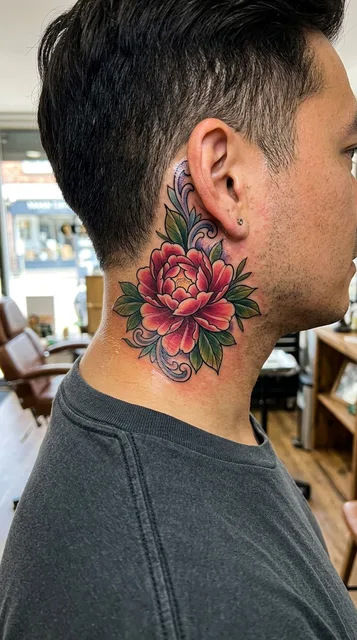
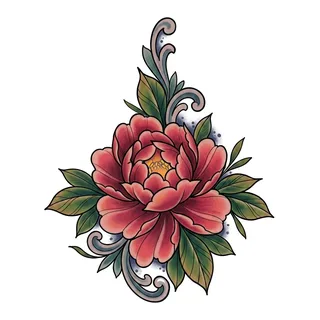
- neo traditional · colourTry it on — Color neo traditional peony tattoo on a man's neck
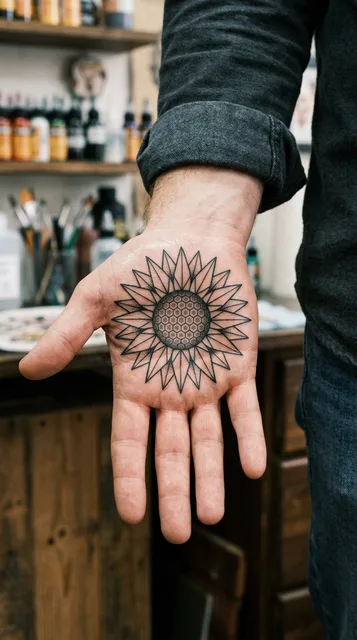
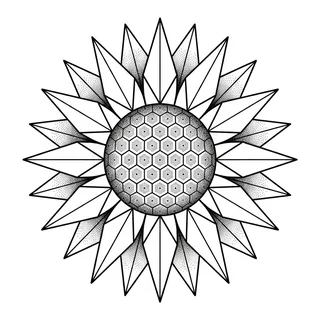
- geometric · black and whiteTry it on — Black and white geometric sunflower tattoo on a man's palm
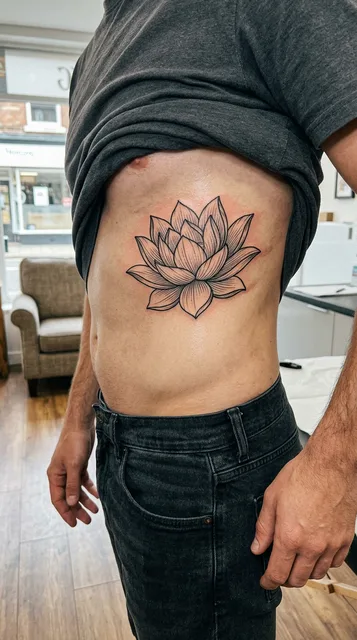
- linework · black and whiteTry it on — Black and white linework lotus tattoo on a man's ribs
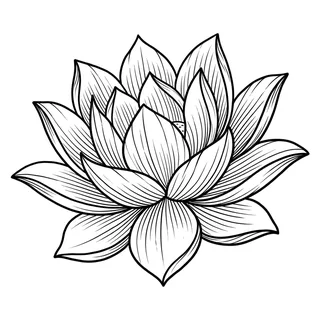
- ornamental · black and greyTry it on — Black and grey ornamental flower tattoo on a man's shin
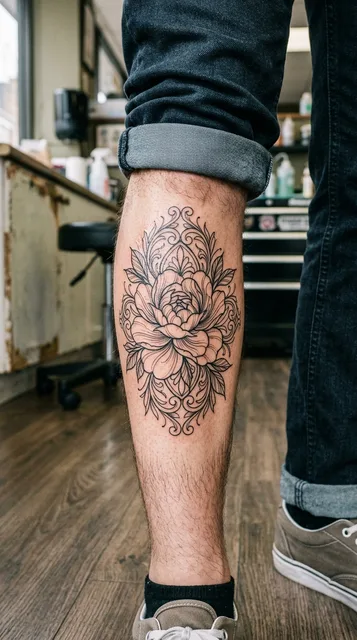
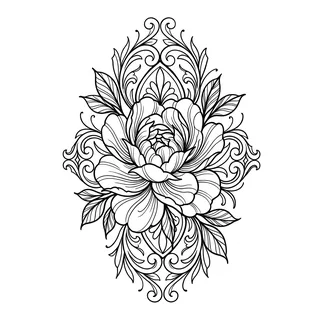
- new school · colourTry it on — Color new school sunflower tattoo on a man's shoulder
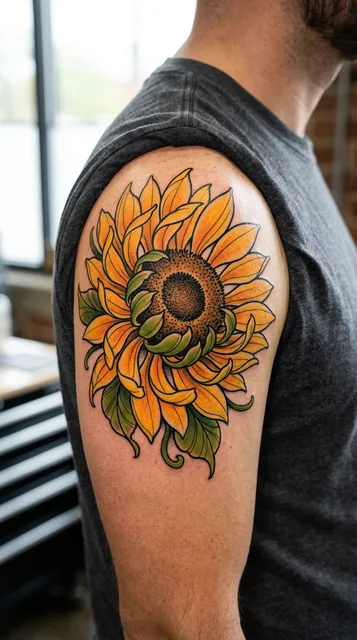
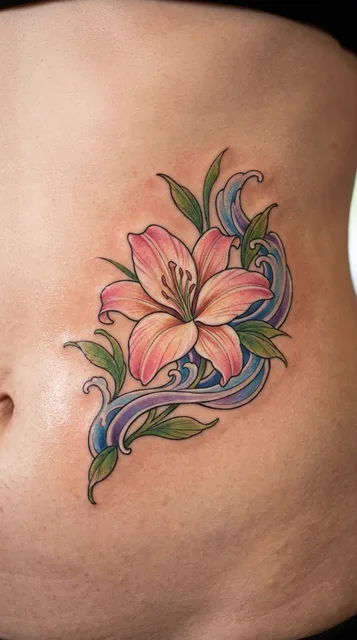
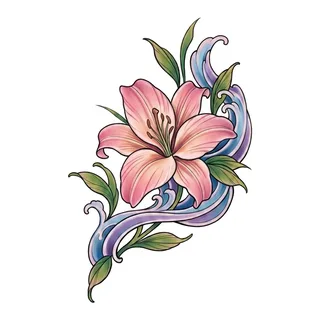
- Japanese · colourTry it on — Color Japanese lily tattoo on a man's stomach
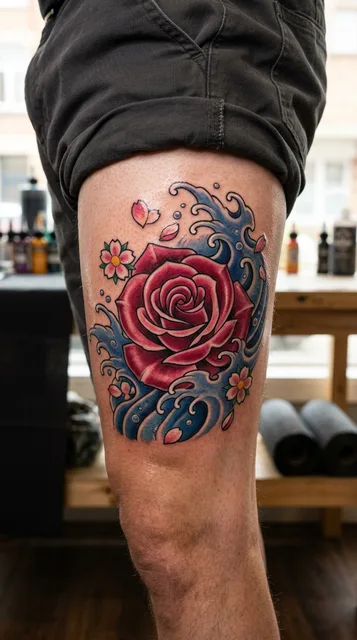
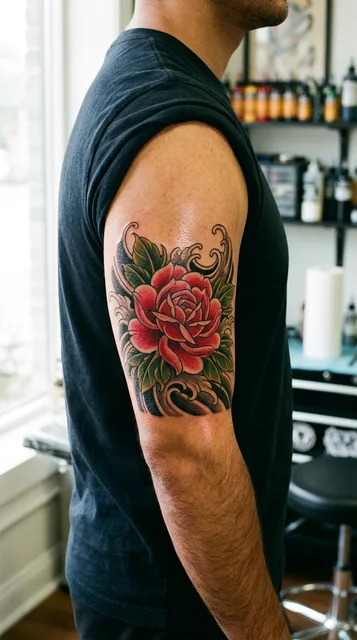
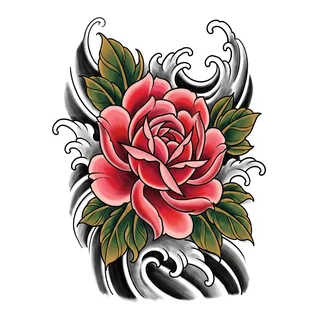
- Japanese · colourTry it on — Color Japanese rose tattoo on a man's thigh
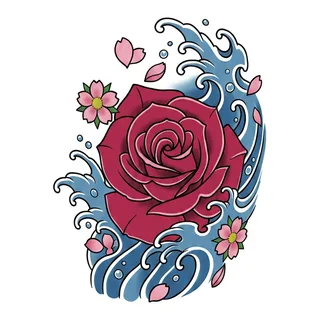
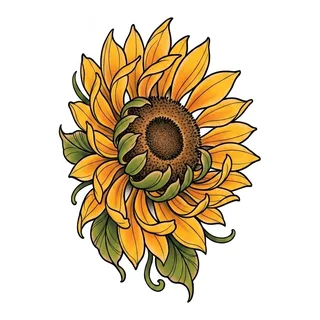
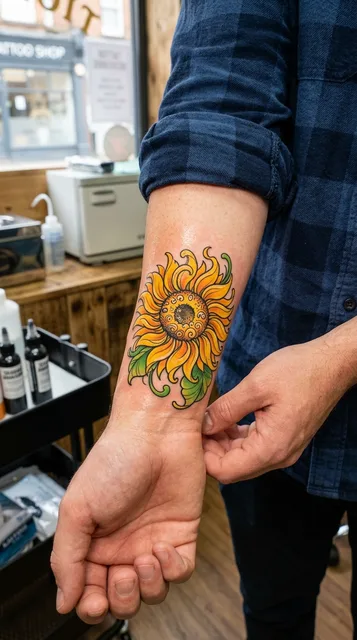
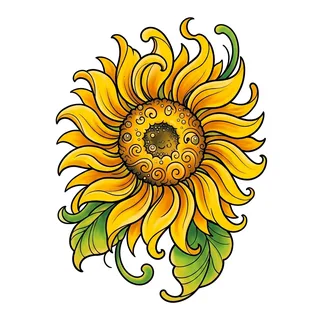
- new school · colourTry it on — Color new school sunflower tattoo on a man's wrist
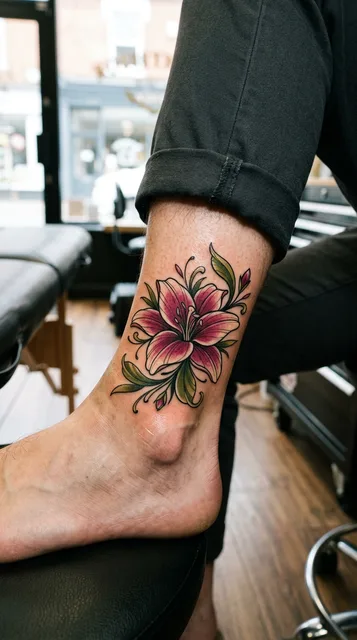
- neo traditional · colourTry it on — Color neo traditional lily tattoo on a man's ankle
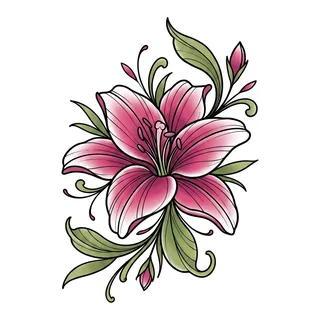
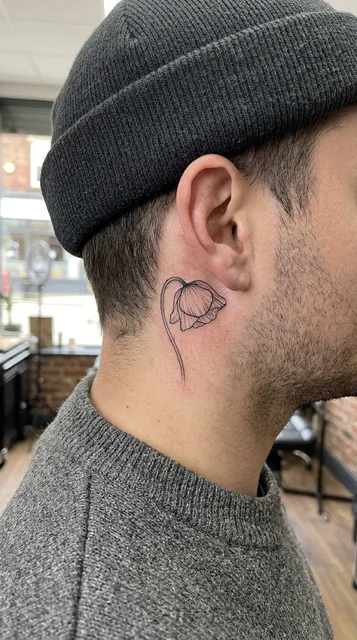
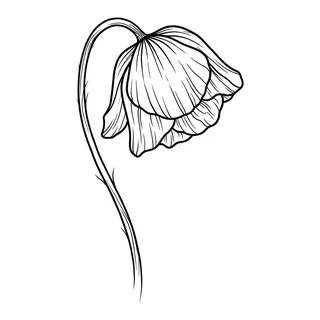
- fine line · black and whiteTry it on — Black and white fine line flower tattoo behind a man's ear
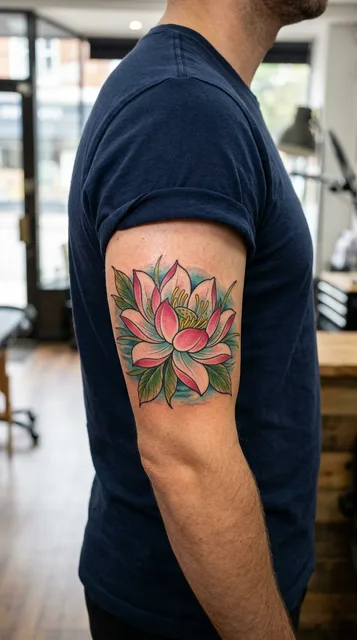
- traditional · colourTry it on — Color traditional lotus tattoo on a man's bicep
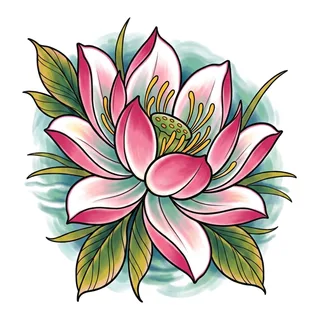
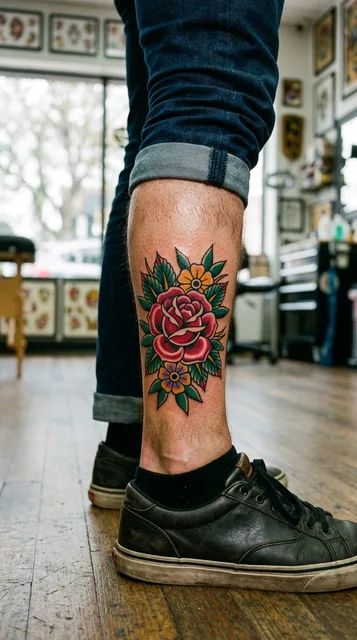
- traditional · colourTry it on — Color traditional rose tattoo on a man's calf
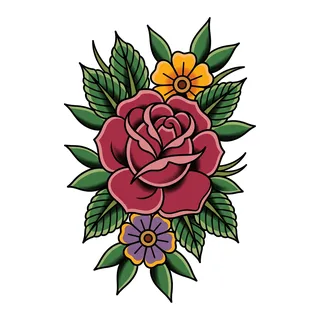
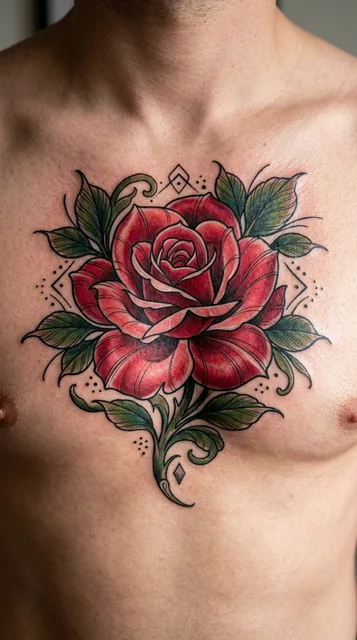
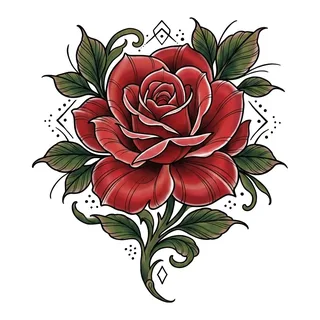
- neo traditional · colourTry it on — Color neo traditional rose tattoo on a man's chest
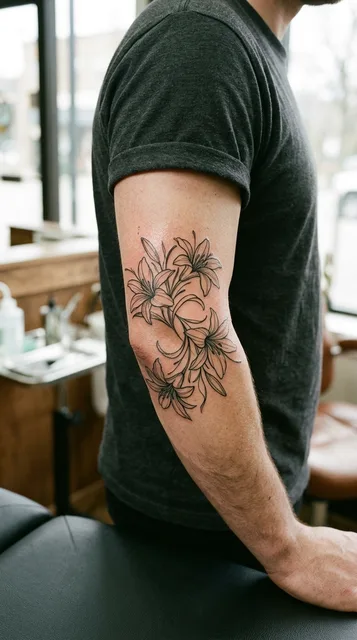
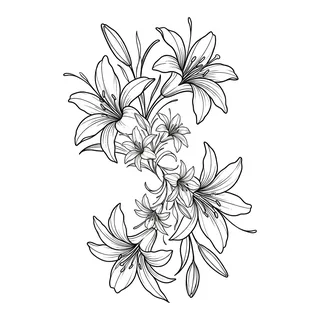
- linework · black and whiteTry it on — Black and white linework lily tattoo on a man's elbow
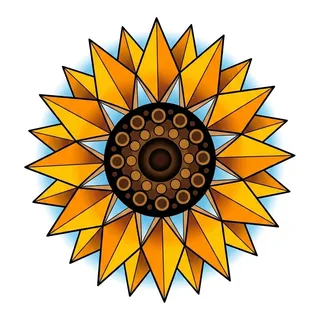
- geometric · colourTry it on — Color geometric sunflower tattoo on a man's forearm

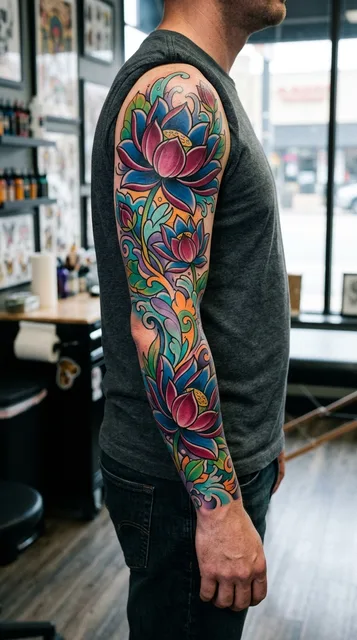
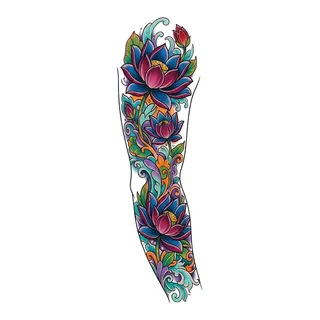
- new school · colourTry it on — Color new school lotus tattoo as a full sleeve on a man
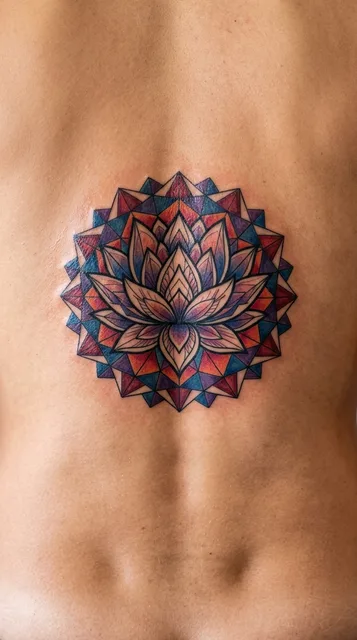
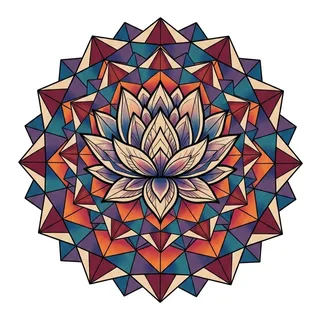
- geometric · colourTry it on — Color geometric lotus tattoo on a man's lower back
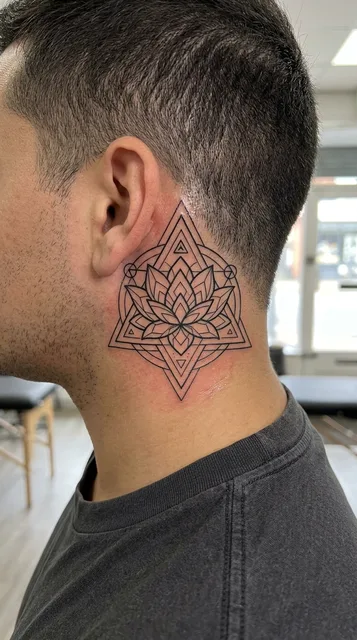
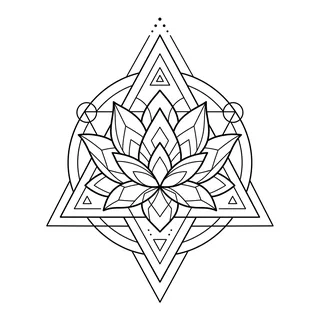
- geometric · black and whiteTry it on — Black and white geometric lotus tattoo on a man's neck
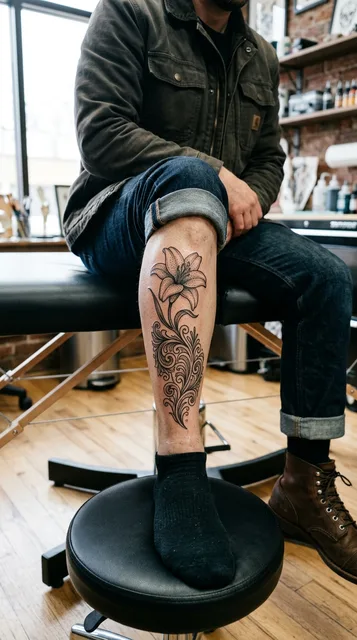
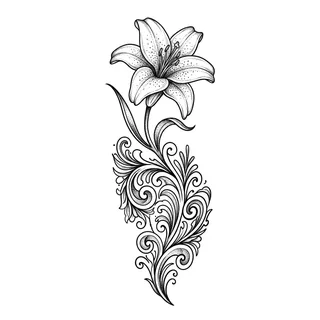
- ornamental · black and greyTry it on — Black and grey ornamental lily tattoo on a man's shin
- dotwork · black and greyTry it on — Black and grey dotwork cherry blossom tattoo on a man's shoulder
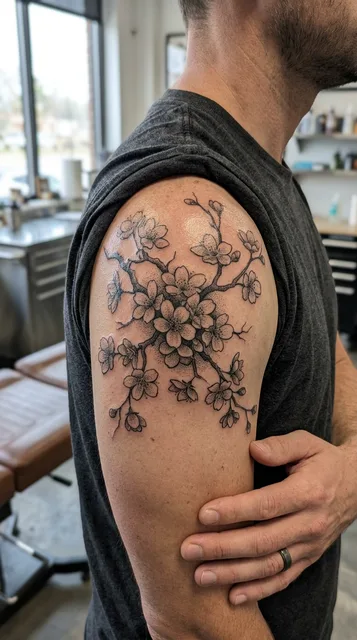
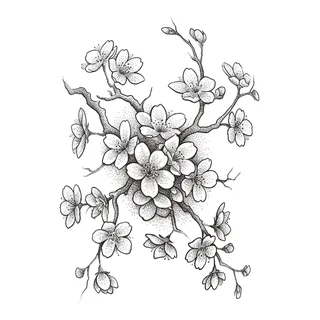
- biomechanical · colourTry it on — Color biomechanical flower tattoo behind a man's ear
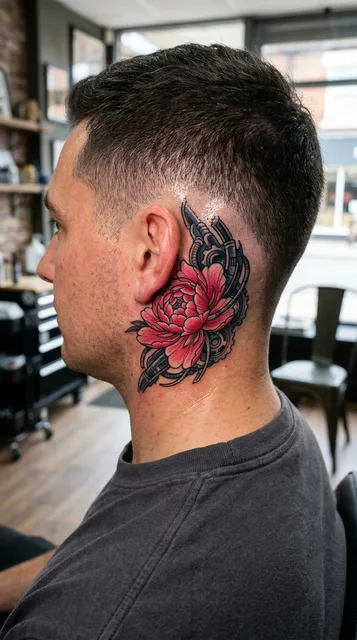
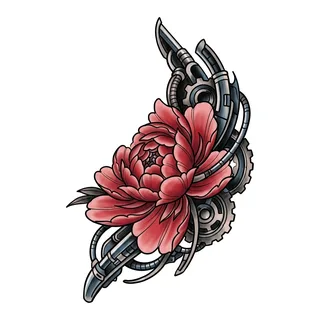
- Japanese · colourTry it on — Color Japanese rose tattoo on a man's bicep
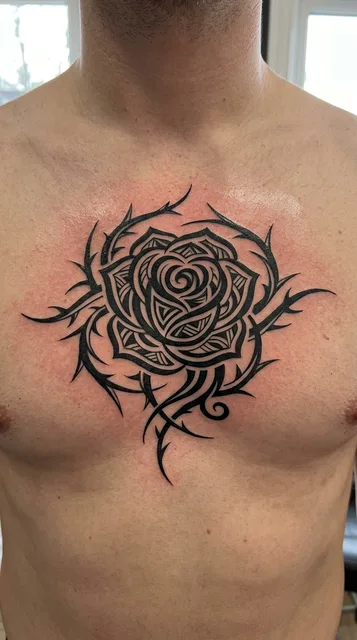
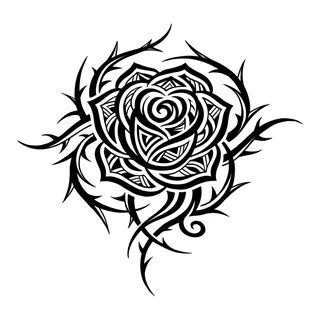
- tribal · black and whiteTry it on — Black and white tribal rose tattoo on a man's chest
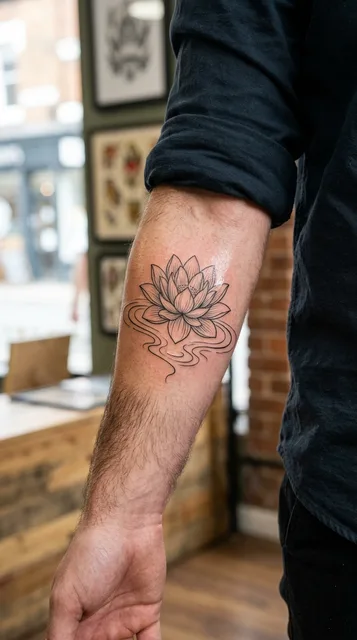
- fine line · black and whiteTry it on — Black and white fine line lotus tattoo on a man's forearm
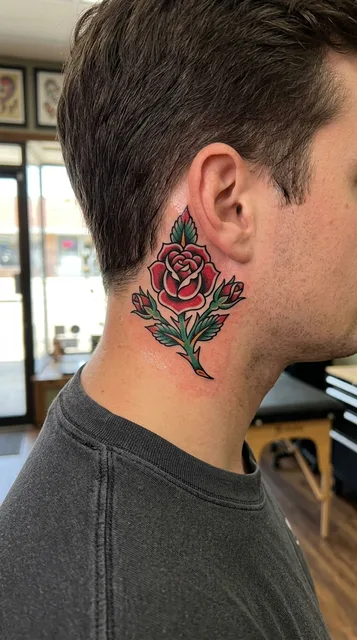
- traditional · colourTry it on — Color traditional rose tattoo behind a man's ear
- ornamental · black and greyTry it on — Black and grey ornamental cherry blossom tattoo on a man's bicep
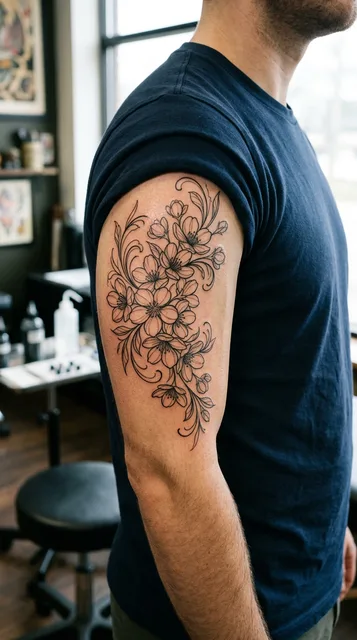
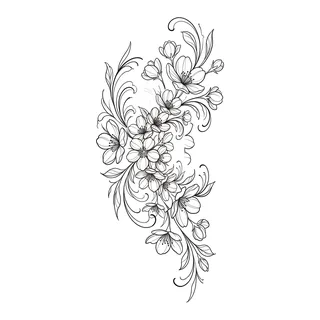
- linework · black and whiteTry it on — Black and white linework flower tattoo on a man's forearm
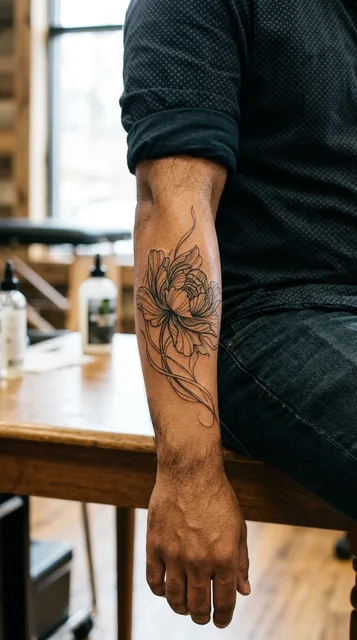
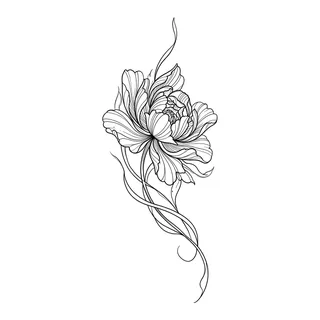


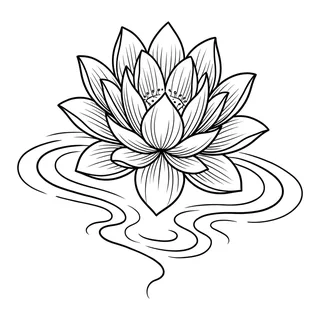
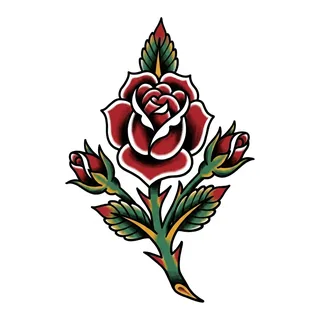
Every pair is one tattoo: the design as it was drawn, and a photograph of that same design on the body.
These 39 tattoos of flowers on men, in numbers
- Body parts
- 20
- Black and grey
- 20
- Colour
- 19
- Most common style
- geometric
The rose in the port towns
The rose came into men's tattooing with sailors and soldiers. American traditional flash of the early twentieth century paired it with a banner for a mother or a sweetheart, and a 1918 song about Red Cross nurses on the Western Front gave the flash sheets the Rose of No Man's Land: a rose with a nurse's face or a red cross at its heart, worn by servicemen into the Second World War. The traditional roses here, on a calf and behind the ear, keep that heavy outline and flat colour.
The black-and-grey rose has a separate root. It came out of the single-needle work of East Los Angeles in the 1970s, where the rose became the standard flower of remembrance, drawn soft and usually beside a name, a date or a portrait. Black-and-grey memorial roses mostly descend from it rather than from sailor flash, which is why they are shaded in grey where the traditional ones are outlined and filled.
The roses in this set also turn up in less expected company: a blackwork one on the lower back, a geometric one on an ankle, a tribal one on a chest. For roses paired with a dagger or a skull, the other classic from the same flash sheets, start from the dagger and skull pages.
Peony, chrysanthemum and cherry on irezumi
Japanese tattooing gave men a second flower tradition, and a weightier one. The peony, botan, is paired on a back or sleeve with the karajishi, the Chinese guardian lion: the king of beasts beside the king of flowers. The chrysanthemum, kiku, has an imperial weight in Japan, where a sixteen-petal chrysanthemum is the emperor's crest. Both were worn in Edo on the same skin as dragons and outlaw heroes.
Peonies are scarce in these photographs, a single neo-traditional one on a neck, and there is no chrysanthemum at all. The Japanese-style pieces here are a lily on a stomach and roses on a thigh and a bicep, and the rose deserves a note: it was not part of the Edo repertoire, which leaned on the peony, chrysanthemum, cherry blossom, lotus and maple, so a Japanese rose is a Western flower drawn in the Japanese manner.
The cherry blossom carried a warrior's reading long before it reached a tattoo shop. The falling blossom stood for a short life ended at its height, and in 1945 the Imperial Japanese Navy sent a piloted flying bomb named Ōka, cherry blossom, into combat. The cherry blossoms on men here are quieter than that history, in dotwork across a shoulder and a half-sleeve, in blackwork on a hand and in ornamental work on a bicep.
Bold, geometric and half in colour
Taken as a set, these flowers are bolder and more varied than the single grey rose that usually stands for a man's flower tattoo. Geometric work is the most common style, with sunflowers on a full sleeve, a forearm and a palm and lotuses on the lower back and the neck. Neo-traditional lilies follow, on a calf, a forearm and an ankle, and sunflowers in new school sit on a shoulder and a wrist.
Hair decides which of them suits which arm. The geometric and neo-traditional pieces, with heavy outlines and filled petals, read through forearm and chest regrowth. The fine-line lotus on a forearm and the fine-line flower behind the ear depend on smooth or shaved skin, and the one behind the ear is the safer bet, since the skin just behind the ear carries little hair.
Petals are the part that ages, and the photographs show the useful range. A single bloom behind the ear or on a wrist works at a few centimetres if it is drawn with few petals and open space between them; a lotus or a lily with layered petals wants the width of a bicep or a calf, and a full sleeve, like the geometric sunflower here, is the scale at which every petal keeps its own shape. See a flower on a photo of your own arm at the size you have in mind.
Common questions
- What was the Rose of No Man's Land?
- A classic of wartime flash, named after a 1918 song honouring Red Cross nurses on the Western Front. The design sets a nurse's face, or a red cross, in the centre of a rose, and soldiers and sailors wore it into the Second World War. It survives in traditional work today as a tribute to nurses and carers.
- Which flowers suit a hairy forearm?
- Ones drawn with heavy outlines and solid petals: a traditional rose, a neo-traditional lily or a geometric sunflower all read through regrowth. Fine-line and light dotwork flowers disappear under forearm hair a few weeks after each shave, so save those for smoother skin such as the inner arm or behind the ear.
- What does a peony mean on a Japanese back piece?
- Wealth, standing and a certain boldness, and it is usually paired with the karajishi, the Chinese guardian lion. On a large back or sleeve the peony also does practical work, filling the space around the main subject and setting the season as early summer, which matters when the rest of the piece carries seasonal flowers too.
- Is a black-and-grey rose on a man always a memorial?
- No, though it is the most common memorial flower there is. Without a name, a date or a banner it reads simply as a rose, which is why many men choose it for a memorial they would rather not explain, and why just as many wear one that marks nothing at all.
See it on your own skin first
InkCraft places a design on a photo of you — scaled, wrapped and shaded to the spot you pick, so you can judge the size against your own body before it is permanent.