 InkCraft
Daisy Tattoo Ideas, Designs and Meaning
24 original daisy designs drawn for InkCraftBy Uladzimir TumanauUpdated
A daisy is one ring of narrow ray petals around a small flat centre, and that proportion is the whole identification. Draw the disc large and seeded and you have a sunflower with the wrong petals.
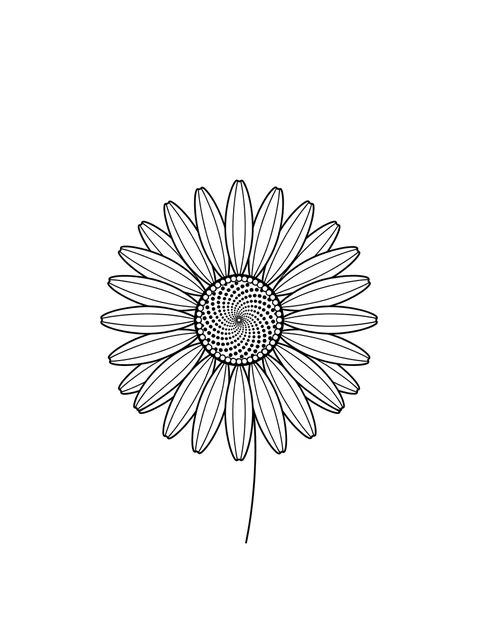
Black and white fine line daisy tattoo design, outline stencil Try it on — Black and white fine line daisy tattoo design, outline stencil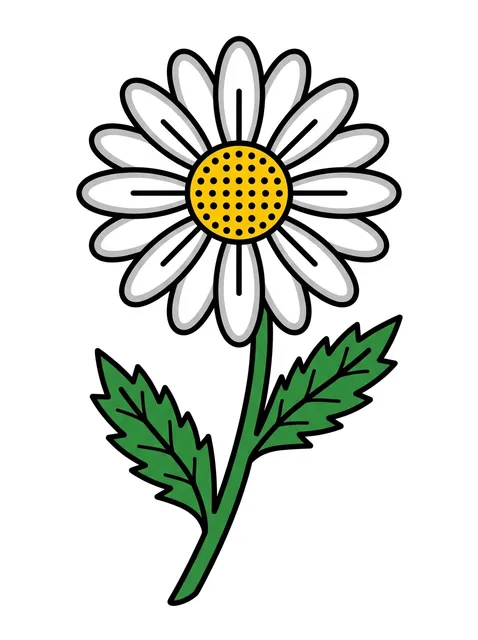
Color traditional daisy tattoo design Try it on — Color traditional daisy tattoo design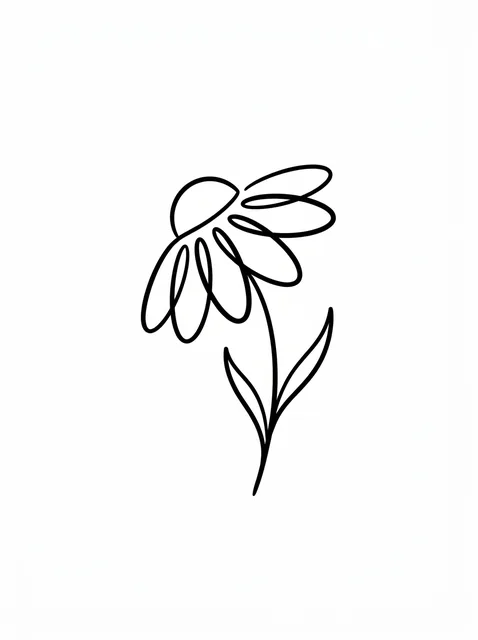
Black and white minimalist daisy tattoo design, outline stencil Try it on — Black and white minimalist daisy tattoo design, outline stencil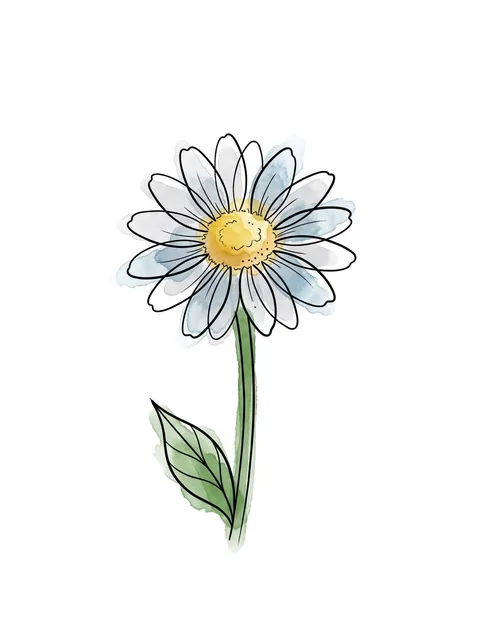
Color watercolor daisy tattoo design Try it on — Color watercolor daisy tattoo design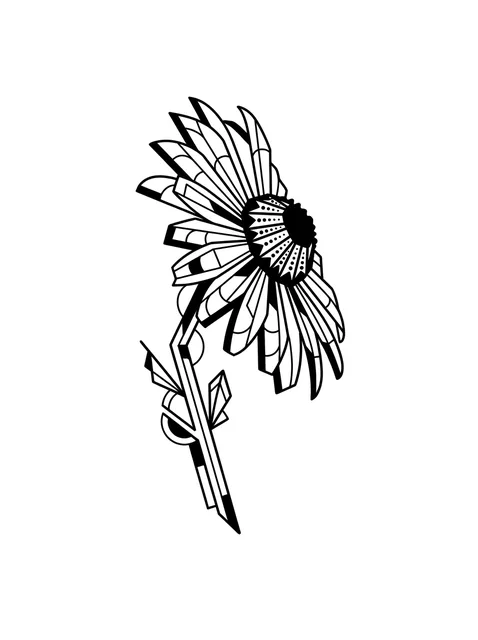
Black and white geometric daisy and flower tattoo design, outline stencil Try it on — Black and white geometric daisy and flower tattoo design, outline stencil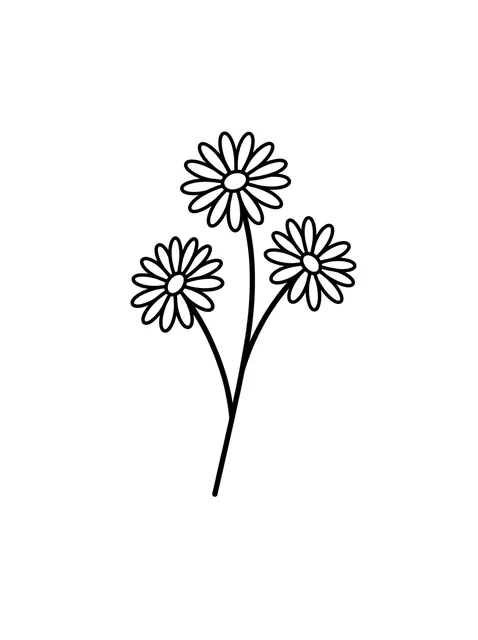
Black and white linework daisy and flower tattoo design, outline stencil Try it on — Black and white linework daisy and flower tattoo design, outline stencil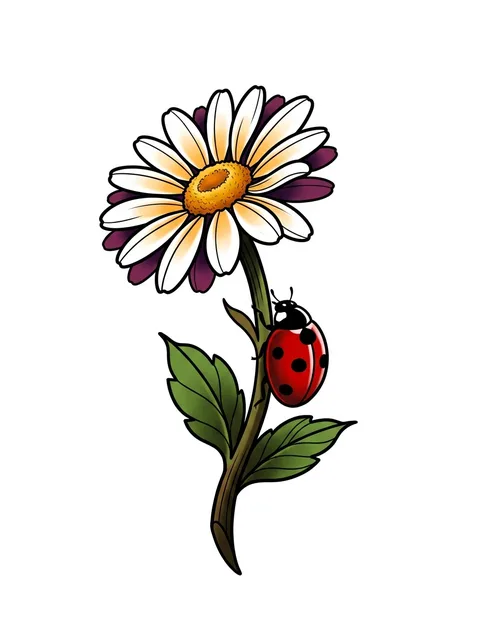
Color traditional daisy and flower tattoo design Try it on — Color traditional daisy and flower tattoo design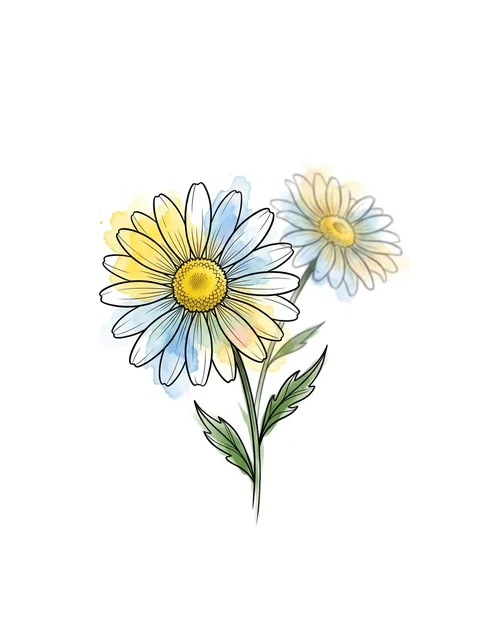
Color watercolor daisy and flower tattoo design Try it on — Color watercolor daisy and flower tattoo design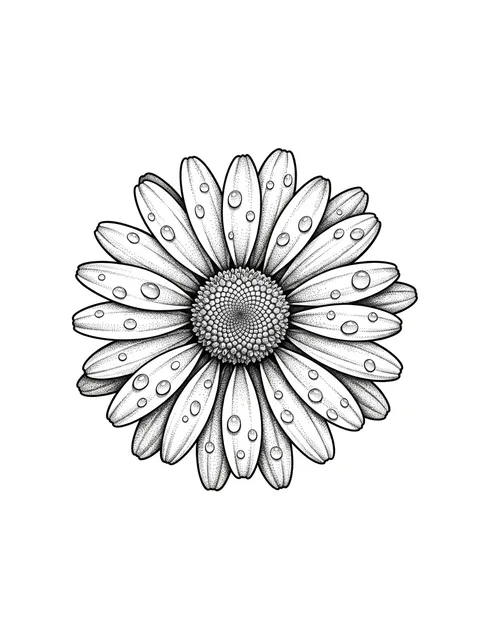
Black and grey dotwork daisy and flower tattoo design Try it on — Black and grey dotwork daisy and flower tattoo design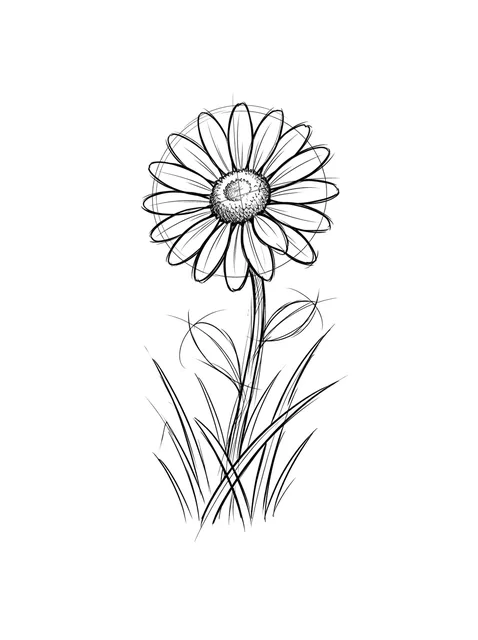
Black and grey sketch daisy and flower tattoo design Try it on — Black and grey sketch daisy and flower tattoo design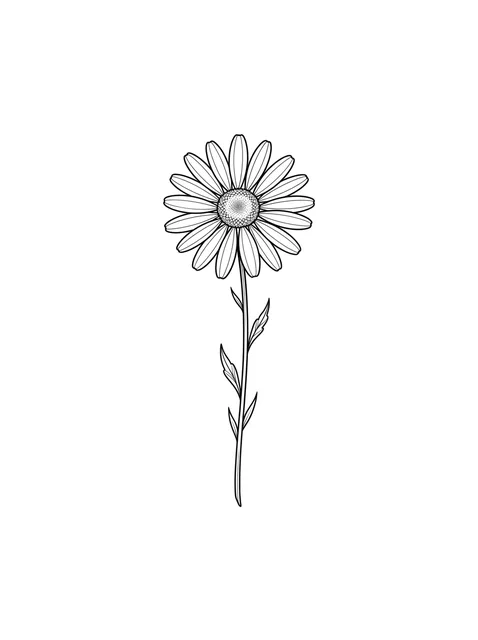
Black and white linework daisy and flower tattoo design, outline stencil Try it on — Black and white linework daisy and flower tattoo design, outline stencil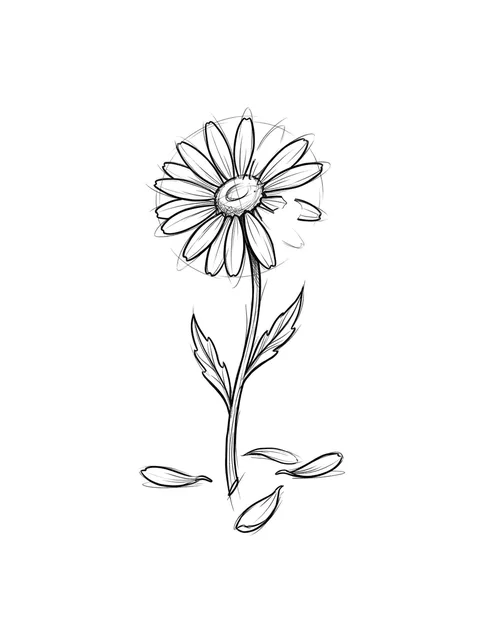
Black and grey sketch daisy and flower tattoo design: a daisy with some petals falling Try it on — Black and grey sketch daisy and flower tattoo design: a daisy with some petals falling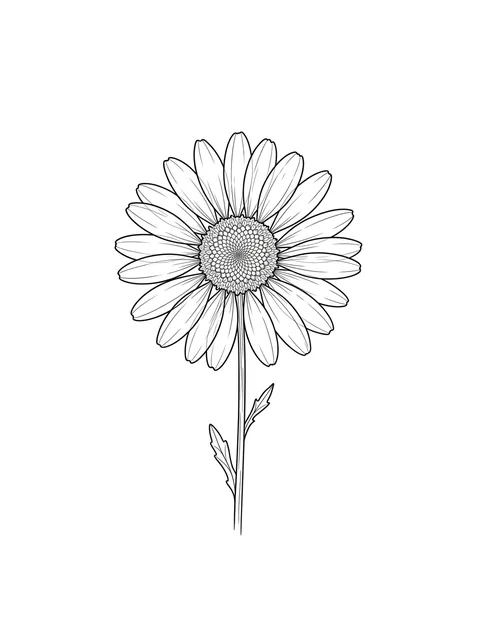
Black and white linework daisy and flower tattoo design, outline stencil Try it on — Black and white linework daisy and flower tattoo design, outline stencil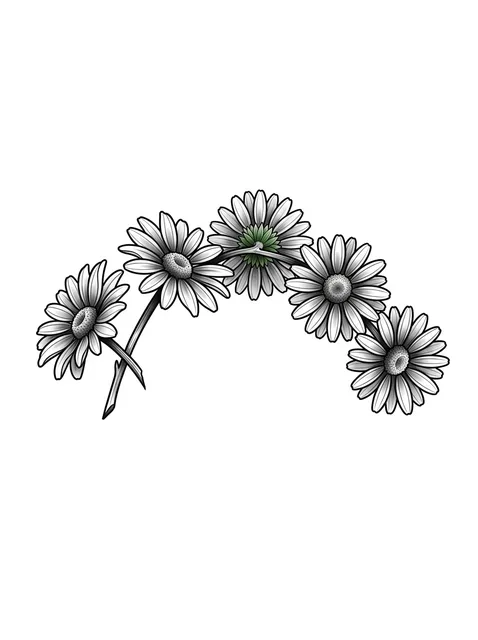
Black and grey illustrative daisy and flower tattoo design Try it on — Black and grey illustrative daisy and flower tattoo design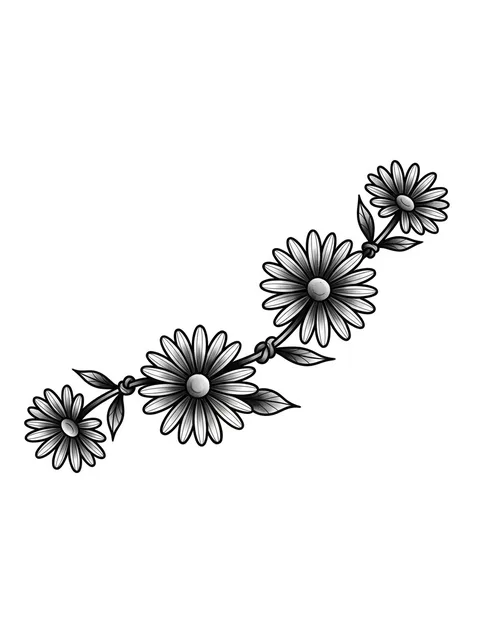
Black and grey traditional daisy and flower tattoo design: a string of daisies with leaves Try it on — Black and grey traditional daisy and flower tattoo design: a string of daisies with leaves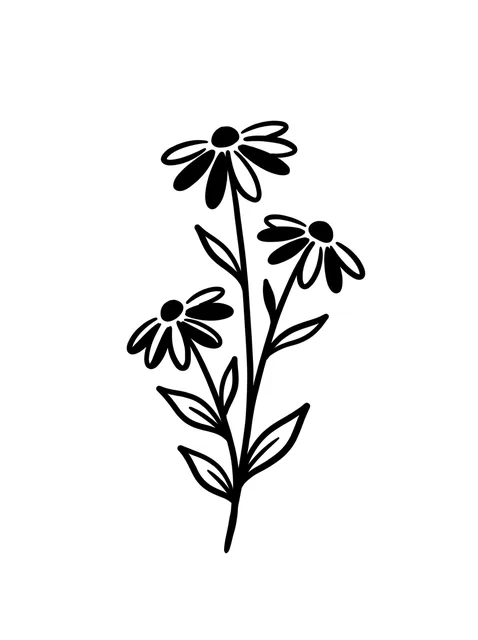
Black and white minimalist daisy and flower tattoo design, outline stencil Try it on — Black and white minimalist daisy and flower tattoo design, outline stencil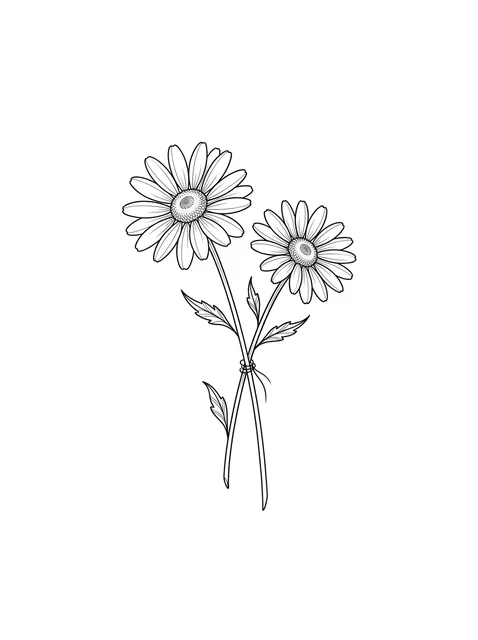
Black and white linework daisy and flower tattoo design, outline stencil Try it on — Black and white linework daisy and flower tattoo design, outline stencil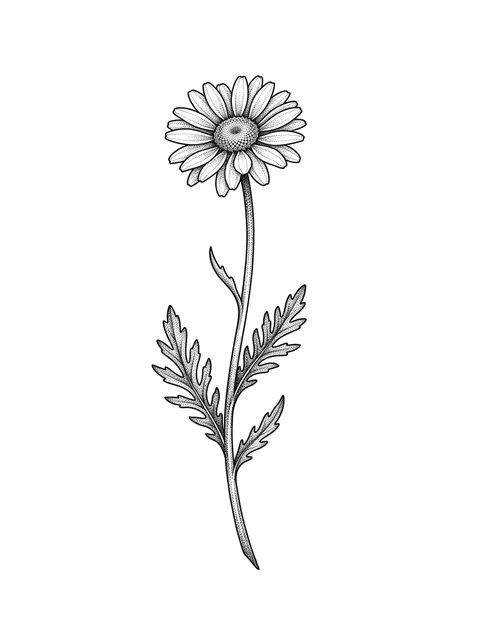
Black and grey dotwork daisy and flower tattoo design Try it on — Black and grey dotwork daisy and flower tattoo design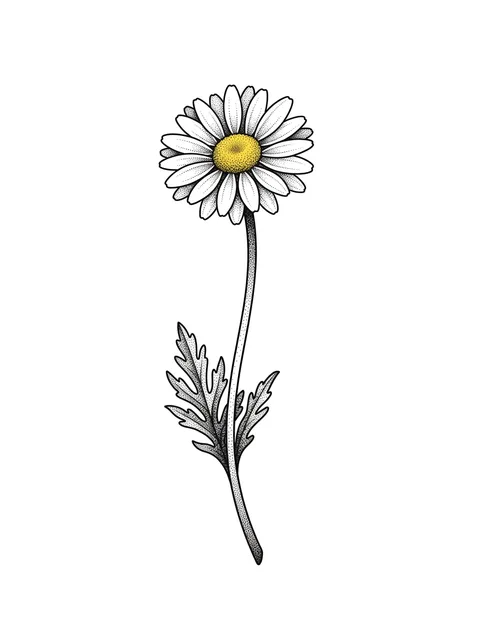
Color illustrative daisy and flower tattoo design: a vibrant yellow center and white petals Try it on — Color illustrative daisy and flower tattoo design: a vibrant yellow center and white petals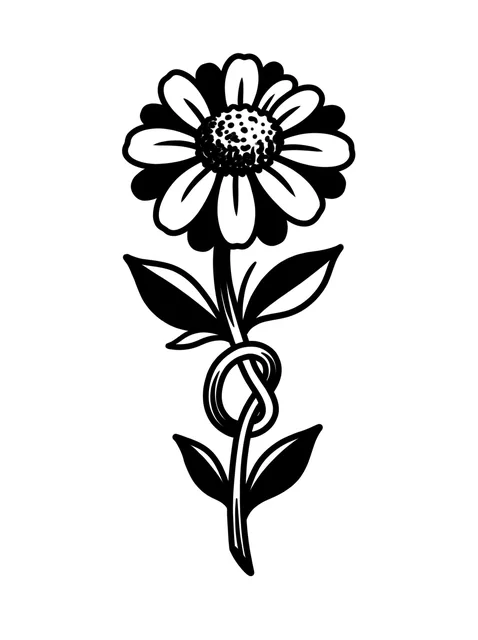
Black and grey traditional daisy and flower tattoo design: a single flower with a knotted stem Try it on — Black and grey traditional daisy and flower tattoo design: a single flower with a knotted stem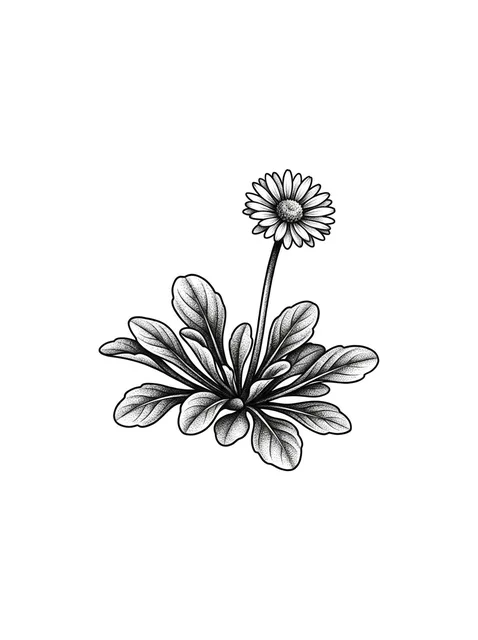
Black and grey dotwork daisy and flower tattoo design: a single daisy with its leaves Try it on — Black and grey dotwork daisy and flower tattoo design: a single daisy with its leaves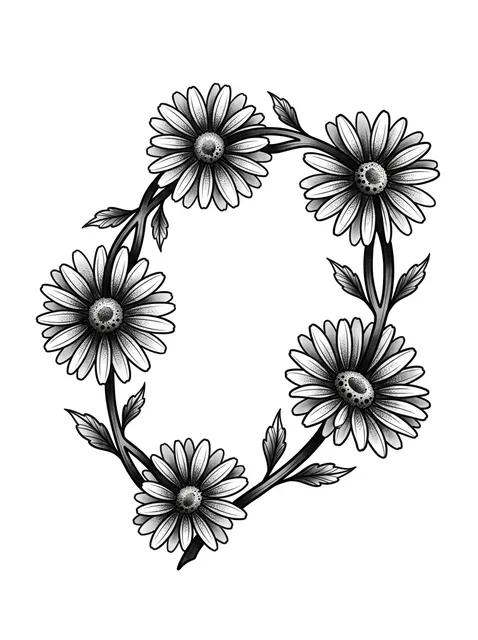
Black and grey traditional daisy and flower tattoo design Try it on — Black and grey traditional daisy and flower tattoo design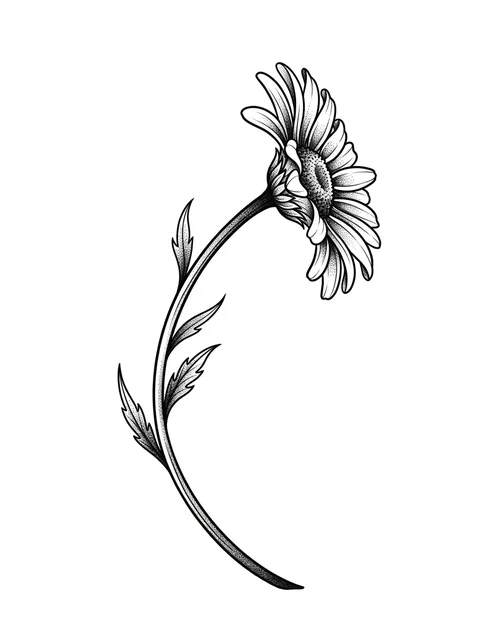
Black and grey dotwork daisy and flower tattoo design: a single daisy Try it on — Black and grey dotwork daisy and flower tattoo design: a single daisy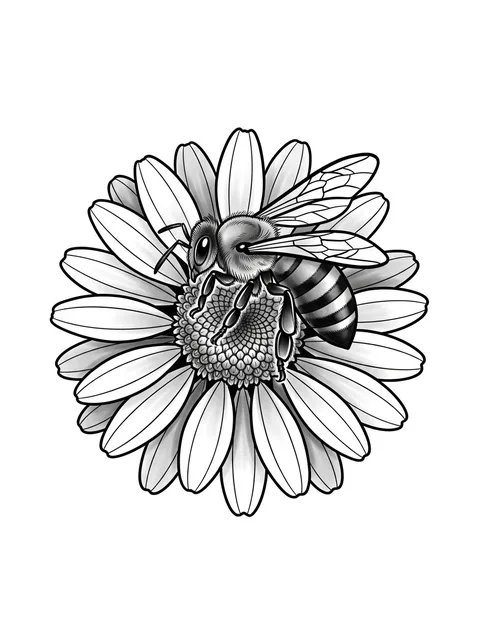
Black and grey illustrative daisy and bee tattoo design: a bee resting on a daisy Try it on — Black and grey illustrative daisy and bee tattoo design: a bee resting on a daisy


Tap any design to see it on your own skin in the try-on — no signup.
This set of 24 daisy designs, by the numbers
- Styles represented
- traditional (5), linework (4), dotwork (4), illustrative (3), minimalist (2), watercolor (2)
- Black-and-grey vs colour
- 79% black-and-grey, 21% colour
- Most often drawn with
- flower, leaf, vine, bee
Counted from the 24 designs shown on this page. Every one was drawn for InkCraft — none are scraped or reposted. Free to reference with a link to this page.
What a daisy tattoo means
The daisy is the flower of innocence and it earned the association honestly. It is the first flower most people pick, the one used for chains and for he-loves-me-not, and it grows where it is walked on — which is why it reads as unpretentious rather than as sentimental.
The name is a fact about the plant rather than a poetic idea. Daisy is a contraction of "day's eye": the flower closes at night and opens again at dawn, which is genuinely true of the common lawn daisy and is the best reason to wear one.
It has carried new beginnings since long before tattooing. Daisies appear in Chaucer, who calls the daisy the "empress and flower of flowers", and the association with childbirth, fresh starts and the turning of a season has run more or less unbroken since.
The petal-pulling game is the one piece of daisy symbolism nearly everyone knows and nearly nobody draws. A flower with gaps in the ring and the pulled petals lying beneath it tells a whole story with a single missing element.
Where the design comes from
The daisy is the most common flower in western Europe and one of the least painted, precisely because it is ordinary. Where it does appear it is deliberate: medieval and Renaissance painters used the marguerite as an attribute of innocence and of the Virgin, and Chaucer opens the Legend of Good Women with a long passage in praise of it. In tattooing it arrived with the same fine-line wave that brought the dandelion, and for the same reason — a thin needle makes twenty narrow petals possible where a traditional liner would have merged them. The gerbera, which is what most people picture when they hear daisy and which is not a daisy in the everyday sense at all, is a twentieth-century florist's flower and belongs to the colour traditions rather than to fine line.
Choosing yours
- Watch the proportion of the centre. One ring of narrow petals around a small flat disc is a daisy; a wide seeded disc with short petals is a sunflower, and that single ratio is what people get wrong.
- Draw the disc florets if the size allows. The centre of a real daisy is hundreds of tiny flowers arranged in a spiral, and rendering that rather than a stippled blob is what lifts the drawing out of a child's daisy.
- The chain is the best composition available and it depends on one detail. The stems have to be split and threaded through each other, which is how it is actually made, and almost every drawn chain simply overlaps them.
Size, cost and placement
How big, and what it costs
A single fine-line daisy is a shop-minimum piece under an hour and one of the most common small tattoos there is. A daisy chain with threaded stems is 12-15 cm and two hours. A botanical plate with lobed leaves and a rendered disc is three to four hours because the centre is hundreds of separate marks.
Where it sits, and how much it hurts
Small daisies suit the ankle, the inner wrist, behind the ear and the ribs. Chains want a long run and wrap well, which makes the forearm and the ankle the natural homes. A single flower seen head-on needs a flat field so the ring of petals stays circular.
What to ask your artist
- To keep the centre small relative to the petals, and to say so explicitly.
- Whether the disc will be stippled or drawn as individual florets at your size.
- For a chain, to thread the stems properly rather than overlapping them, since that is what makes it read as made rather than drawn.
Prices vary widely by city and artist — treat these as session lengths rather than quotes, and expect a shop minimum on anything small. The cost guide turns hours into money by size, placement and style.
Common questions
Where does the name come from?
From "day's eye" — the flower closes at night and reopens at dawn, which is genuinely true of the common lawn daisy. That is the specific reason to wear one; innocence and new beginnings are the general ones.
How do I stop it looking like a sunflower?
Keep the centre small and flat and the petals narrow, in a single ring. A large seeded disc reads as a sunflower regardless of what the petals do, and that is the most common failure on this subject.
Is a gerbera a daisy?
Botanically it is in the same enormous family, but visually it is a different flower: a dense double ring of long petals in saturated colour. It belongs in traditional or neo-traditional colour work, not in fine line.
See it on your skin before you commit
InkCraft places any of these designs on a photo of you — scaled, wrapped and shaded to the placement you pick.