 InkCraft
Swallow Tattoo Ideas, Designs and Meaning
15 original swallow designs drawn for InkCraftBy Uladzimir TumanauUpdated
The sailor's swallow is a bird of return, and the famous rule of one swallow for every five thousand nautical miles is repeated everywhere and documented almost nowhere. The long forked tail is what identifies the bird, and without it the drawing reads as a sparrow.
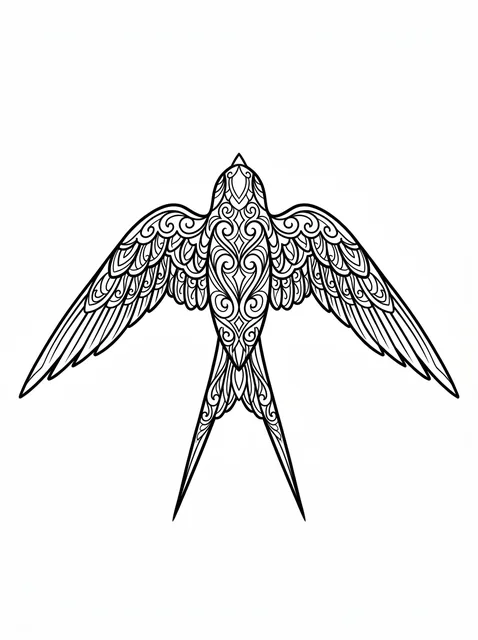
Black and grey ornamental swallow tattoo design Try it on — Black and grey ornamental swallow tattoo design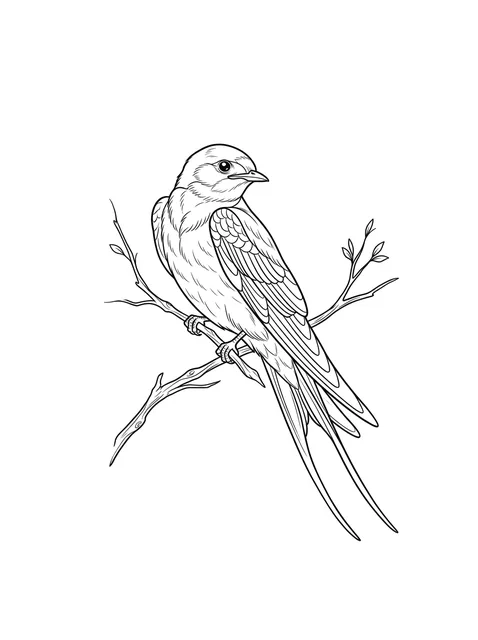
Black and white fine line swallow tattoo design, outline stencil Try it on — Black and white fine line swallow tattoo design, outline stencil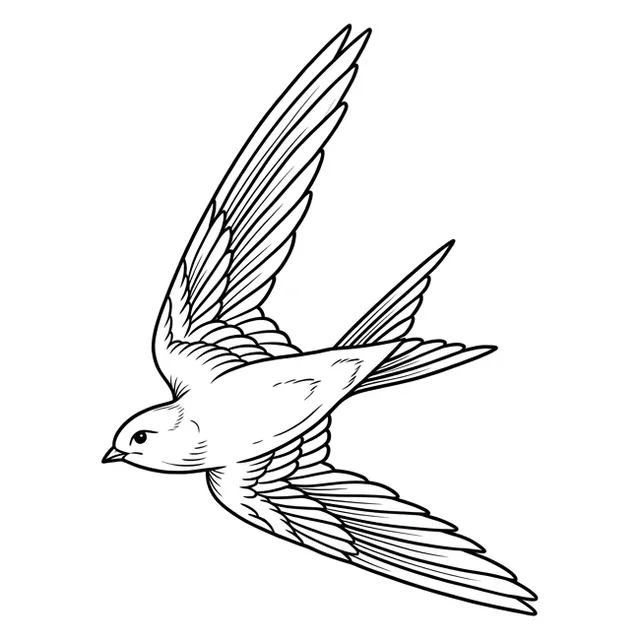
Black and white fine line swallow and bird tattoo design, outline stencil Try it on — Black and white fine line swallow and bird tattoo design, outline stencil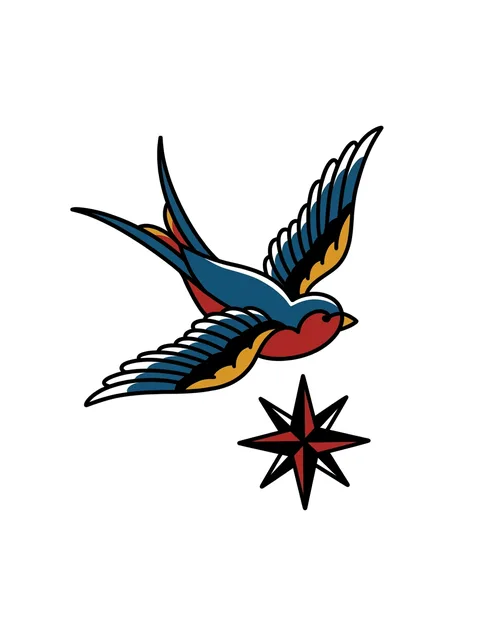
Color traditional swallow and star tattoo design Try it on — Color traditional swallow and star tattoo design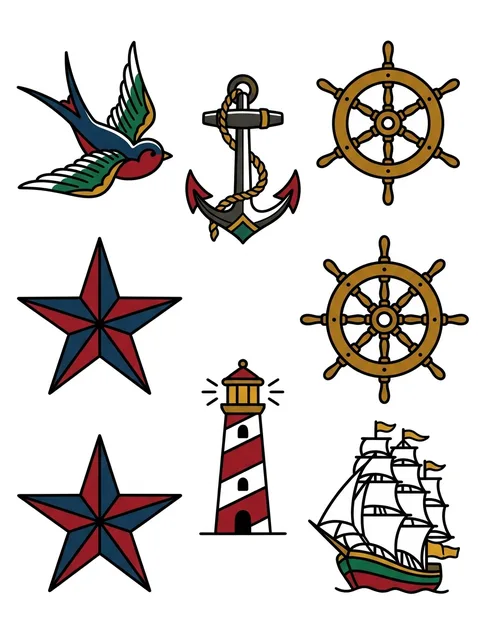
Color flash swallow and anchor tattoo design Try it on — Color flash swallow and anchor tattoo design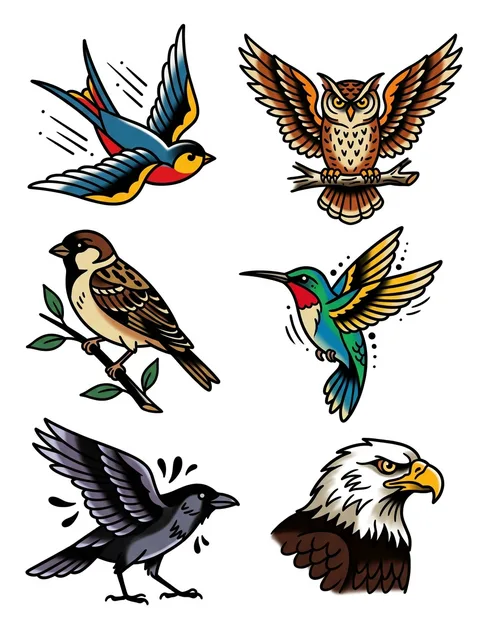
Color flash swallow and owl tattoo design: a sparrow on a twig, a hummingbird and a crow Try it on — Color flash swallow and owl tattoo design: a sparrow on a twig, a hummingbird and a crow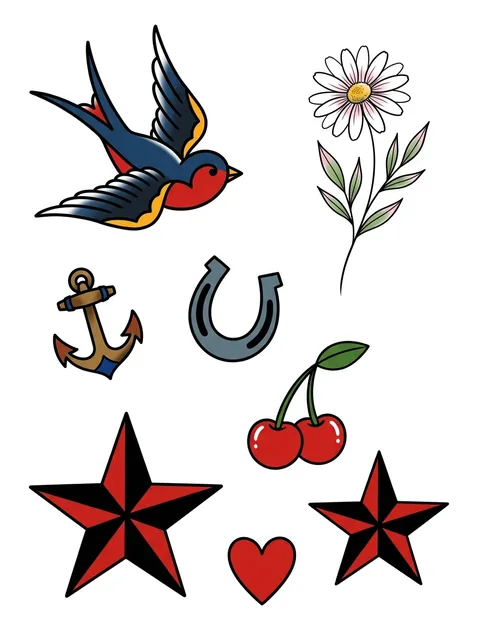
Color patchwork swallow and star tattoo design Try it on — Color patchwork swallow and star tattoo design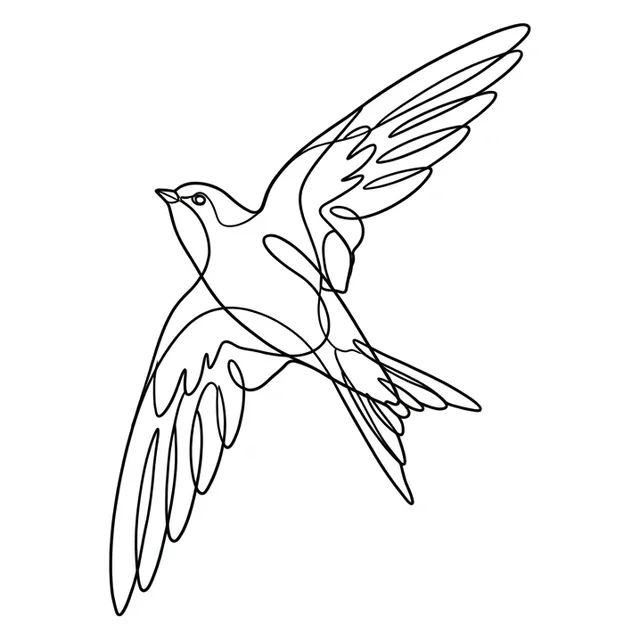
Black and white linework swallow and bird tattoo design, outline stencil Try it on — Black and white linework swallow and bird tattoo design, outline stencil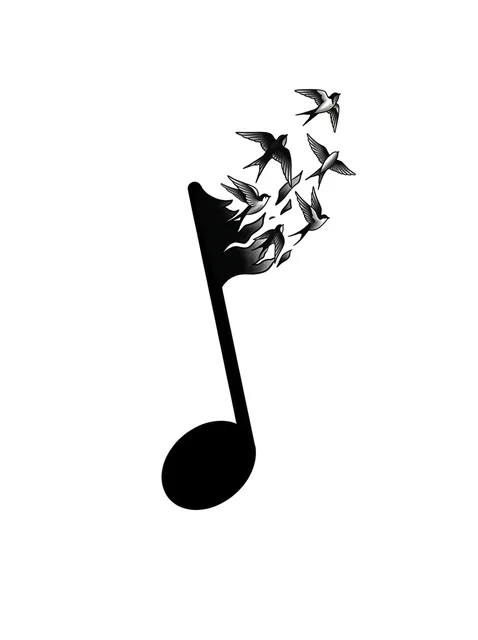
Black and grey illustrative swallow and music note tattoo design: their wings open Try it on — Black and grey illustrative swallow and music note tattoo design: their wings open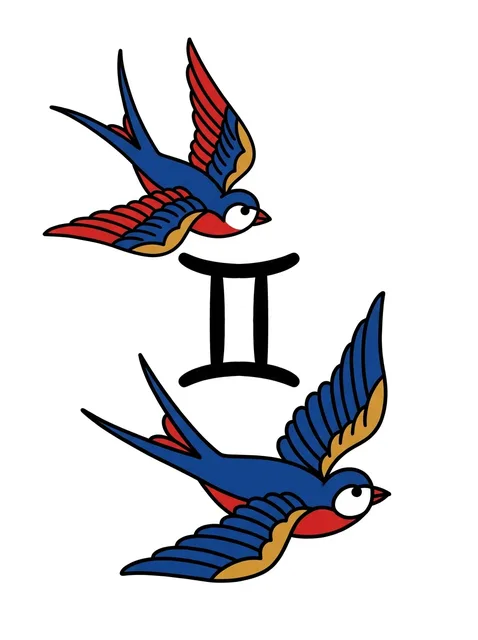
Color traditional swallow and gemini tattoo design Try it on — Color traditional swallow and gemini tattoo design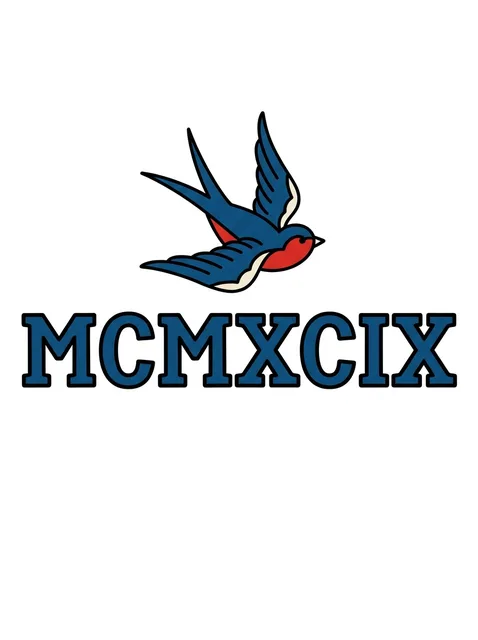
Color lettering swallow and roman numerals tattoo design Try it on — Color lettering swallow and roman numerals tattoo design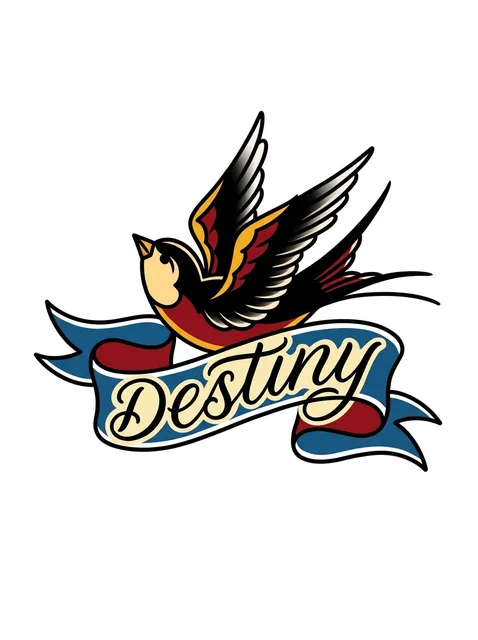
Color lettering swallow and script tattoo design Try it on — Color lettering swallow and script tattoo design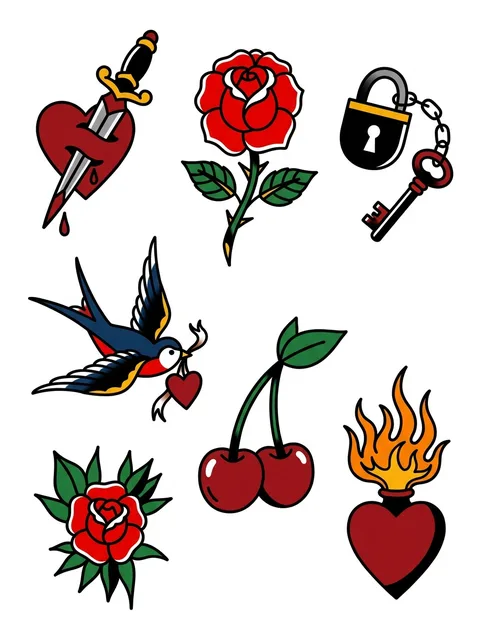
Color flash swallow and heart tattoo design Try it on — Color flash swallow and heart tattoo design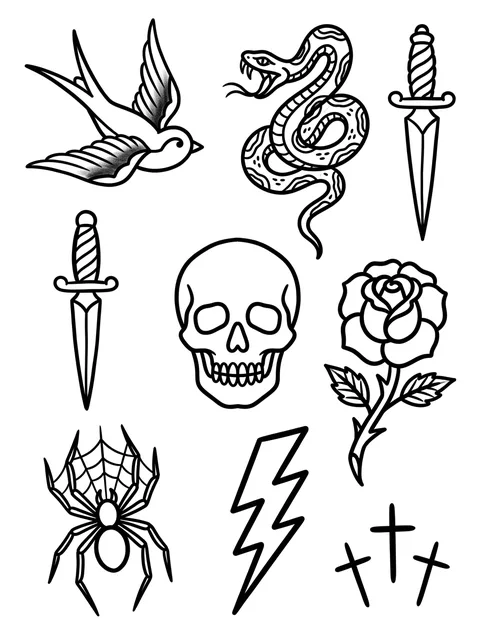
Black and grey patchwork swallow and skull tattoo design Try it on — Black and grey patchwork swallow and skull tattoo design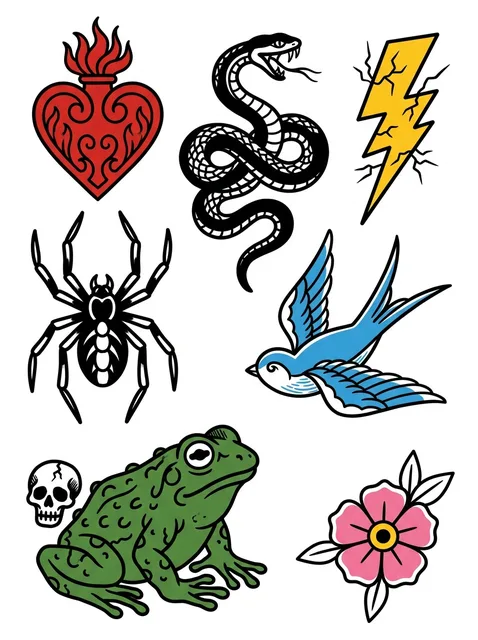
Color patchwork swallow and heart tattoo design Try it on — Color patchwork swallow and heart tattoo design


Tap any design to see it on your own skin in the try-on — no signup.
This set of 15 swallow designs, by the numbers
- Styles represented
- flash (3), patchwork (3), fine line (2), traditional (2), lettering (2), ornamental (1)
- Black-and-grey vs colour
- 40% black-and-grey, 60% colour
- Most often drawn with
- bird, star, anchor, heart
Counted from the 15 designs shown on this page. Every one was drawn for InkCraft — none are scraped or reposted. Free to reference with a link to this page.
What a swallow tattoo means
A swallow is a promise to come back. Barn swallows leave Britain and northern Europe each autumn, cross the Sahara to winter in southern Africa and return in spring, often to the same barn or porch they nested in the year before; an adult weighs around 20 grams and makes that journey twice a year, and birds ringed in Britain have been recovered in South Africa since 1912. To a sailor months from home that homing was the whole attraction. One bird on each side of the chest, beaks turned toward the breastbone, is the classic sailor's layout, and it is about the return rather than the flight.
The rule everyone quotes is that a sailor earned one swallow for five thousand nautical miles at sea and a second at ten thousand. It may have held on some ships in some decades, but no one has yet pointed to a nineteenth-century source that records it, and the modern accounts mostly repeat one another. The same is true of the idea that swallows carried a drowned sailor's soul to heaven. Treat both as tattoo folklore, a real tradition in its own right, rather than as recorded naval custom.
Swallows also stand for love and loyalty, because they pair and come back to the same site, and in old flash a swallow carrying a heart or a banner in its beak was a love token. Here it turns up in that role on a love sheet beside a pierced heart and a padlock, and above the year 1999 in Roman numerals, where the return it promises is to a date. Newer designs drop the sailor entirely, a swallow perched on a twig in fine line or one seen from above in filigree, and keep only the outline and the fork. English still quotes Aristotle's line that one swallow does not make a summer.
Where the design comes from
By the early twentieth century swallows were standard on American flash beside the anchor, the ship and the nautical star, drawn with a navy back, a red throat and a tail split into two long points, the barn swallow's own colours reduced to two inks that held. Norman Collins, Sailor Jerry, drew them for servicemen in Honolulu until his death in 1973, and his heavy outline and flat colour are the look the flash sheets and patchwork sets here keep.
Choosing yours
- Keep the forked tail long. It is the one feature that identifies a swallow, and without it the bird could be a sparrow. It is also the male's advertisement: in 1988 the Danish biologist Anders Pape Møller lengthened some males' streamers and shortened others, and the long-tailed birds found mates sooner.
- Choose one bird or a pair. A mirrored pair is the sailor's version and suits the chest; a single bird suits the forearm, the shoulder or behind the ear.
- Traditional navy and red hold well because the inks are packed flat; a fine-line swallow relies on shape alone and needs clean skin between the streamers.
Size, cost and placement
How big, and what it costs
A traditional swallow in colour is 6 to 9 cm and one to two hours; a mirrored pair for the chest takes about twice that, since the second bird must match the first.
Where it sits, and how much it hurts
The upper chest below the collarbones is the traditional place. The shoulder, forearm and back of the hand take a single bird; the hand blurs fastest and hurts more, the forearm least.
What to ask your artist
- That the tail stays a true fork with two long streamers.
- For a pair, that the second bird is traced as a mirror of the first.
- How the red and navy will soften on your skin over ten years.
Prices vary widely by city and artist — treat these as session lengths rather than quotes, and expect a shop minimum on anything small. The cost guide turns hours into money by size, placement and style.
Common questions
Is one swallow really for five thousand nautical miles?
That is the popular story, but nobody has shown a period record of it. Five thousand nautical miles is a little over 9,000 km, roughly a British swallow's flight to its winter quarters, a pleasing coincidence and probably nothing more.
How do I tell a swallow from a sparrow in a drawing?
By the tail: a swallow's is deeply forked, a sparrow's short and square.
Why are sailor swallows tattooed in pairs on the chest?
One on each side, flying inward, balances the torso and doubles the promise of a homecoming. The claim that the second bird marked ten thousand miles rests on the same undocumented rule.
Does a swallow work as a memorial?
It can. In Oscar Wilde's The Happy Prince of 1888 a swallow stays behind with a statue out of love and dies of the cold, and a swallow over a name reads as someone expected home.
See it on your skin before you commit
InkCraft places any of these designs on a photo of you — scaled, wrapped and shaded to the placement you pick.