 InkCraft
Demon Tattoo Ideas: Hannya, Oni and Devils
12 original demon designs drawn for InkCraftBy Uladzimir TumanauUpdated
The hannya that fills so many Japanese sleeves is not a monster but a Noh mask of a woman consumed by jealousy. The oni is a separate creature, a horned ogre carrying an iron club, and the horns, eyes and mouth are how the two are told apart.
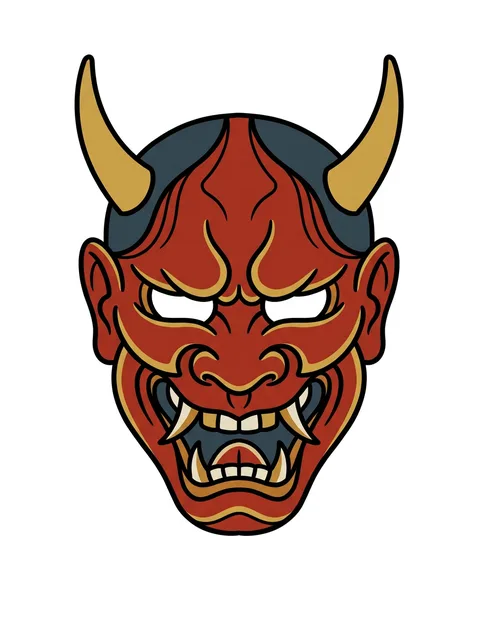
Color Japanese demon tattoo design Try it on — Color Japanese demon tattoo design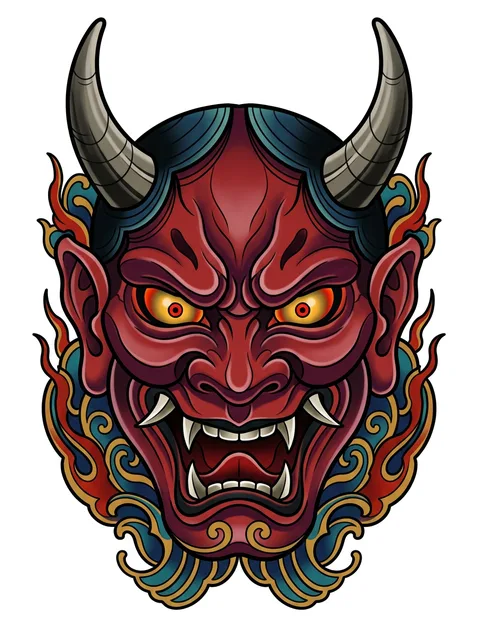
Color Japanese demon tattoo design: a fierce red demon face with prominent horns and sharp fangs Try it on — Color Japanese demon tattoo design: a fierce red demon face with prominent horns and sharp fangs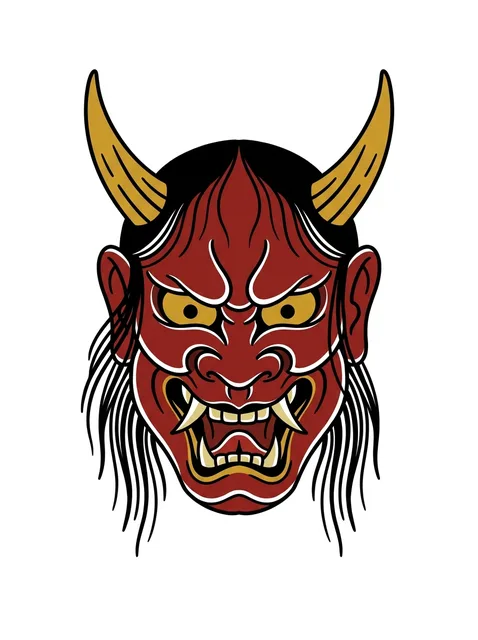
Color irezumi demon tattoo design Try it on — Color irezumi demon tattoo design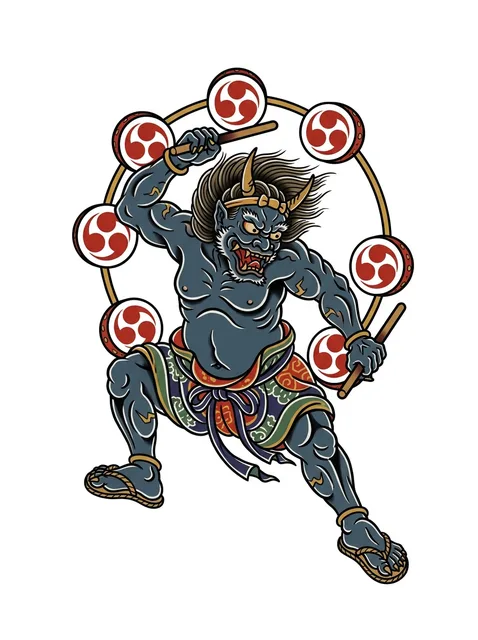
Color irezumi demon tattoo design Try it on — Color irezumi demon tattoo design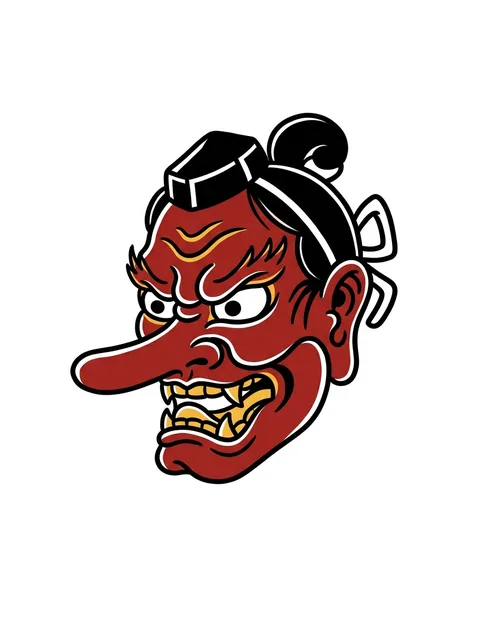
Color irezumi demon tattoo design Try it on — Color irezumi demon tattoo design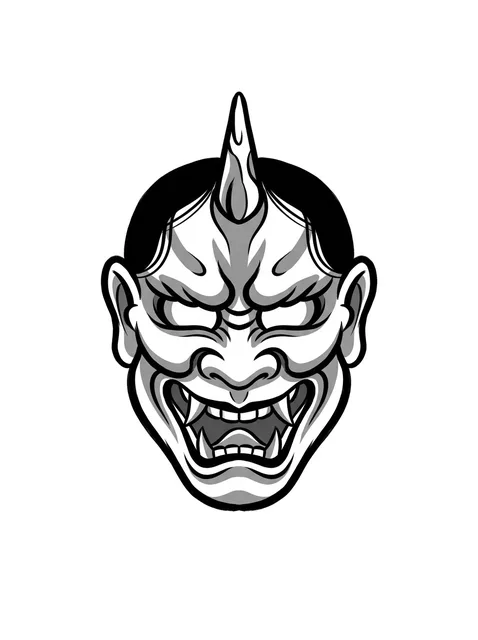
Black and grey irezumi demon tattoo design Try it on — Black and grey irezumi demon tattoo design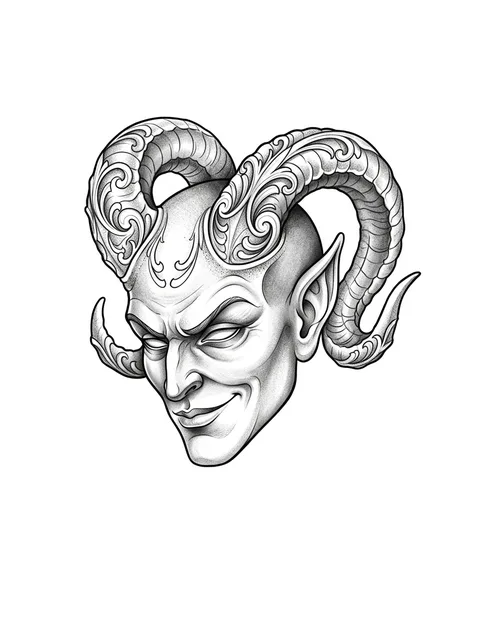
Black and grey chicano demon tattoo design Try it on — Black and grey chicano demon tattoo design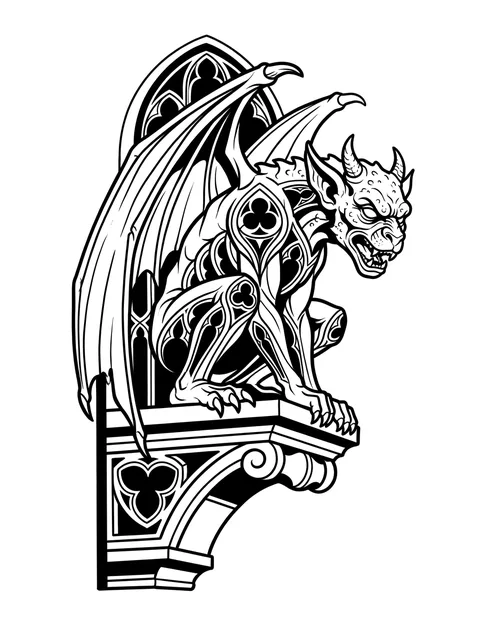
Black and grey gothic demon and dragon tattoo design Try it on — Black and grey gothic demon and dragon tattoo design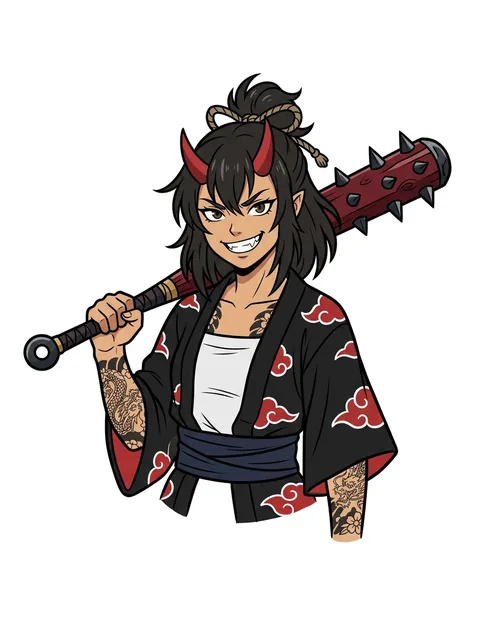
Color anime demon and woman portrait tattoo design: a red cloud pattern Try it on — Color anime demon and woman portrait tattoo design: a red cloud pattern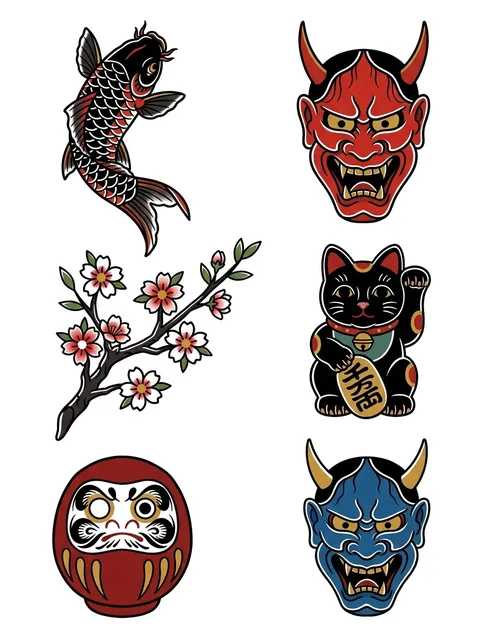
Color flash demon and koi tattoo design: a maneki-neko lucky cat and a daruma doll Try it on — Color flash demon and koi tattoo design: a maneki-neko lucky cat and a daruma doll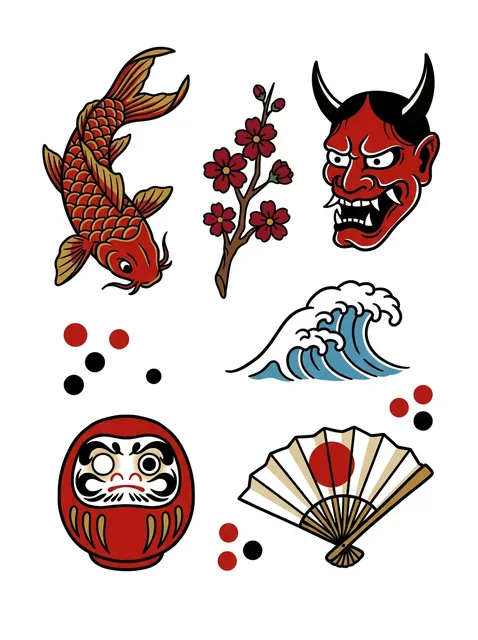
Color patchwork demon and koi tattoo design Try it on — Color patchwork demon and koi tattoo design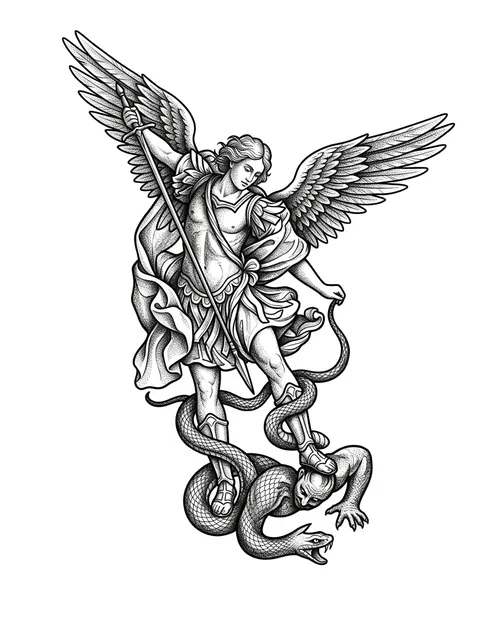
Black and grey dotwork demon and archangel tattoo design Try it on — Black and grey dotwork demon and archangel tattoo design


Tap any design to see it on your own skin in the try-on — no signup.
This set of 12 demon designs, by the numbers
- Styles represented
- irezumi (4), japanese asian (2), chicano (1), gothic (1), anime (1), flash (1)
- Black-and-grey vs colour
- 33% black-and-grey, 67% colour
- Most often drawn with
- koi, cherry blossom, dragon, woman portrait
Counted from the 12 designs shown on this page. Every one was drawn for InkCraft — none are scraped or reposted. Free to reference with a link to this page.
What a demon tattoo means
Start with the hannya, the face most people mean and most often misread. In Noh theatre it is worn by a woman whose jealousy has made her a demon: two horns, gold eyes, a mouth split almost to the ears. Tipped down under the stage lights the carved face looks grief-stricken, and tipped up it looks enraged, and a well-made mask does both. On skin it is less a monster than a warning about what a feeling can do to the person who has it.
An oni is a separate creature, from folk belief rather than the stage. It is the ogre of Japanese folklore: red or blue skin, horns, fangs, a tiger-skin loincloth and an iron club called a kanabō, carried so reliably that "an iron club for an oni" is a proverb for making the strong stronger. The usual explanation for the ox horns and the tiger skin is direction, since the unlucky north-east, the demon gate, was ushitora in the old compass, ox and tiger. Every February at Setsubun families throw beans and shout "oni wa soto", demons out, yet oni faces also sit on temple roofs as onigawara tiles, guarding the building. An oni tattoo can mean the threat or the guard.
A Western demon is a third idea. Christianity made demons fallen angels, and the horned, bat-winged figure is the shape they settled into in late medieval painting. People wearing one now rarely mean the devil. They mean their own demons, an addiction, a depression, a temper, drawn and put where they can be watched rather than left to work unseen.
The Greek word pulls the other way entirely. A daimon was a spirit attached to a person and not necessarily an evil one, and Socrates spoke of an inner voice that warned him off mistakes and never urged him on.
Where the design comes from
The hannya belongs to Noh, the masked drama given its classical shape by Kan'ami and his son Zeami in the fourteenth and fifteenth centuries. It appears in Aoi no Ue, where the jealous spirit of Lady Rokujō from The Tale of Genji torments her rival, and in Dōjōji, where a woman spurned by a monk becomes a serpent and burns him inside a temple bell. Irezumi borrowed it from the stage and from woodblock prints, and it became a standard face of the Japanese bodysuit.
Choosing yours
- Tell the faces apart first. A hannya has two horns, gold eyes and a wide mouth: a person changed by feeling. An oni has one horn or two, a heavy brow and often its club: a force. Raijin with his drums and the long-nosed tengu on this page are neither, one a thunder god and the other a mountain spirit.
- Choose the hannya's colour deliberately: Noh uses a pale mask for a refined woman and the deepest red for one wholly turned demon. On a Western head the horns do the work, and ram horns, as on the fine-line head here, pull it toward the devil.
Size, cost and placement
How big, and what it costs
A mask needs about 10 cm to keep fangs, horns and eyes apart, and most sit at 12 to 18 cm. Flat traditional colour is quicker than soft black and grey, and a full Raijin with his drums is a half-day or more.
Where it sits, and how much it hurts
A single mask suits the outer upper arm, shoulder cap or calf; a full figure among waves wants the thigh, chest or back. The sternum is the sharp one.
What to ask your artist
- Whether it is a hannya or an oni, since the meaning follows the horns, eyes and mouth.
- Which shade the hannya should be, rather than red by default.
- What surrounds the mask: waves, wind bars or blossom.
Prices vary widely by city and artist — treat these as session lengths rather than quotes, and expect a shop minimum on anything small. The cost guide turns hours into money by size, placement and style.
Common questions
Is a hannya a demon or a woman?
Both, in sequence: the Noh mask plays a woman whose jealousy has turned her into a demon. Many wearers read it as a warning about their own feelings, which is closer to the source than "evil mask".
Will people read a demon tattoo as satanic?
Rarely if it is Japanese, since hannya and oni are read as irezumi. A horned Western head is more open to it, though most wearers mean personal demons.
Is a hannya mask off limits without Japanese heritage?
No. Hannya and oni come from theatre and folklore, not a restricted practice. What carries weight in Japan is irezumi's link with the yakuza, which still bars tattooed people from some bathhouses.
Why does a gargoyle turn up among the demons?
Because it was carved to look like one. Strictly a gargoyle is a waterspout, and the famous brooding beasts on Notre-Dame are nineteenth-century additions by Eugène Viollet-le-Duc.
See it on your skin before you commit
InkCraft places any of these designs on a photo of you — scaled, wrapped and shaded to the placement you pick.