 InkCraft
Surreal tattoos: one thing becoming another
8 original surreal tattoos designs drawn for InkCraftBy Uladzimir TumanauUpdated
A surreal tattoo shows one thing turning into another, a guitar neck growing into a branch or a wave pouring out of a shell, drawn as calmly as anything ordinary. The change is the subject, so the join where one form becomes the other needs the most room.
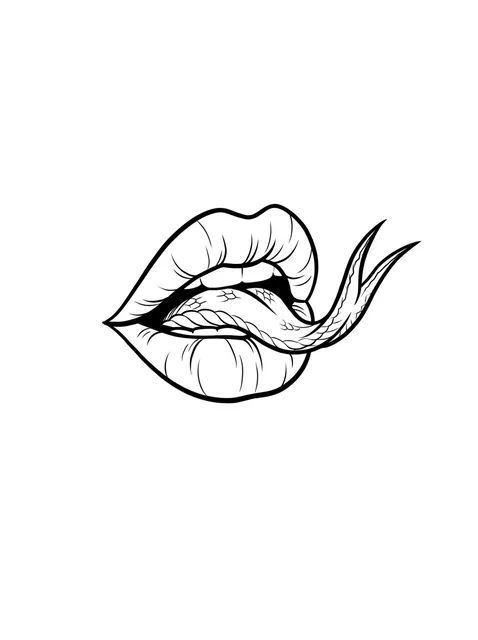
Black and grey surreal lips tattoo design: the mouth and curls upward to the right Try it on — Black and grey surreal lips tattoo design: the mouth and curls upward to the right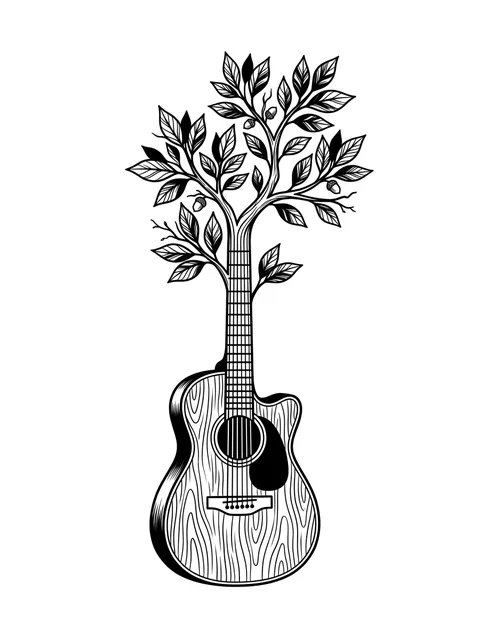
Black and grey surreal guitar and tree tattoo design Try it on — Black and grey surreal guitar and tree tattoo design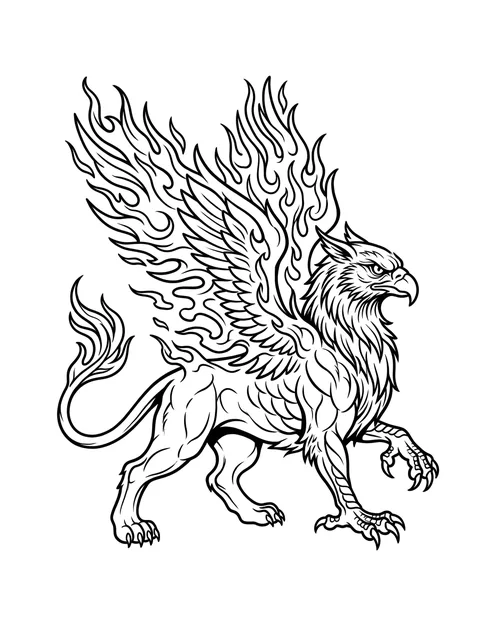
Black and grey surreal griffin and fire tattoo design Try it on — Black and grey surreal griffin and fire tattoo design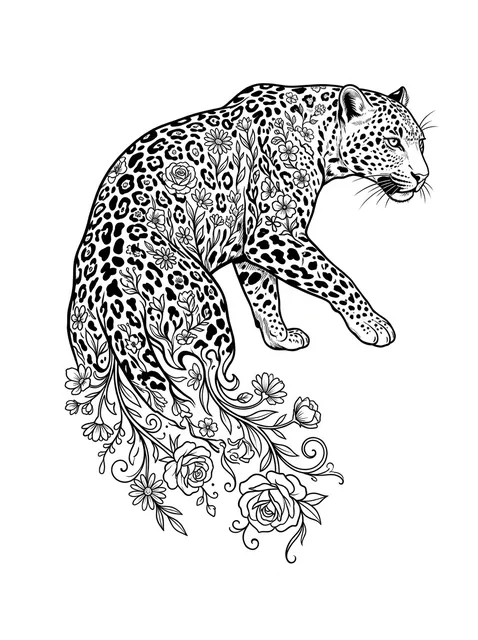
Black and grey surreal leopard and flower tattoo design Try it on — Black and grey surreal leopard and flower tattoo design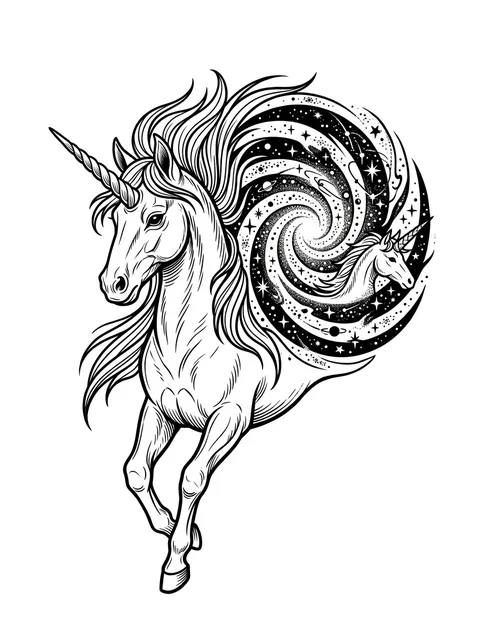
Black and grey surreal unicorn and galaxy tattoo design Try it on — Black and grey surreal unicorn and galaxy tattoo design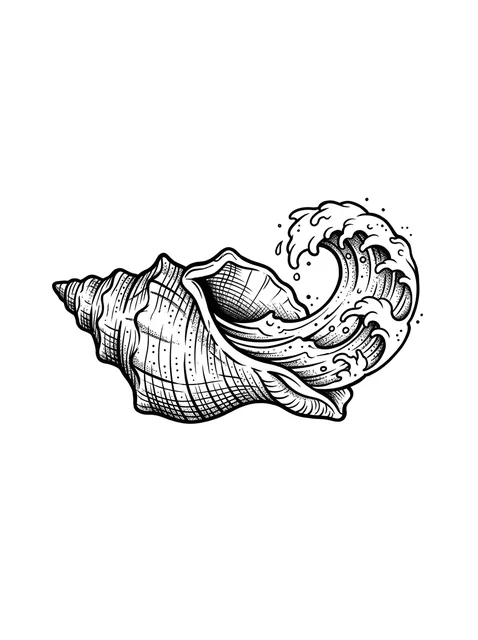
Black and grey surreal ocean and wave tattoo design Try it on — Black and grey surreal ocean and wave tattoo design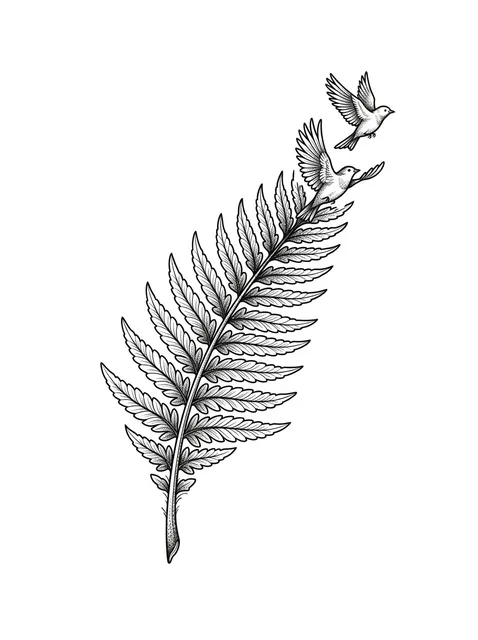
Black and grey surreal fern and bird tattoo design Try it on — Black and grey surreal fern and bird tattoo design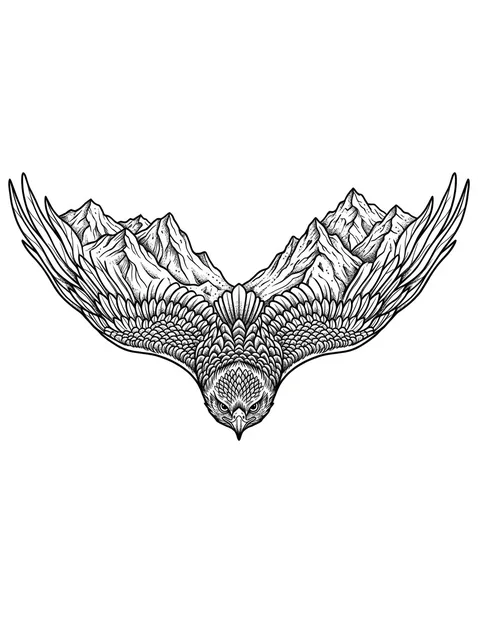
Black and grey surreal hawk and mountain tattoo design Try it on — Black and grey surreal hawk and mountain tattoo design


8 designs drawn for InkCraft in this style. Tap any one to place it on a photo of your own skin.
These 8 designs, in numbers
- Black and grey
- 8
- Colour
- 0
- Subjects covered
- 15
Three painters, three methods
Surrealism started as a movement of writers in Paris. André Breton published the first Manifesto of Surrealism in 1924 and defined it as psychic automatism, thought set down without the control of reason, and the painters around him spent the next two decades looking for pictures that would do the same. Their touchstone was a line the poet Lautréamont published in 1869, describing a youth as beautiful as the chance meeting of a sewing machine and an umbrella on a dissecting table.
Three of those painters left methods a tattoo can still use. Salvador Dalí painted double images, a single shape that reads as two things, most famously in Swans Reflecting Elephants of 1937, where swans on a lake cast reflections that are elephants. René Magritte painted ordinary objects in a plain, illustrator's manner and put them where they could not be, as in The Treachery of Images of 1929, a carefully painted pipe above the words Ceci n'est pas une pipe. Max Ernst worked from texture, rubbing pencil over floorboards and leaves in the technique he called frottage from 1925 and letting creatures emerge from the grain.
All three are visible in the designs here. The hawk whose wing edges become mountain ridges and the unicorn whose mane swirls into a spiral galaxy are double images in Dalí's sense, one outline carrying two readings. The guitar whose neck grows into a leafy branch is Magritte's move, an everyday object drawn straight and made impossible. The leopard whose rosettes turn into small flowers while its hindquarters dissolve into stems is closer to Ernst, a creature and a texture trading places.
Older than the movement, newer on skin
Transformation long predates the surrealists. Ovid's Metamorphoses, finished around the year 8, ends story after story with a body becoming something else, Daphne rooting into a laurel as Apollo reaches her, and Gian Lorenzo Bernini carved that instant in marble for Cardinal Scipione Borghese in the 1620s. What the twentieth century added was the refusal to explain. Ovid gives nearly every change a cause; a surrealist picture gives none and asks the viewer to accept it anyway.
Surrealism reached tattooing mostly second-hand. The clearest line runs through H. R. Giger, the Swiss painter whose airbrushed fusions of flesh and machinery, including the creature he designed for Ridley Scott's Alien in 1979, fed straight into biomechanical tattooing. The pieces on this page are gentler and closer to the older painters: black line and grey, no machinery, and one change per design, whether it is parted lips letting out a long, scaled, forked tongue or a griffin whose wings are flames.
Every design here is black ink on bare skin, and that suits the idea. A transformation in two colours asks the eye to see two objects stuck together; in one ink, with one light falling across both halves, it reads as a single thing that has changed. It also keeps the join, the part that carries the whole piece, in the pigment that holds its edge longest.
Room for the change to happen
The join is the zone where one form is still becoming the other, and it fails first. Where a feather edge turns into a ridge line, both have to be legible at once, so the lines there are the finest and the most closely packed in the drawing. Give it room. A design 12 to 15 cm long lets the change happen across two or three centimetres; squeeze the same drawing to 6 cm and the join closes into a smudge that reads as neither thing.
Let the change run with the body. A transformation reads in a direction, from the familiar thing to the strange one, and a limb has a direction of its own. The guitar becoming a branch wants the length of a forearm or a calf, with the leaves growing up the arm; the hawk spreading into a mountain range reaches sideways, which suits the upper back or across the chest; the leopard dissolving into stems has a head end and a tail end and settles along a thigh.
Test the drawing on someone who has not seen it. Shown it at arm's length, they should name both halves, the wave and the shell, the mane and the galaxy; if they name only one, the change needs more room or fewer parts. Place it on a photo of the spot at its real size and ask the same question of the render.
What an hour of this work costs, and how many hours surreal tattoos takes at each size, is in the cost guide. How it behaves later — under a laser, and as the thing doing the covering — is in the removal and cover-up guide.
Common questions
- Who were the surrealist painters?
- Salvador Dalí, René Magritte and Max Ernst are the three names most people know, with Yves Tanguy, Joan Miró, Leonora Carrington and Remedios Varo close behind. The movement was led by a writer, André Breton, from his first manifesto in 1924 until well after the Second World War.
- What makes a design surreal rather than fantasy?
- Fantasy invents a world with its own rules, where griffins and unicorns simply exist. Surrealism takes the ordinary world and breaks one rule in it without comment. A unicorn on its own is fantasy; the unicorn here becomes surreal at the moment its mane turns into a galaxy.
- Should I copy a famous surrealist painting?
- A painting was composed for a rectangle seen straight on, and most lose their logic when wrapped round a limb or cropped to fit one. A better request is a piece that uses the same device, a double image or an object in the wrong place, drawn for the body instead of for a frame.
- Does a surreal tattoo need to mean anything?
- Not to anyone else. The surrealists refused to explain their pictures, and a transformation can simply be a pairing you like. Most people still choose the two halves with care, music turning into nature or an animal into a landscape, because the pairing is what they will be asked about.
- Where on the body does the transformation read best?
- Running along the limb, so the eye follows the change the way it follows the arm or leg. Long designs suit the forearm, calf and thigh; ones that spread sideways, like wings becoming mountains, suit the upper back or chest. Keep the join away from a joint, where the skin folds.
See this style on your own skin
InkCraft places a design on a photo of you — scaled, wrapped and shaded to the spot you pick, so you can judge how the style reads on your body before it is permanent.