 InkCraft
New school tattoo designs: cartoon, but durable
22 original new school tattoos designs drawn for InkCraftBy Uladzimir TumanauUpdated
The 1990s answer to traditional tattooing: the same heavy outlines and solid colour, aimed at cartoon proportions instead of flash-sheet ones. Exaggerated, saturated, and built on the one thing that actually survives.
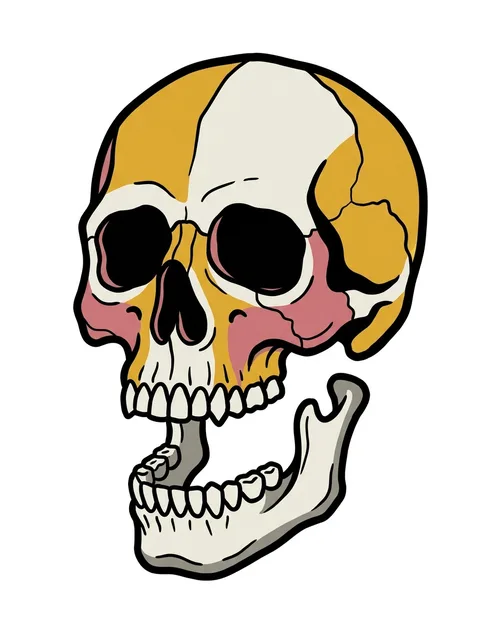
Color new school skull tattoo design: a human skull with an open jaw Try it on — Color new school skull tattoo design: a human skull with an open jaw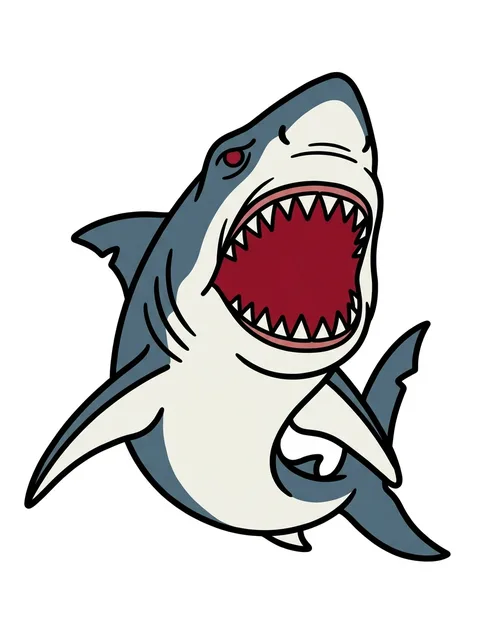
Color new school shark tattoo design Try it on — Color new school shark tattoo design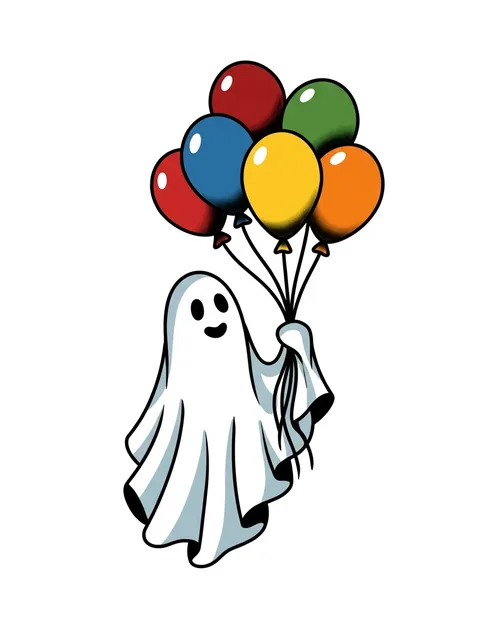
Color new school ghost tattoo design: a friendly white ghost holding a vibrant bunch of balloons Try it on — Color new school ghost tattoo design: a friendly white ghost holding a vibrant bunch of balloons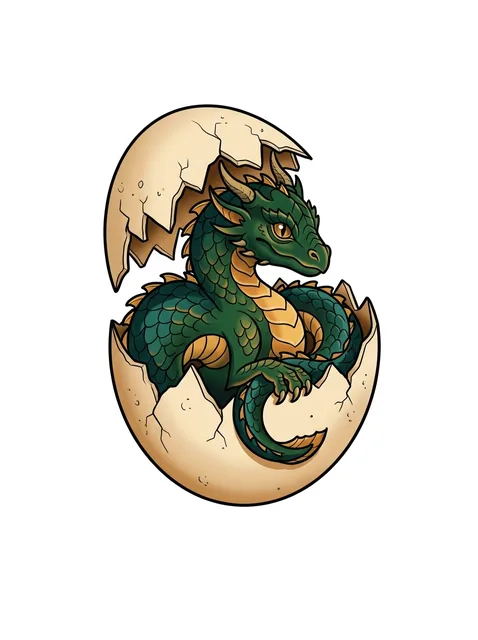
Color new school dragon tattoo design: a baby dragon hatching from an egg Try it on — Color new school dragon tattoo design: a baby dragon hatching from an egg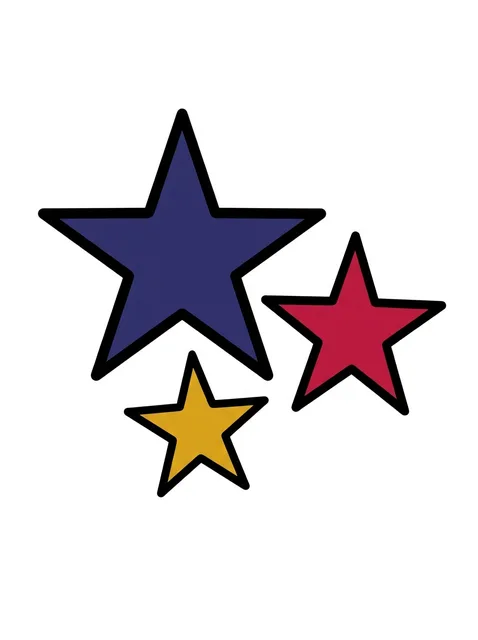
Color new school star tattoo design: three stars of varying sizes Try it on — Color new school star tattoo design: three stars of varying sizes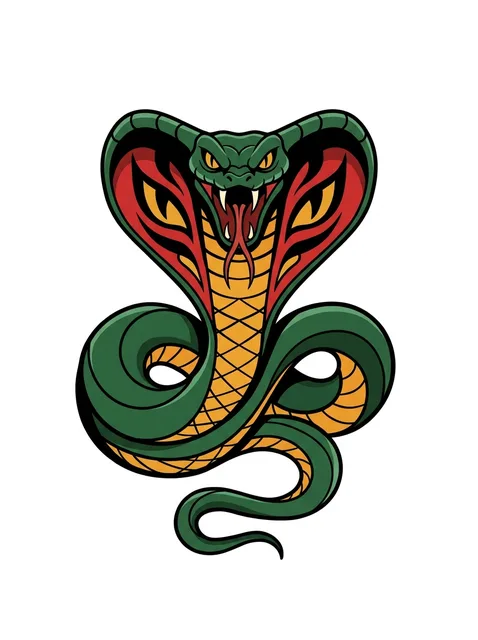
Color new school snake tattoo design: a cobra with its hood spread, ready to strike Try it on — Color new school snake tattoo design: a cobra with its hood spread, ready to strike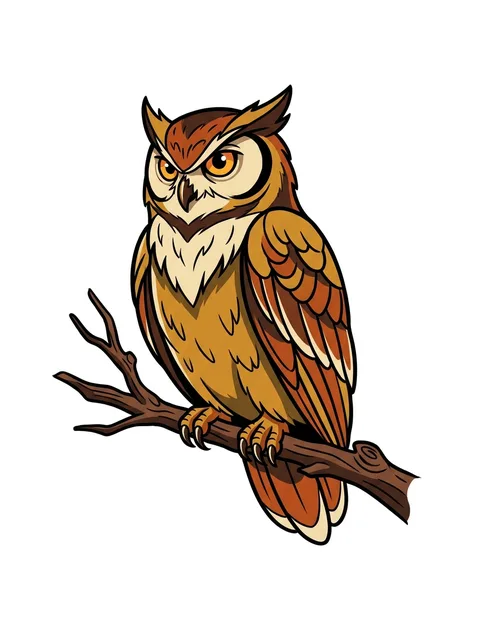
Color new school owl tattoo design: an owl perched on a branch Try it on — Color new school owl tattoo design: an owl perched on a branch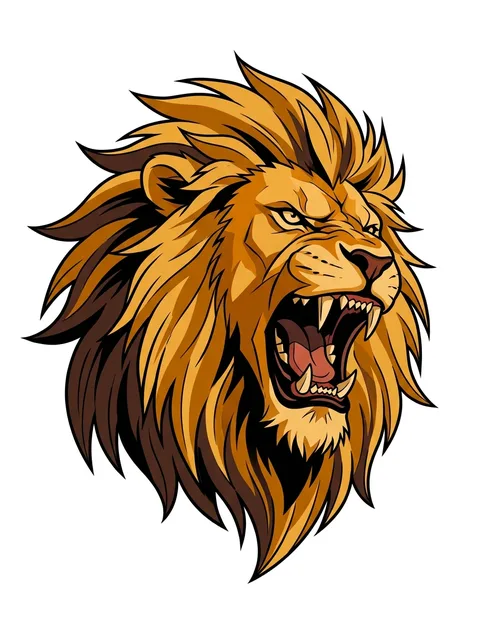
Color new school lion tattoo design Try it on — Color new school lion tattoo design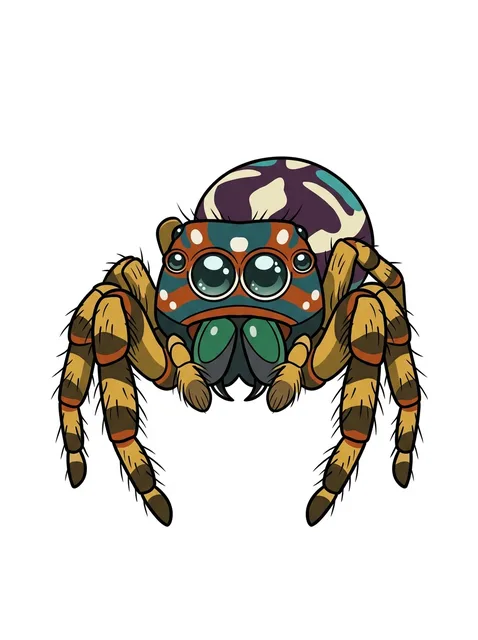
Color new school spider tattoo design: a cute, stylized spider Try it on — Color new school spider tattoo design: a cute, stylized spider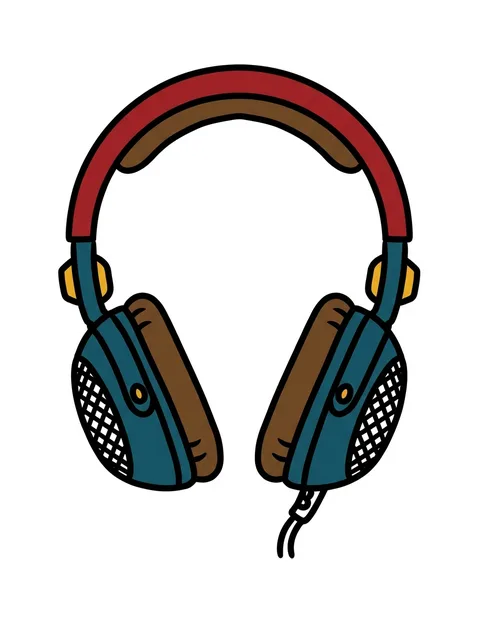
Color new school headphones tattoo design: a pair of headphones Try it on — Color new school headphones tattoo design: a pair of headphones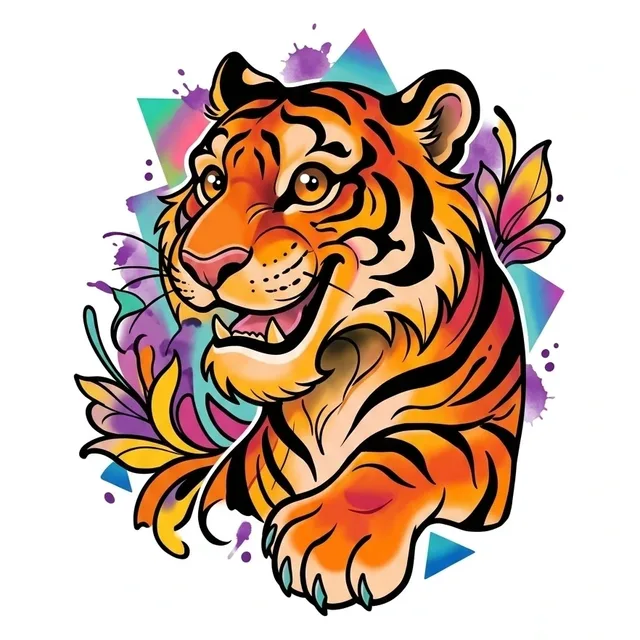
Color new school tiger and flower tattoo design Try it on — Color new school tiger and flower tattoo design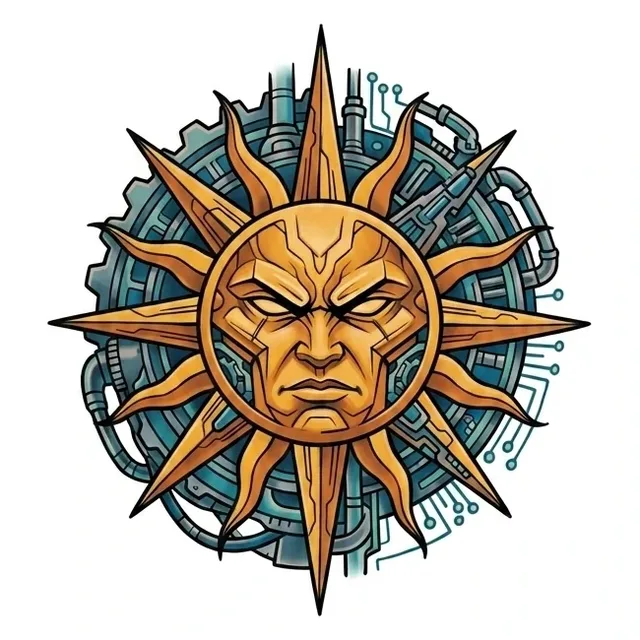
Color new school sun tattoo design: a stylized sun with an angry, robotic face at its center Try it on — Color new school sun tattoo design: a stylized sun with an angry, robotic face at its center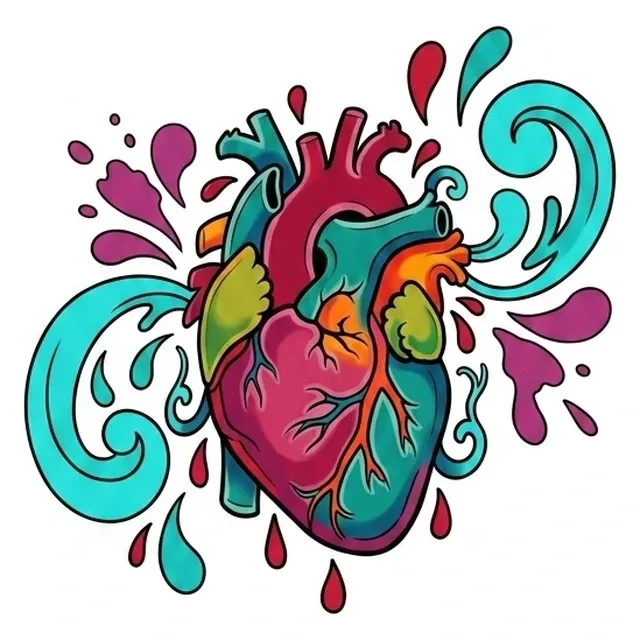
Color new school heart tattoo design Try it on — Color new school heart tattoo design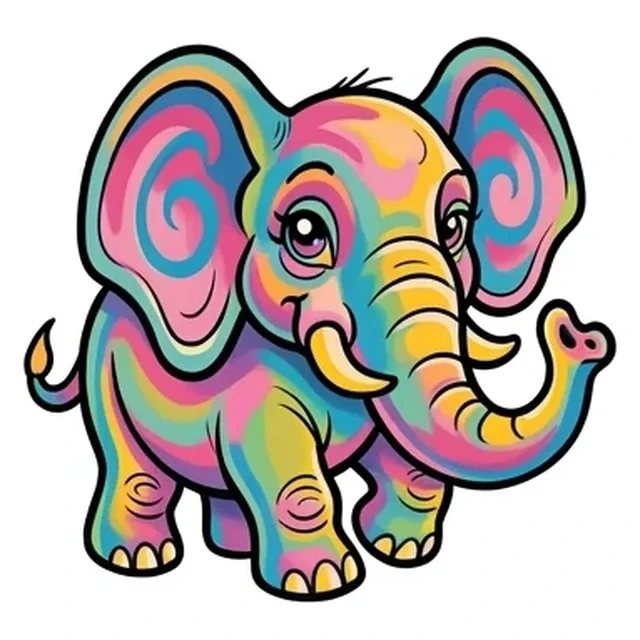
Color new school elephant tattoo design: a cute baby elephant Try it on — Color new school elephant tattoo design: a cute baby elephant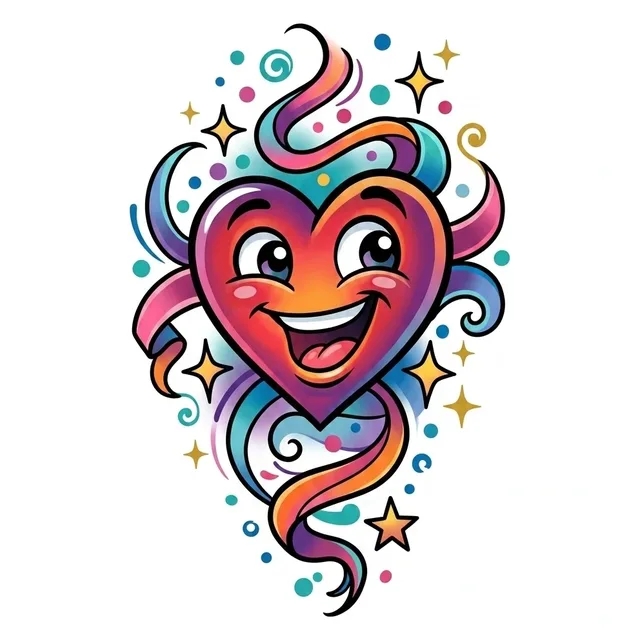
Color new school heart and star tattoo design Try it on — Color new school heart and star tattoo design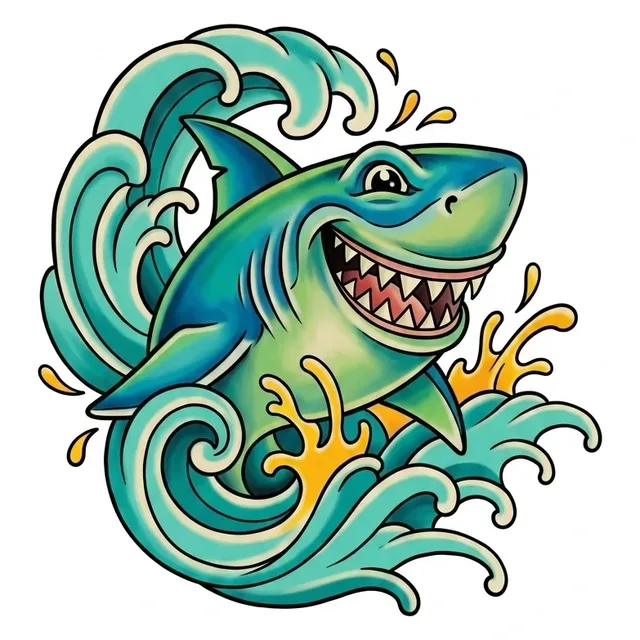
Color new school shark and wave tattoo design Try it on — Color new school shark and wave tattoo design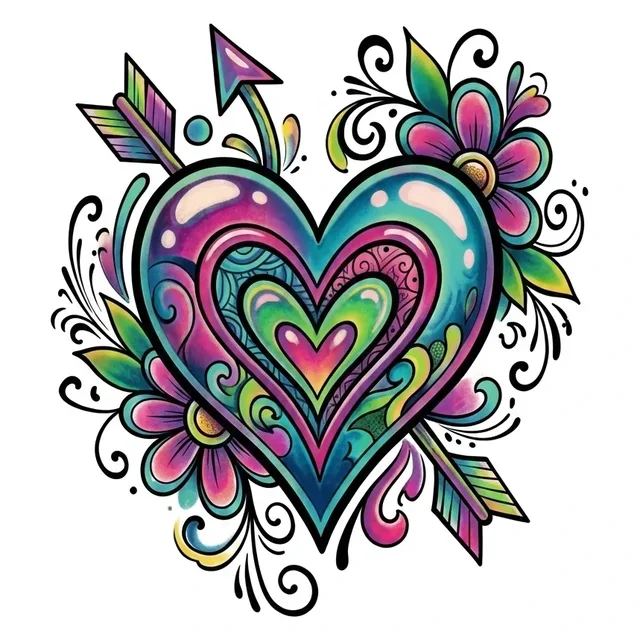
Color new school heart and flower tattoo design: a glossy, layered heart pierced by a colorful arrow Try it on — Color new school heart and flower tattoo design: a glossy, layered heart pierced by a colorful arrow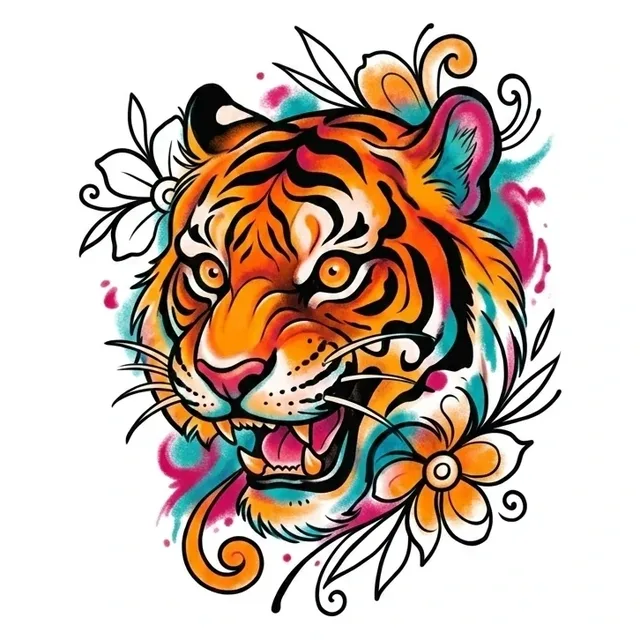
Color new school tiger and flower tattoo design Try it on — Color new school tiger and flower tattoo design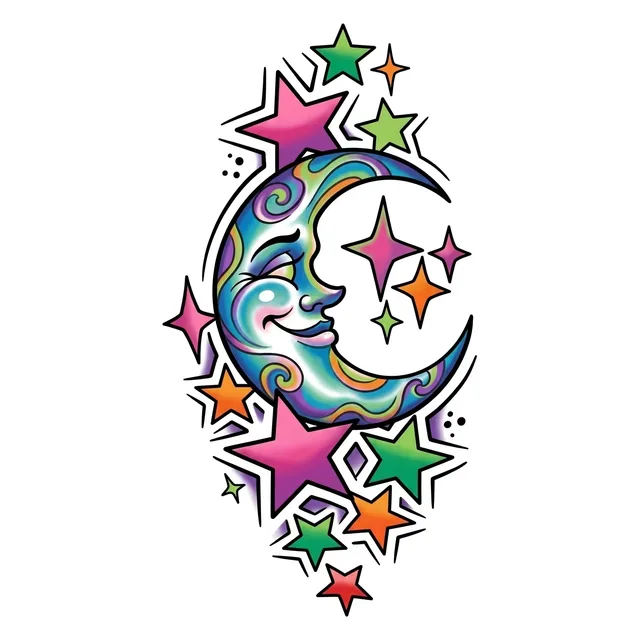
Color new school moon and star tattoo design Try it on — Color new school moon and star tattoo design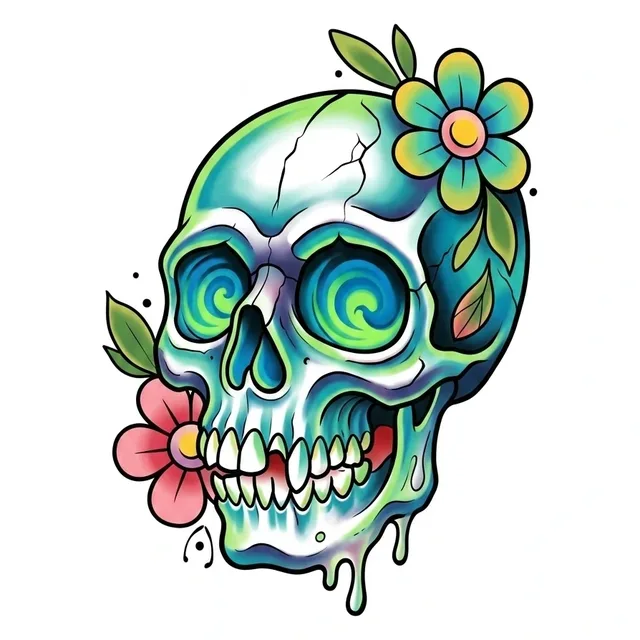
Color new school skull and flower tattoo design Try it on — Color new school skull and flower tattoo design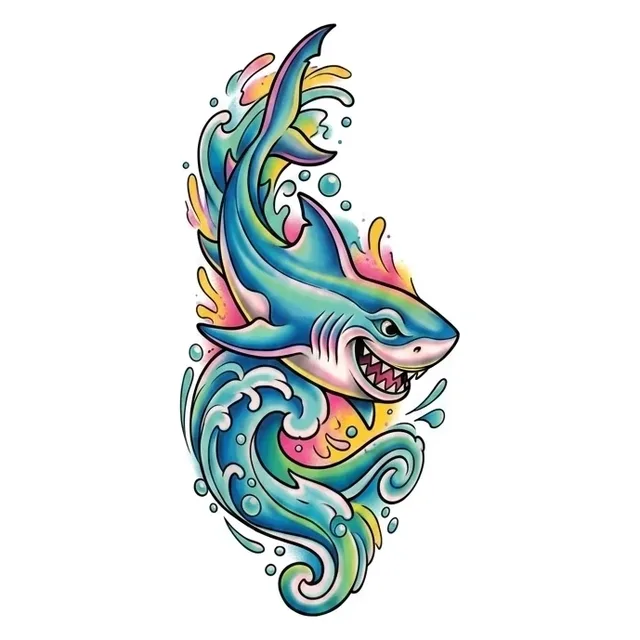
Color new school shark and wave tattoo design: a dynamic shark emerging from colorful waves Try it on — Color new school shark and wave tattoo design: a dynamic shark emerging from colorful waves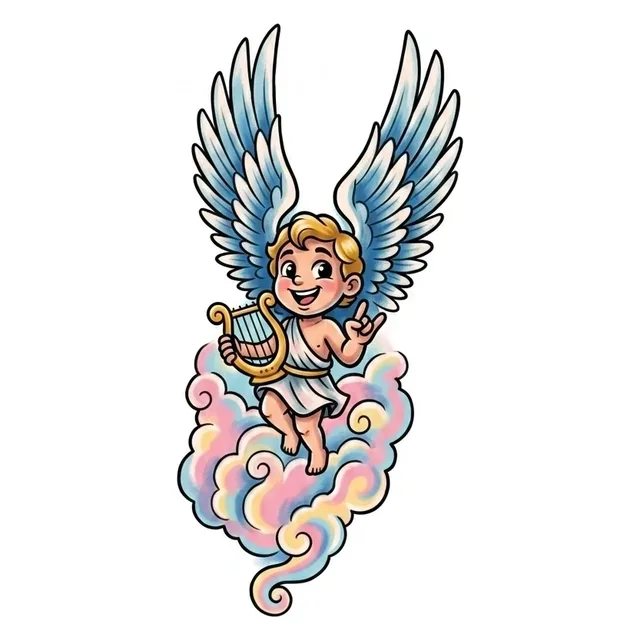
Color new school angel and cloud tattoo design Try it on — Color new school angel and cloud tattoo design


22 designs drawn for InkCraft in this style. Tap any one to place it on a photo of your own skin.
These 22 designs, in numbers
- Black and grey
- 0
- Colour
- 22
- Subjects covered
- 20
The outline changes weight, and that is the signature
American traditional draws an essentially uniform outline all the way round a subject. New school does not: the line thickens where a shape turns away from you and thins where it catches the light, sometimes swelling to three or four times its own width within a single contour. That variation is what makes a new school drawing look inflated, like something with air inside it, and it is the clearest way to tell the two apart at a glance.
Proportion is exaggerated on the same principle. Eyes, teeth, fins, paws and wheels get bigger; everything connecting them gets smaller. The subject is not being drawn accurately and is not trying to be, which is why a new school panther and a realistic one share almost nothing beyond the animal.
Highlights finish it. A hard white or bare-skin highlight on one side of each form, often with a drop shadow beneath, is what lifts the piece off the arm rather than leaving it flat on it.
The palette broke open, and the black held it together
Traditional worked from five pigments chosen because they lasted. New school arrived once ink chemistry had moved on and used what that made possible: purple, orange, teal, magenta, lime, and blends between them that the older palette had no way to mix.
Those colours are not equal in durability, and it is worth knowing which. Black and the darker saturated tones hold almost indefinitely. The light and the fluorescent ones — pale yellow, hot pink, pastel anything — are the first to go, and on sun-exposed skin they can visibly soften within a decade.
What saves the piece is the structure underneath. Every colour sits inside a heavy black boundary, so as the brightest passages soften, the drawing itself does not move. That is the whole reason new school ages more like traditional than like the airbrushed colour realism it is sometimes confused with: it inherited the engineering along with the attitude.
It needs room, and it needs commitment
Exaggerated shapes need somewhere to be exaggerated. The outer forearm, the calf, the thigh and the upper back give a piece the 15 to 25 cm it wants; below about 10 cm the inflated forms and the varied line weight start fighting each other for the same millimetre and the drawing closes up.
Be clear-eyed about cover-up too. Between the heavy black and the full-saturation colour there is very little that goes over a new school piece except a larger, darker new school piece. This is a style to commit to rather than to try out, which suits it — it was never a quiet style and does not become one at small size.
What an hour of this work costs, and how many hours new school tattoos takes at each size, is in the cost guide. How it behaves later — under a laser, and as the thing doing the covering — is in the removal and cover-up guide.
Common questions
- What makes a tattoo new school rather than traditional?
- Two things you can see without knowing the history. The outline changes weight within a single contour instead of staying uniform, and the proportions are deliberately exaggerated — oversized eyes, teeth and paws with everything between them shrunk. The colour range is wider, but the line is the giveaway.
- Do new school tattoos age well?
- Better than most colour work, because the structure is inherited from traditional: every colour sits inside a heavy black boundary, so the drawing holds its shape even as the brightest passages soften. Pale yellows and fluorescent tones go first; black and the deep saturated colours stay.
- How big does a new school tattoo need to be?
- Around 15 cm is comfortable and 10 cm is roughly the floor. The style depends on outlines that change weight and on shapes that are already exaggerated, and both need room — shrink them together and the variation stops reading as variation.
- Can a new school tattoo be covered up later?
- Only with something larger and darker. Full-saturation colour under heavy black leaves very little room for anything else, so treat it as a commitment rather than an experiment. That is a fair trade for a style that was never designed to be subtle.
See this style on your own skin
InkCraft places a design on a photo of you — scaled, wrapped and shaded to the spot you pick, so you can judge how the style reads on your body before it is permanent.