 InkCraft
Black and grey realism tattoo designs
12 original realism tattoos designs drawn for InkCraftBy Uladzimir TumanauUpdated
Realism usually drops the outline and builds everything from value, the steps between black and bare skin, so the ink reads like a photograph. The set here is black and grey, from a leopard's eye to a breaching humpback, with one touch of rust on a hawk's tail.
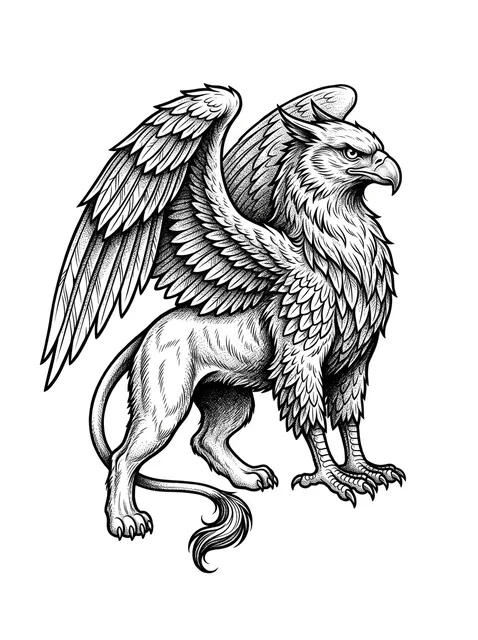
Black and grey realism griffin tattoo design Try it on — Black and grey realism griffin tattoo design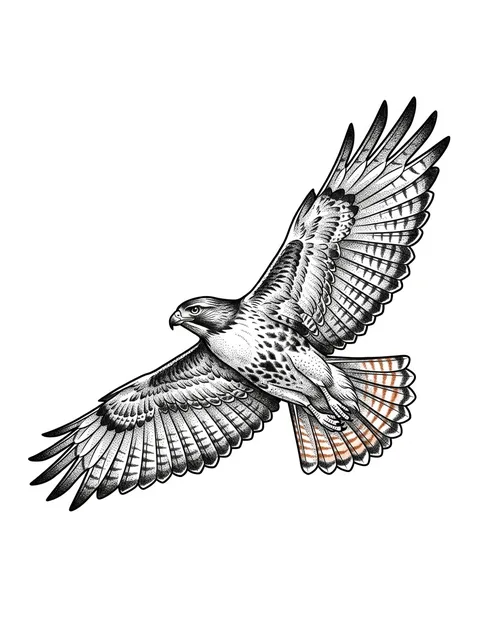
Color realism hawk tattoo design Try it on — Color realism hawk tattoo design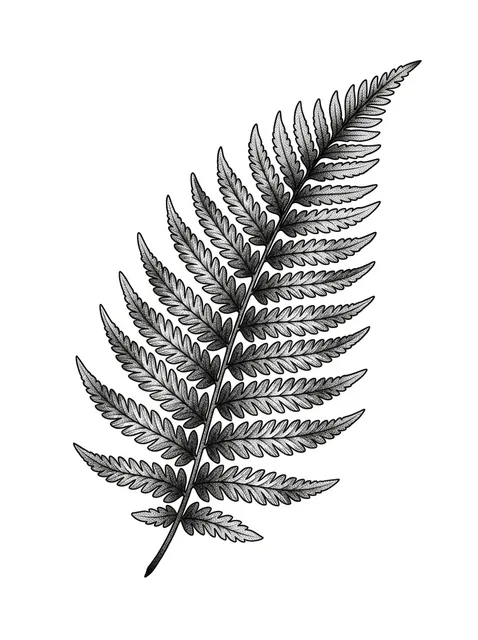
Black and grey realism fern tattoo design Try it on — Black and grey realism fern tattoo design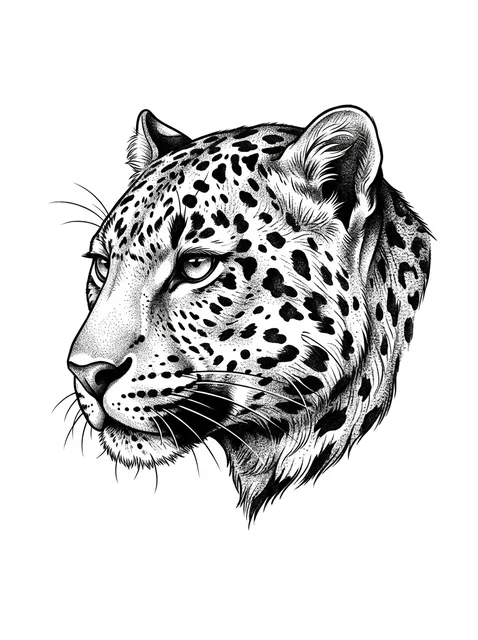
Black and grey realism leopard tattoo design Try it on — Black and grey realism leopard tattoo design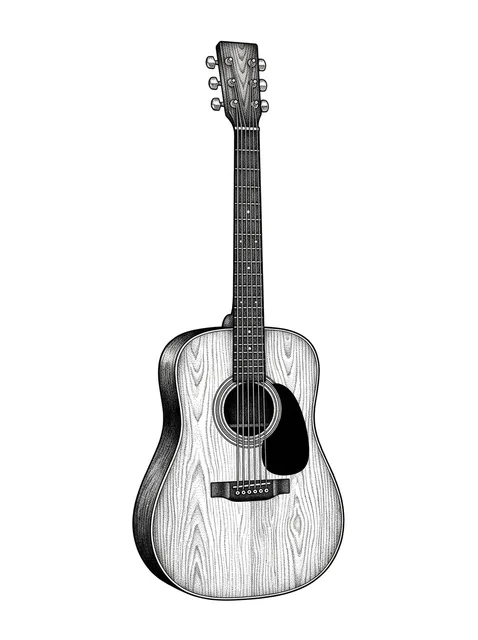
Black and grey realism guitar tattoo design Try it on — Black and grey realism guitar tattoo design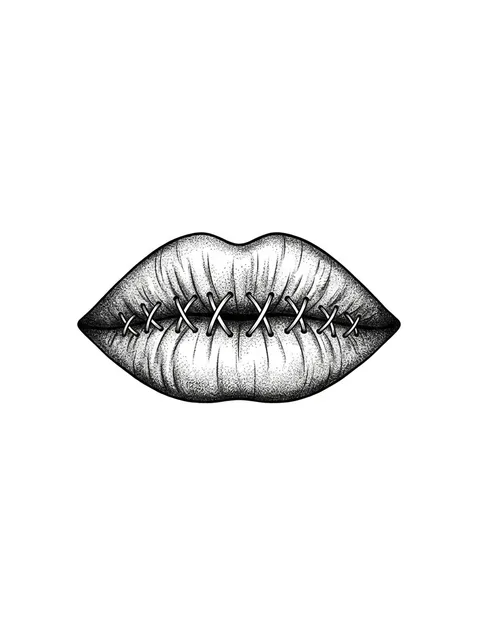
Black and grey realism lips tattoo design Try it on — Black and grey realism lips tattoo design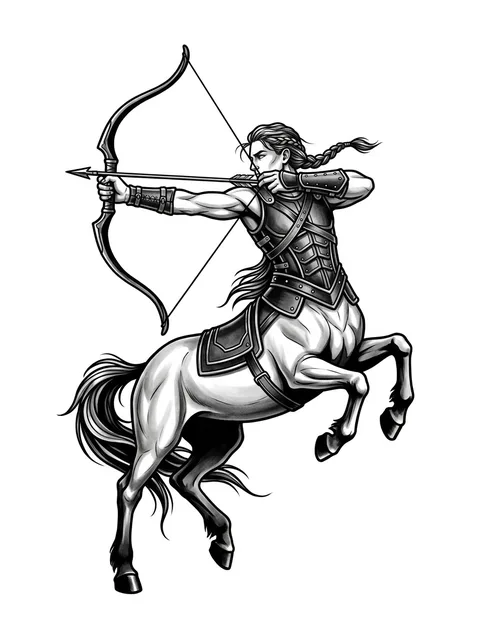
Black and grey realism sagittarius tattoo design Try it on — Black and grey realism sagittarius tattoo design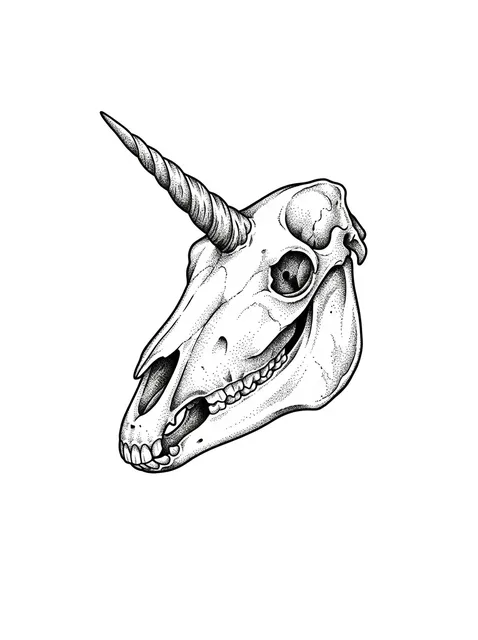
Black and grey realism unicorn and skull tattoo design Try it on — Black and grey realism unicorn and skull tattoo design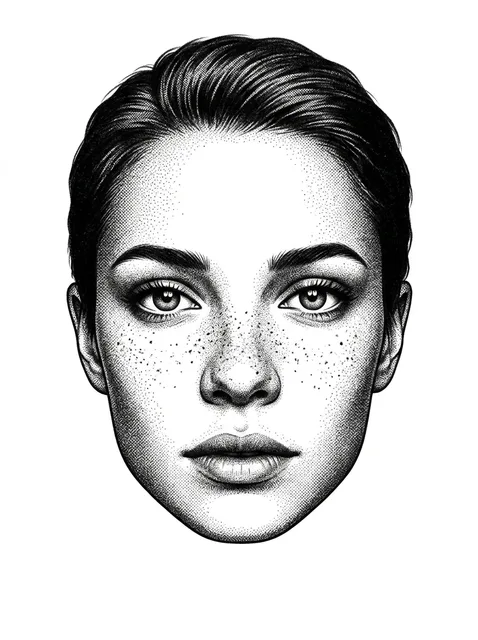
Black and grey realism woman portrait tattoo design Try it on — Black and grey realism woman portrait tattoo design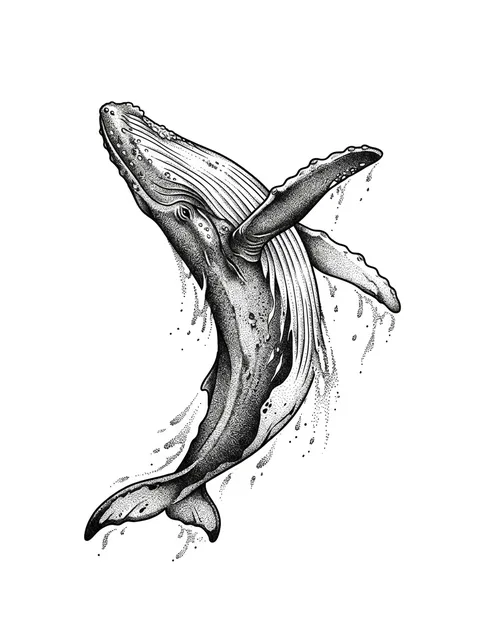
Black and grey realism ocean and whale tattoo design Try it on — Black and grey realism ocean and whale tattoo design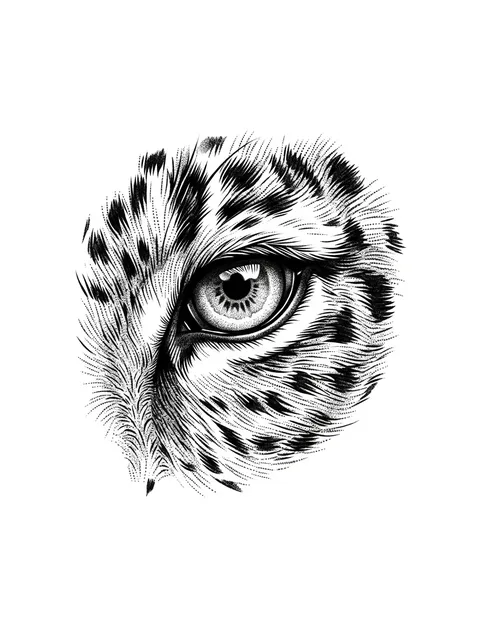
Black and grey realism leopard tattoo design Try it on — Black and grey realism leopard tattoo design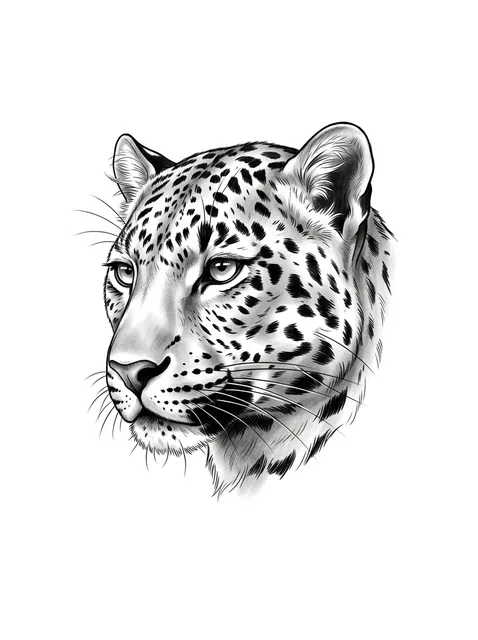
Black and grey realism leopard tattoo design Try it on — Black and grey realism leopard tattoo design


12 designs drawn for InkCraft in this style. Tap any one to place it on a photo of your own skin.
These 12 designs, in numbers
- Black and grey
- 11
- Colour
- 1
- Subjects covered
- 12
Built from value, not from line
A realistic tattoo is judged against the thing itself rather than against other tattoos. Where traditional work names an object with an outline and a few flat fields, realism describes the light on it: the soft turn of a cheek, the wet glint in an eye, the grain running across the top of a guitar. There is usually no line around anything. An edge exists only where one value meets another, which is how a camera records a scene.
In black and grey work every value comes from one pigment. Black is diluted with distilled water into a graded set, commonly three to five steps from a faint wash to near-solid, and blended with soft-edged magnum groupings that leave no line of their own. Texture goes on top. The freckled face here is stipple and whip shading, short flicked strokes that fade out at one end, and the leopard's eye is framed by hair strokes that thin to nothing, so the fur dissolves into skin instead of stopping at a border.
The black and grey version shares a root with chicano work, in the single-needle shading that reached Los Angeles studios in the 1970s, and then pulled away from it towards hard contrast and texture. Painting had made a similar move a few years before. Chuck Close finished Big Self-Portrait, a face nearly nine feet tall transferred square by square from a photograph, in 1968, and in 1969 the dealer Louis K. Meisel gave the movement its name, photorealism.
Animals, objects and creatures that never lived
Realism is a technique rather than a list of motifs. Animals are its steadiest subject, because fur, feathers and an eye give the shading so much to describe: three leopards, one of them only an eye, a red-tailed hawk carrying the set's only colour, a pale rust on its tail, and a humpback rising almost vertically out of the water. A fern frond lives on the gradient along each serrated leaflet, a guitar on its wood grain and the one solid dark shape of the pickguard.
It will also render things nobody has photographed. The griffin, where eagle feathers meet lion fur at the chest, the centaur archer of Sagittarius and the unicorn skull with its spiralled horn are shaded with the same true-to-life proportion as the leopard, and that is what makes them unsettling: the eye accepts the lighting before it notices the animal. The sewn-shut lips sit on the same edge. One step further, where something real turns into something else, the piece belongs on the surreal page.
Portraits are the hardest test, because every viewer is an expert on faces. A likeness lives in distances of a few millimetres, the gap between the eyes, the depth of the upper lip, and an error that would pass unnoticed in a leopard turns a person into a stranger who resembles them. The woman on this page is not a portrait of anyone. For a real face, above all a memorial one, look for an artist whose healed portraits can be held up against the photographs they came from.
The reference, the size and the years
Everything starts from the reference photograph, because an artist can only render light that is in it. A face or a pet wants a sharp picture in daylight or under one clear light, taken at eye level, with the subject large in the frame. Flash flattens a face into one bright plane, beauty filters smooth away the texture the shading needs, and a screenshot from a messaging app has thrown detail away before the stencil is made.
Size follows the smallest feature that has to survive. In a portrait that is the eye, which needs room for an iris, a catchlight and the line of the lid, so portrait artists rarely draw a face under about 12 cm. The single leopard eye here manages a smaller overall size only because the eye is the whole composition. Detail shrunk below its floor does not look finer once healed; it looks grey.
Age takes the light end of the range first. Pale greys lighten further, hair strokes soften into tone, and two close values drift into one, so a piece built entirely from mid-greys looks smoky within a decade. The designs that last have deliberate black in them, under a jaw or inside a leopard's rosettes, so there is contrast left to spend. Put the design on a photo of the spot at its real size and check that the smallest feature is still a feature.
What an hour of this work costs, and how many hours realism tattoos takes at each size, is in the cost guide. How it behaves later — under a laser, and as the thing doing the covering — is in the removal and cover-up guide.
Common questions
- Why is most realism black and grey?
- Because one pigment diluted into steps gives the finest control over value, and value is what a likeness is made of. Colour realism exists, but each hue needs its own gradient, so it takes longer to lay and, on skin that sees sun, loses its range sooner than grey does.
- What photo should I bring for a portrait?
- The sharpest one you have, taken in daylight or under a single light, at eye level, with the face filling most of the frame. Avoid flash, filters and screenshots. Several photos help the artist understand the face, but the tattoo is drawn from one, so choose it together.
- At what size does a face stop being a likeness?
- When the eyes can no longer hold an iris, a catchlight and a lid line as separate marks, which for most artists means a face much under 12 cm tall. Below that the features merge as the ink settles, and the result still reads as a face but no longer as that person.
- Will a realistic tattoo still look real in twenty years?
- It will look softer. The palest greys lighten and fine texture blurs into tone, so pieces built on strong blacks against bare skin keep their depth and pieces built from mid-greys flatten. A later session that deepens the darkest shadows recovers much of what was lost.
- Why do realism artists quote by the session?
- Because the time depends on the reference as much as on the size. Blending several dilutions until no step shows is slow, a palm-sized black and grey piece takes several hours, and a portrait or a large animal usually runs across more than one sitting, with healing time between.
See this style on your own skin
InkCraft places a design on a photo of you — scaled, wrapped and shaded to the spot you pick, so you can judge how the style reads on your body before it is permanent.